
How to Structure the Perfect XC Practice: A Daily Blueprint for High School Distance Programs
The season was three weeks old when I realized we were wasting an hour every day.
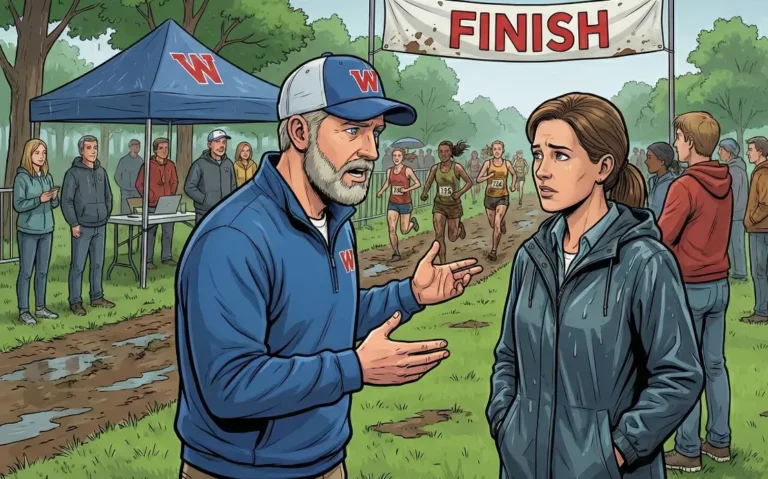
Athletes trickled in across a 20-minute window. Kids disappeared to the trainer one at a time, each taking 15 minutes. Warmup was chaotic—some kids jogging easy, others already stretching, a few sprinting around aimlessly. We’d start the workout 45 minutes after official practice time, rush through it, skip cooldown because we were running late, and send everyone home without any strength work or team connection.
We had two hours and two coaches. We were using maybe 75 minutes productively.
This article is part of our Complete Guide to High School Cross Country Training, which covers everything from seasonal planning to race day tactics.
The next day, I restructured everything with my assistant coach. Attendance at 3:00 sharp. Trainer visits scheduled in blocks. Dynamic warmup at 3:20, everyone together, with my assistant leading while I handled final logistics. Workout started at 3:35, no exceptions—I coached the varsity group while my assistant worked with JV. Cooldown and strength work built into the schedule, not tacked on as afterthoughts. Team meeting twice weekly with actual purpose.
Within two weeks, we were getting more quality work done, athletes felt less rushed, injury rates dropped, and—critically—the culture shifted from casual to focused.
Time is your most valuable resource as a coach. Two hours, six days a week. That’s 12 hours to build fitness, prevent injury, develop racing skills, create team culture, and teach life lessons that outlast high school. You cannot afford to waste it.
This is the blueprint for structuring practice that maximizes every minute while respecting that your athletes are students first, that their bodies need proper preparation and recovery work, and that great teams are built through intentional culture-building as much as hard workouts.
The Non-Negotiable Framework
Before diving into daily specifics, here are the principles that govern every practice:
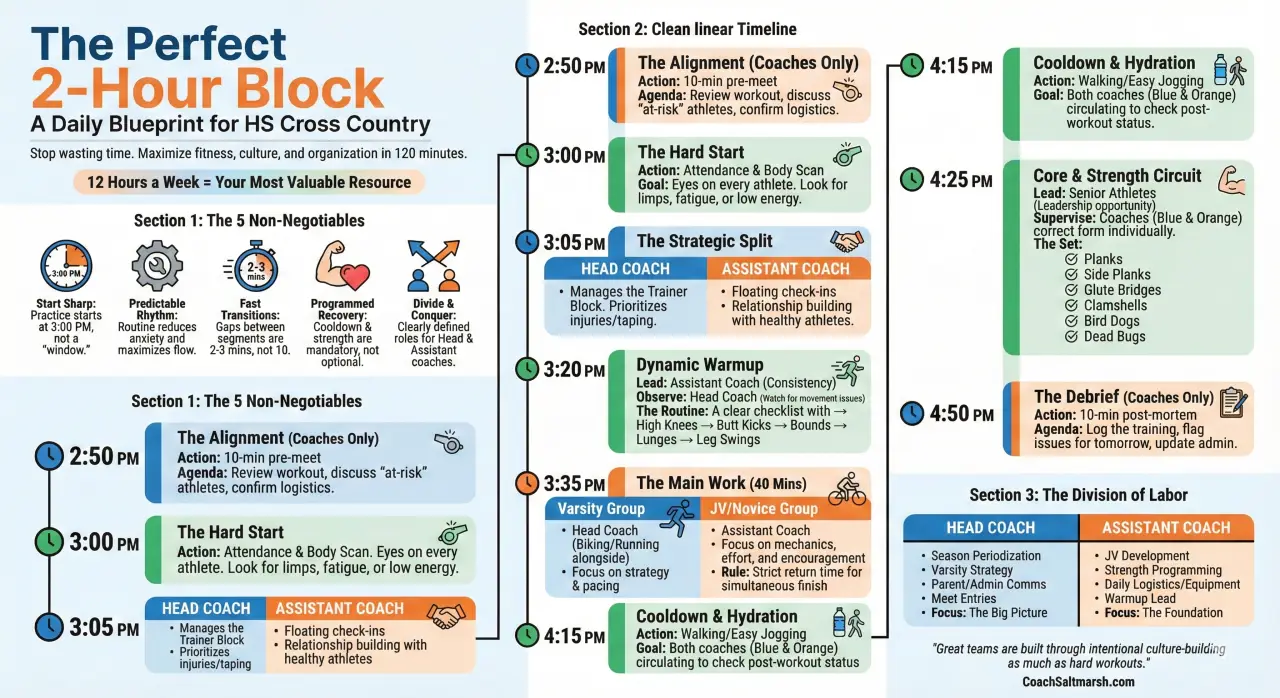
Practice starts at a specific time, not a window. If practice is 3:00 PM, that’s when structured activity begins, not when the first athlete wanders over. This requires communicating clearly with athletes and parents: “Practice is 3:00-5:00. Athletes should arrive by 2:50 to change and be ready.” If you are late and don’t have a valid reason, you will be sent home with an unexcused absence.
Every practice follows a predictable template. Athletes should know the rhythm—attendance, dynamic warmup, main work, cooldown, strength/core, team business. Variations happen within the structure, but the structure itself is constant. Predictability reduces anxiety and maximizes efficiency.
Transition time is trained, not tolerated. The gap between warmup and workout, between workout and cooldown, between cooldown and strength work—these transitions should take 2-3 minutes, not 10. Athletes learn to move efficiently when you expect it and model it.
Recovery is programmed, not optional. Easy days, cooldown miles, strength work—these aren’t extras to skip when you’re short on time. They’re central to the program and get equal attention to workout days.
Divide and conquer with your assistant. Two coaches allow simultaneous management of different groups, personal attention for more athletes, and better supervision across all practice elements. Define roles clearly and communicate constantly.
With those principles established, here’s how to structure each practice day across the week.
Coaching Roles and Communication
Before examining daily structure, establish clear division of responsibilities:
Head Coach Primary Responsibilities:
- Overall season planning and periodization
- Varsity training and racing strategy
- Workout design and progression
- Parent and administration communication
- Attendance and communication tracking
- Meet logistics and entries
Assistant Coach Primary Responsibilities:
- JV and novice athlete development
- Strength and injury prevention programming
- Practice logistics and equipment
- Filling gaps wherever needed
Shared Responsibilities:
- Athlete safety and wellbeing
- Culture building and team cohesion
- Individual athlete check-ins
- Practice supervision
Daily Pre-Practice Meeting (2:50-3:00 PM): Before athletes arrive, both coaches meet briefly:
- Review the day’s workout and any modifications needed
- Discuss specific athletes who need attention (injury concerns, struggling academically, personal issues)
- Confirm group assignments and who’s coaching what
- Align on any announcements or team business
This 10-minute alignment prevents confusion, ensures both coaches are on the same page, and allows you to present a unified message to athletes.
SAMPLE Daily Practice Routine
Monday: Recovery and Reset
2:50 PM – Coach Alignment Head coach and assistant review: “Today’s recovery day, how did everyone look at Saturday’s meet? Anyone we’re concerned about? Let’s plan: you lead warmups, I’ll handle trainer coordination, and we’ll meet up to give the team their workout specifics for today.
3:00 PM – Attendance and Check-In (5 minutes) Head coach takes official attendance on roster while assistant coach sets up ladders and cones on the track for the dynamic routine. Quick full-team huddle led by head coach: “How’s everyone feeling after the weekend? Any injuries to report? Today’s plan is recovery run plus core work. Questions?”
This isn’t perfunctory roll call. Both coaches are scanning for red flags—who looks tired, who’s limping, who seems off mentally.
3:05 PM – Trainer Block Time (15 minutes) Head coach manages the trainer queue. Athletes who need taping, ice, evaluation, or treatment get prioritized and organized. The head coach stays with this group and talks directly with the trainer about any modifications, ensuring efficient flow and tracking who’s getting what treatment.
Meanwhile, assistant coach works with athletes who don’t need trainer time—checking in individually, answering questions about training or racing, building relationships. These informal conversations are where you learn about academic stress, family issues, social dynamics—information that helps you coach the whole person.
By 3:20, everyone has been processed through trainer, and both groups converge.
3:20 PM – Dynamic Warmup (15 minutes) Assistant coach leads the full-team warmup. This is their domain—they own the daily warmup sequence, making it consistent and efficient. Head coach participates but also observes, watching for athletes whose movement looks off or who are favoring something.
Warmup Template (assistant-led):
- 10 minutes easy jogging as full team around the fields and viewable by coaches
- 5 minutes dynamic drills in lines:
- A-skips (20 meters)
- B-skips (20 meters)
- High knees (20 meters)
- Butt kicks (20 meters)
- Straight-leg bounds (20 meters)
- Walking lunges (20 meters)
- Leg swings (10 each leg, front-to-back and side-to-side)
The assistant demonstrates each drill as needed, corrects form, keeps the pace moving. Athletes learn to follow their lead without needing constant redirection.
3:35 PM – Main Run (40 minutes) Monday is recovery day following Saturday’s race or long run. The ‘Main Run’ segment of practice, is where you will implement your key sessions, such as Threshold runs or CV intervals. Groups split by pace but both coaches supervise:
Head coach bikes alongside the varsity/top group (7-8 athletes), enforcing easy pace, using the time for conversations about training, racing, goals, life. This is relationship-building time as much as training.
Assistant coach works with the JV/developing athletes (12-15 athletes), teaching them what easy pace actually feels like, proper running form, answering their questions, encouraging the slower runners. This group often needs more coaching—they’re learning how to train, not just training.
Any remaining athletes (novices, injured athletes doing modified work) stay at the practice site on the bike or elliptical matching the time commitment of the main group.
Critical coaching coordination: Before splitting, both coaches confirm the return time—”Back here at 4:15, both groups.” This ensures simultaneous finish for cooldown and strength work.
4:15 PM – Cooldown (10 minutes) Both coaches with full team. Walking and very easy jogging. Hydration happens here. Both coaches circulating, checking in with different athletes—you’re covering more ground with two sets of eyes and ears.
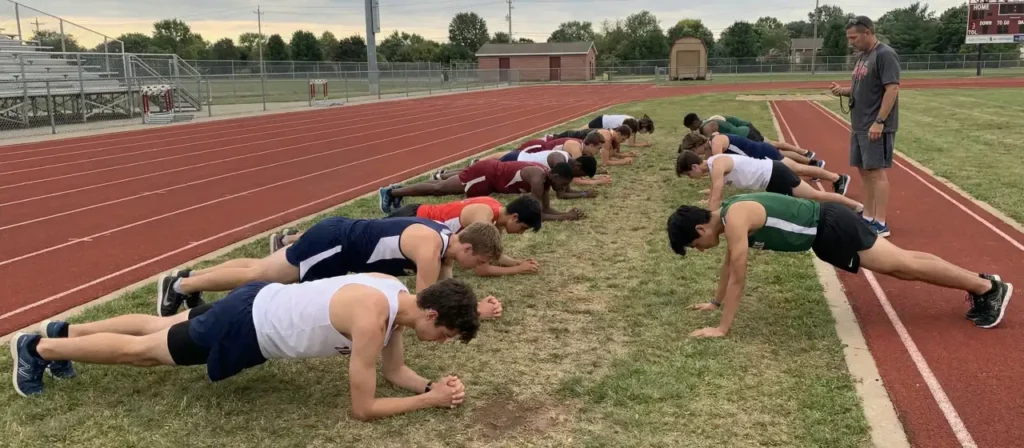
4:25 PM – Core and Hip Strength Routine (20 minutes) Senior athlete(s) leads the strength circuit while coaches supervises and corrects form. This division allows the coaches to move through the group making individual corrections and modifications for injured athletes.
Monday Core Routine (3 rounds):
- Plank: 45 seconds
- Side plank (right): 30 seconds
- Side plank (left): 30 seconds
- Glute bridges: 20 reps
- Single-leg glute bridges: 10 reps each leg
- Clamshells: 15 reps each side
- Bird dogs: 10 reps each side
- Dead bugs: 10 reps each side
- Russian twists: 20 total reps
30-second rest between rounds.
4:45 PM – Announcements and Dismissal (5 minutes) Quick team huddle led by head coach with assistant coach adding relevant details:
Head coach: “Tomorrow’s workout: 2×12 minutes at threshold. Be ready mentally for a solid effort.”
Assistant coach: “Reminder— We’re ordering team shirts this week, get your sizes to me.”
Team cheer, dismissed by 4:50 PM.
4:50-5:05 PM – Coach Debrief After athletes leave, both coaches spend 5-10 minutes:
- Discussing observations from practice
- Flagging athletes who need monitoring
- Confirming tomorrow’s plans and group assignments
- Updating shared practice log or training document
- Discussing Parent/Booster relations
This debrief keeps both coaches aligned and ensures nothing falls through the cracks.