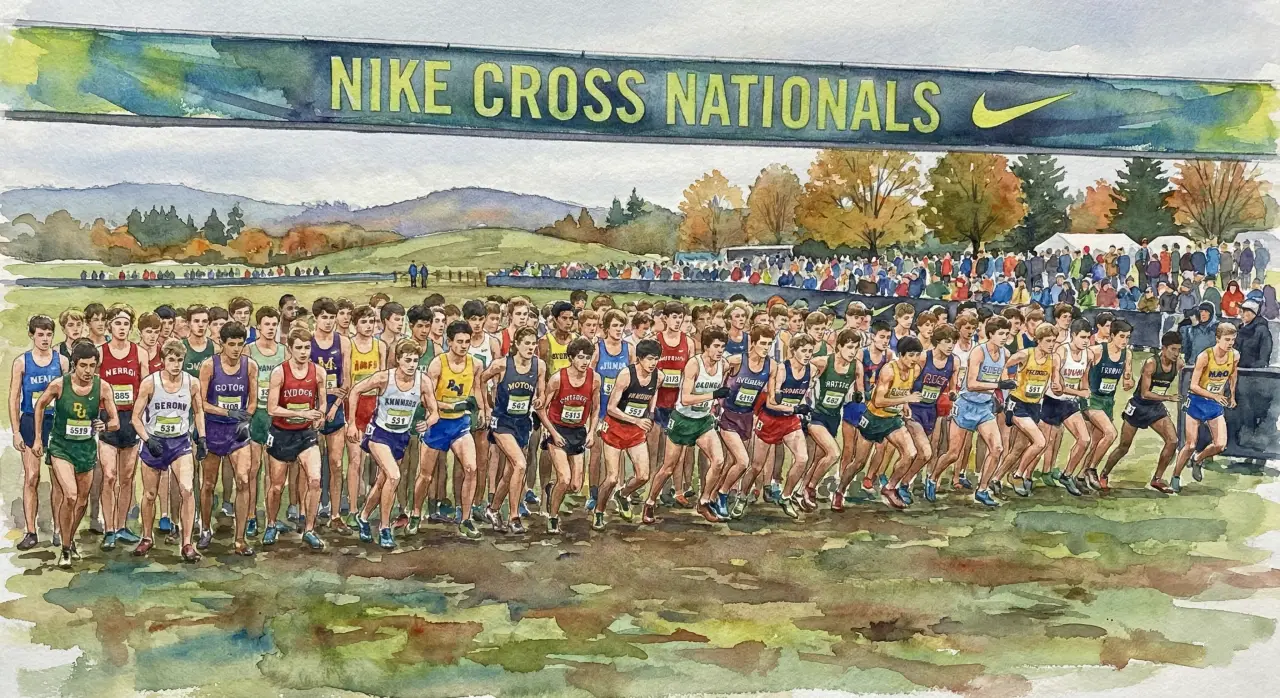
Building a Championship XC Culture: Lessons from F-M, Niwot & Newbury Park
If you study the nation’s most dominant high school distance programs—places like Fayetteville-Manlius, Newbury Park, Niwot, and Southlake Carroll—you start to notice something: their secret to success is hiding in plain sight. It’s visible in every practice, every conversation, and goes into every decision that gets made. Excellence in high school running isn’t built on magic workouts or genetic lottery tickets. It’s built on culture.
I’ve spent two decades coaching high school distance runners. I’ve seen kids who couldn’t break 7:00 for the mile as freshmen become state champions. I’ve seen gutsy JV athletes work relentlessly throughout high school and eventually find a spot running for powerhouse collegiate programs. What separates programs that produce one good athlete from programs that produce consistent excellence? It comes down to the consistent and progressive work of building something bigger than any individual season.
The Stotan Principle: Process Over Outcome
Bill Aris didn’t transform Fayetteville-Manlius into a national dynasty by obsessing over splits. In 2004, when he introduced the “Stotan” philosophy—a blend of stoic and spartan principles borrowed from legendary Australian coach Percy Cerutty—he fundamentally shifted what his athletes valued. The Stotan approach emphasizes selflessness, commitment to the process, and performing for your teammates rather than yourself.
As Aris explained in interviews, “By being selfless, thinking of performing for others—that is, your teammates—you free yourself of the constraints of having to perform only for yourself.” That summer, he took his top eight boys to a week-long camp in the Adirondacks. They ran trails, discussed mind-body connection, jumped in the lake after hard efforts, and built a shared identity that transcended individual achievement.
The result? At the Manhattan Invitational that fall, F-M swept the top five places against national powers. They’ve since accumulated 17 New York State titles and 12 Nike Cross Nationals championships. But here’s what matters: Aris didn’t invent interval training or discover some hidden workout formula. He built a culture where athletes learned to value the process.
Athlete-Driven Goals: The Niwot Model
Kelly Christensen has led Niwot High School to 14 state championships and two NXN national titles in just ten seasons. His program’s defining characteristic? The athletes set the goals. Every summer, at their annual team barbecue, the runners decide what they want to accomplish. Not the coach. The runners.
Christensen, a former school counselor with a psychology degree, understands something fundamental about teenage development: ownership drives commitment. When the team decides they want to win NXN, it becomes their mission, not a directive from the coach. He emphasizes balance, telling reporters, “We’re really just trying to mix it up and do more non-running things and have fun and bond as a team, and really just not let running be our only identity.”
This athlete-centered approach doesn’t mean lowered standards. Niwot’s boys scored just 61 points at the 2025 NXN—the best team performance in the meet’s storied history. Their culture produces elite results precisely because athletes take responsibility for the outcome.
Consistency and Trust: The Southlake Carroll Formula
Justin Leonard has been with the Southlake Carroll program for over a decade, guiding the Dragons to eight appearances at Nike Cross Nationals. When asked about his program’s success, Leonard points to two factors: consistency and trust. The athletes trust themselves, their teammates, and their training system. They’re consistent not just with the hard workouts, but with what Leonard calls “the little things”—sleep, nutrition, mobility work, and mental preparation.
This isn’t accidental. Leonard deliberately teaches his teams “the value of hard work and self-discipline” while giving them ownership of the training system. The result? Seven guys under 10 minutes in the 3200 meters. Not because they had seven genetic freaks show up in one graduating class, but because the culture values and produces excellence systematically.
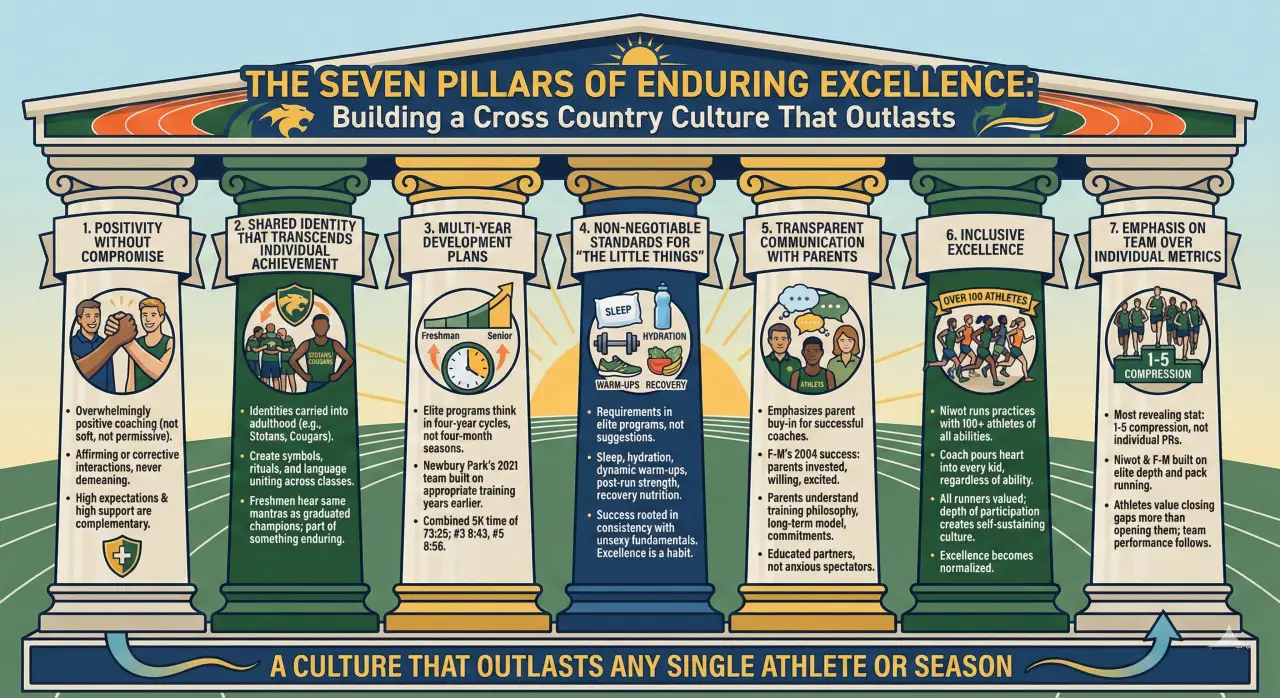
The Seven Pillars of Enduring Excellence
After studying these programs and building a few of my own successful teams, I’ve identified seven non-negotiables for creating a culture that outlasts any single athlete or season:
1. Positivity Without Compromise
Overwhelmingly positive coaching. Not soft. Not permissive. Positive. Every interaction is either affirming or corrective in nature, never demeaning. High expectations and high support aren’t contradictory—they’re complementary.
2. Shared Identity That Transcends Individual Achievement
F-M’s “Stotans.” Niwot’s “Cougars.” These aren’t just nicknames; they’re identities that athletes carry into adulthood. Create symbols, rituals, and language that unite your program across graduating classes. When a freshman hears the same mantras that a graduated state champion heard, they understand they’re part of something enduring.
3. Multi-Year Development Plans
Newbury Park’s 2021 boys team—arguably the greatest high school cross country team in history—didn’t appear overnight. That exceptional team was built on freshmen who were given appropriate training loads three years earlier. Elite programs think in four-year cycles, not four-month seasons.
4. Non-Negotiable Standards for “The Little Things”
Sleep. Hydration. Dynamic warm-ups. Post-run strength work. Recovery nutrition. These aren’t suggestions in elite programs; they’re requirements. Southlake Carroll’s success is rooted in their consistency with these procedural fundamentals. Excellence is a habit, and habits are built through repeated daily micro-decisions.
5. Transparent Communication with Parents
Every successful coach I’ve interviewed emphasizes parent buy-in. F-M’s 2004 breakthrough season worked because “we had the parents invested, willingly, and excited about it,” according to Aris. Parents need to understand the training philosophy, the long-term development model, and the non-running commitments required. When parents are educated partners rather than anxious spectators, the entire ecosystem improves.
6. Inclusive Excellence
Niwot runs practices with over 100 athletes. Not 100 elite athletes—100 athletes of all abilities. Kelly Christensen’s athletic director described him as someone who “pours his heart and soul into every kid, regardless of ability.” The 30-minute 5K runners show up because they’re valued, and that depth of participation creates a self-sustaining culture where excellence becomes normalized rather than exceptional.
7. Emphasis on Team Over Individual Metrics
The most revealing stat isn’t someone’s PR; it’s 1-5 compression. Niwot’s boys won NXN with elite depth. F-M’s dynasty was built on perfect scores and pack running. When athletes learn to value closing gaps more than opening them, team performance follows.
Practical Implementation: Your Cultural Blueprint
Creating culture isn’t about inspiration. It’s about infrastructure. Here’s how to systematically build excellence:
Establish Your Program’s Core Values (Week 1)
Don’t copy F-M’s Stotan philosophy or invent motivational slogans. Sit down with your returning runners and identify what your program values. Write them down. Make them visible. Reference them in every team meeting. Make them visible with t-shirts, posters and bracelets. Build your brand.
Create Rituals and Traditions
Sunday long runs that always end at the same coffee shop. Pre-meet pasta dinners. Post-championship team photos at the same location every year. Quirky awards. These rituals create continuity across seasons and build shared memory.
Implement the “Culture Council”
Form a leadership group of 3-5 upperclassmen who meet with you monthly to discuss team dynamics, identify problems early, and model the behaviors you want to see. Give them real decision-making authority on team social events and minor logistical matters.
Develop Your Training Philosophy Document
Write a 2-3 page explanation of your training philosophy that you can share with athletes and parents. Include your approach to mileage progression, workout progression, rest and recovery, and your reasoning for each. Buy-in will follow.
Track More Than PRs
Create a team spreadsheet that tracks completion rates for post-run strength work, days of adequate sleep (8+ hours), and attendance at optional activities. Culture is built in the margins.
The Downloadable Tools You Need
To support your journey in building an enduring culture, I’ve created several resources specifically designed for high school distance coaches:
The Culture Audit Worksheet
A systematic evaluation tool to assess your program’s current cultural strengths and weaknesses across the seven pillars. Complete this at the start of each season to identify focus areas.
The Team Values Framework
A facilitated workshop outline for your first team meeting, designed to help athletes collaboratively identify and articulate the core values they want to define their team. Includes sample questions and a decision-making protocol.
The Parent Communication Template
A customizable email template explaining your training philosophy, long-term development approach, and the non-running commitments required for success. Send this before the season starts to establish expectations.
The Summer Training Calculator
Input your start date and this tool generates a 10-week summer training plan with appropriate progression, and built-in recovery weeks—ensuring your training philosophy translates into practical weekly schedules.
The Long Game
Here’s what coaches get wrong: they think culture is about motivation. It’s not. Motivation is fleeting. Motivation is intrinsic. Culture is structural. Bill Aris didn’t motivate F-M to 12 national titles. He built a system that produces excellence regardless of who wears the singlet.
Kelly Christensen doesn’t recruit Olympic bloodlines to Niwot. He creates an environment where over 100 athletes choose to participate because the culture makes them better versions of themselves. Justin Leonard doesn’t luck into seven sub-10:00 3200 runners. He systematically teaches work ethic and discipline until excellence becomes the baseline expectation.
Your program won’t transform overnight. F-M had success before 2004, but Aris spent years studying Percy Cerutty before implementing Stotan principles. Niwot’s 2024 NXN title was built on infrastructure Christensen started constructing in 2016. Southlake Carroll’s eight NXN appearances represent over a decade of consistent cultural reinforcement.
The question isn’t whether you have the talent. Talent is distributed more evenly than we like to admit. The question is whether you’re willing to build the culture that develops, sustains, and multiplies that talent across multiple seasons.
Start today. Not with a motivational speech. With a spreadsheet. With a parent email. With a values conversation. With the small, structural decisions that, compounded over years, produce programs that don’t just win—they endure.
Related Resources:
→ Complete Guide to Coaching High School Distance Runners
→ How to Structure the Perfect XC Practice