
High School Distance Coaching: A Science-Based Blueprint
High school distance coaching is unlike any other job in sport. You don’t pick your roster, it’s handed to you. You work with 14-year-olds who have never run a mile and 18-year-olds chasing college scholarships, and somehow you have to meet them both where they are. The margin for error is razor thin. Too much too soon and you lose them to injury. Too little and you leave performance on the table. Done right, though, what you’re building is bigger than sport. It’s about the importance of discipline, hard work and patience.
This is a resource built specifically for coaches of high school cross country and track. It’s not for elite programs with unlimited budgets and hand-picked talent, but for the coach managing 60 kids across five event groups with one assistant and a two-hour practice window. You’ll find training frameworks grounded in exercise science, practical tools for managing parents and programs, and a philosophy centered on one idea: we are developing people first, and athletes second.
Principles of High School Distance Coaching
1. Build the Base
Aerobic development takes years, not weeks. Summer training is where seasons are won or lost. You cannot make up for lost time in September. High volume at conversational pace builds capillary density, mitochondrial efficiency, and stroke volume. Intensity should be earned only after the foundation is sound, and mileage must increase gradually.
2. Train Every Energy System Precisely
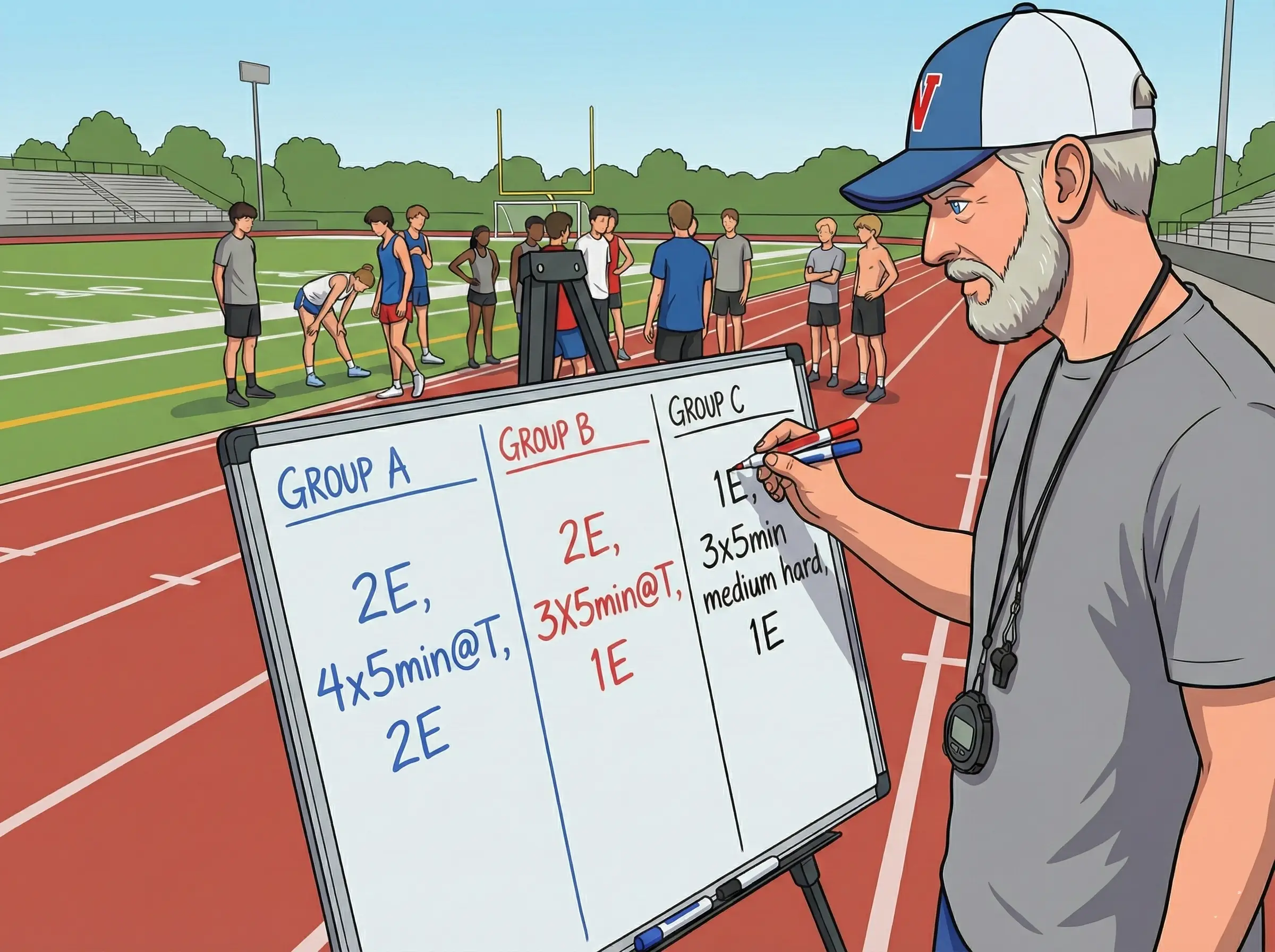
Every run must target a specific physiological adaptation. Easy runs should be easy. Threshold work should be genuinely at threshold pace, not faster, not slower. Make use of VDOT-based pace calculators derived from Jack Daniels’ system to assign exact training zones to every athlete. A tempo run executed too fast becomes a race. Too slow, it’s junk mileage. Guessing wastes the athlete’s most precious resource: their time.
3. Peak for One Moment Each Season
The goal of the season is not to win Tuesday’s dual meet. It is to run the fastest possible time at the championship meet. Every workout, recovery day, and race must serve that single endpoint. The season is structured in distinct mesocycles, and coaches must have the discipline to train through early season races rather than tapering for events that don’t count.
4. Coach the Person, Not the Athlete
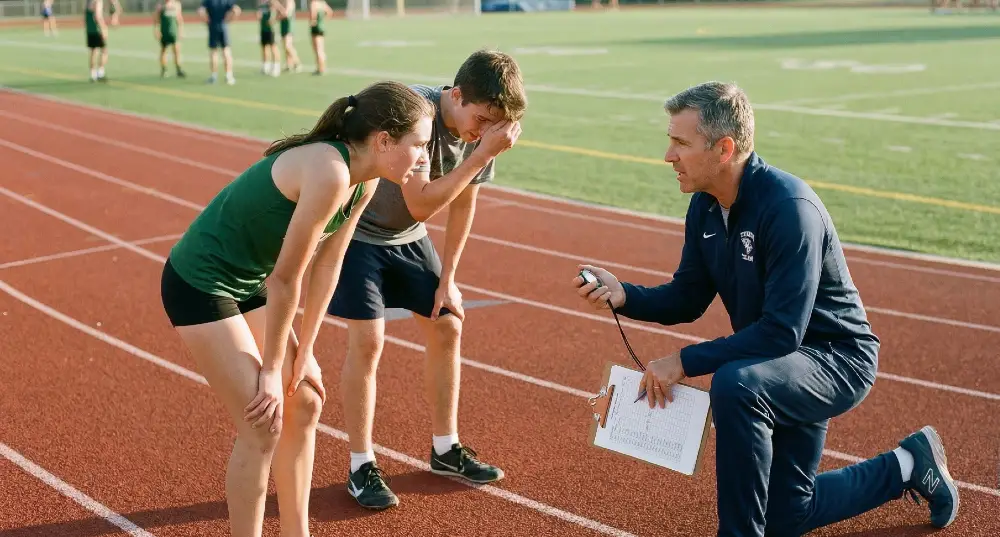
High school coaching is about development, not selection. Unlike college programs, coaches build talent rather than recruit it. That means treating freshmen like freshmen (not seniors), attending to mental health, and understanding that toughness is a teachable skill. Emphasize individualized training, resisting one-size-fits-all programs, and fighting the culture of instant gratification that undercuts long-term athletic development. We are building better people, not just better athletes.
High School Distance Coaching Advice




High School Distance Coaching Resources


Daily Practice Schedule
- 2:30 School day ends
- 2:45 Visit Athletic Trainer if needed
- 3:00 Attendance with QR code
- 3:05 Team meeting on infield
- 3:15 Team Dynamic Warmup Routine
- 3:30 Event Groups
- 4:30 Weight Room or Dismissal
Recommended Reading for High School Distance Coaches



For the full philosophy behind my training approach, start with the complete distance running framework.
How do I build a high school cross country training program from scratch?
Start with the end in mind: every decision should point toward peak performance at the championship meet, not the first invitational. Begin in summer with high-volume, low-intensity aerobic base work 5–6 days per week. Introduce threshold work in early September, then shift to VO2 max intervals in October as the championship phase approaches. Use my VDOT-based pace calculators to assign precise training zones to every athlete. The biggest mistake new high school distance coaches make is skipping the base and jumping straight to hard workouts. Aerobic fitness takes months to build and cannot be crammed.
How many miles should high school cross country runners run per week?
Mileage should be based on age and experience, not one-size-fits-all. A reasonable framework: freshmen and first-year runners should build toward 20–25 miles per week by late summer; experienced sophomores can target 30–35; varsity upperclassmen with two or more years of base may reach 40–50 or even 60 in some rare cases. The rate of increase matters more than the total. Follow the 10% rule loosely. But, more importantly, listen to the athlete. Shin pain, persistent fatigue, and declining motivation are signals to pull back. Stress fractures and burnout almost always trace back to ramping mileage and/or intensity too fast, too soon.
How do I handle parents as a high school track and cross country coach?
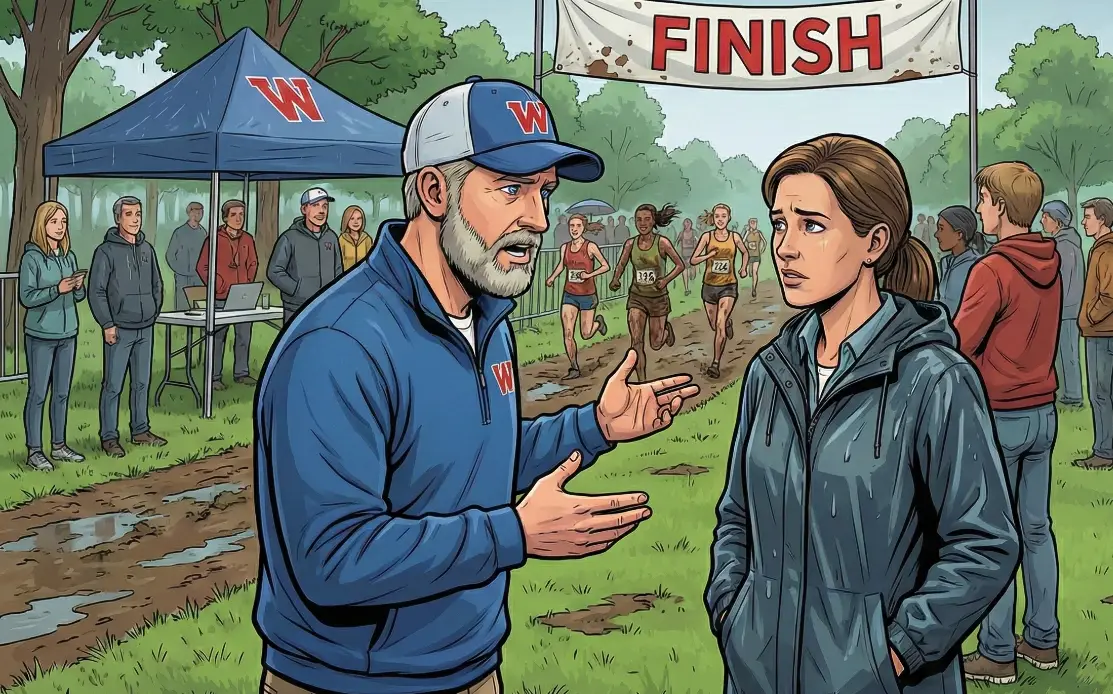
Set expectations before the season starts. A pre-season parent meeting covering your training philosophy, communication channels, and injury protocols eliminates the majority of mid-season conflicts. Establish a “24-hour rule”: parents should wait 24 hours after a meet before contacting you about concerns. Send a weekly email update so parents feel informed without requiring individual conversations. Remember that most parent friction comes from anxiety, not bad intent. When parents understand your system and trust your process, they become supporters rather than critics.
What is the best workout for high school distance runners?
There is no single best workout, but the long run and the tempo run are the two most important workouts in a high school distance coach’s toolbox. Each should be done once a week. Beyond that, a complete program needs easy aerobic runs, short, fast repetitions at roughly mile race pace, and strides for neuromuscular sharpness. The key is executing each workout at the correct intensity.
How do I keep high school runners motivated throughout a long season?
Motivation problems are usually training problems in disguise. Athletes who are chronically tired, injured, or running workouts that feel purposeless will disengage. The first fix is structural: build a periodized season with a clear arc, so athletes understand why they are doing each phase of training and can see progress over time. Beyond the physical, cultivate a team culture where athletes are competing for something larger than individual times. Team scoring, program legacy, and daily process goals all sustain motivation better than outcomes alone. For individual athletes, help them set personal performance goals that are within their control. A sophomore chasing a PR has just as much to run for as your top varsity runner. Award and recognize individual progress as much as you can.