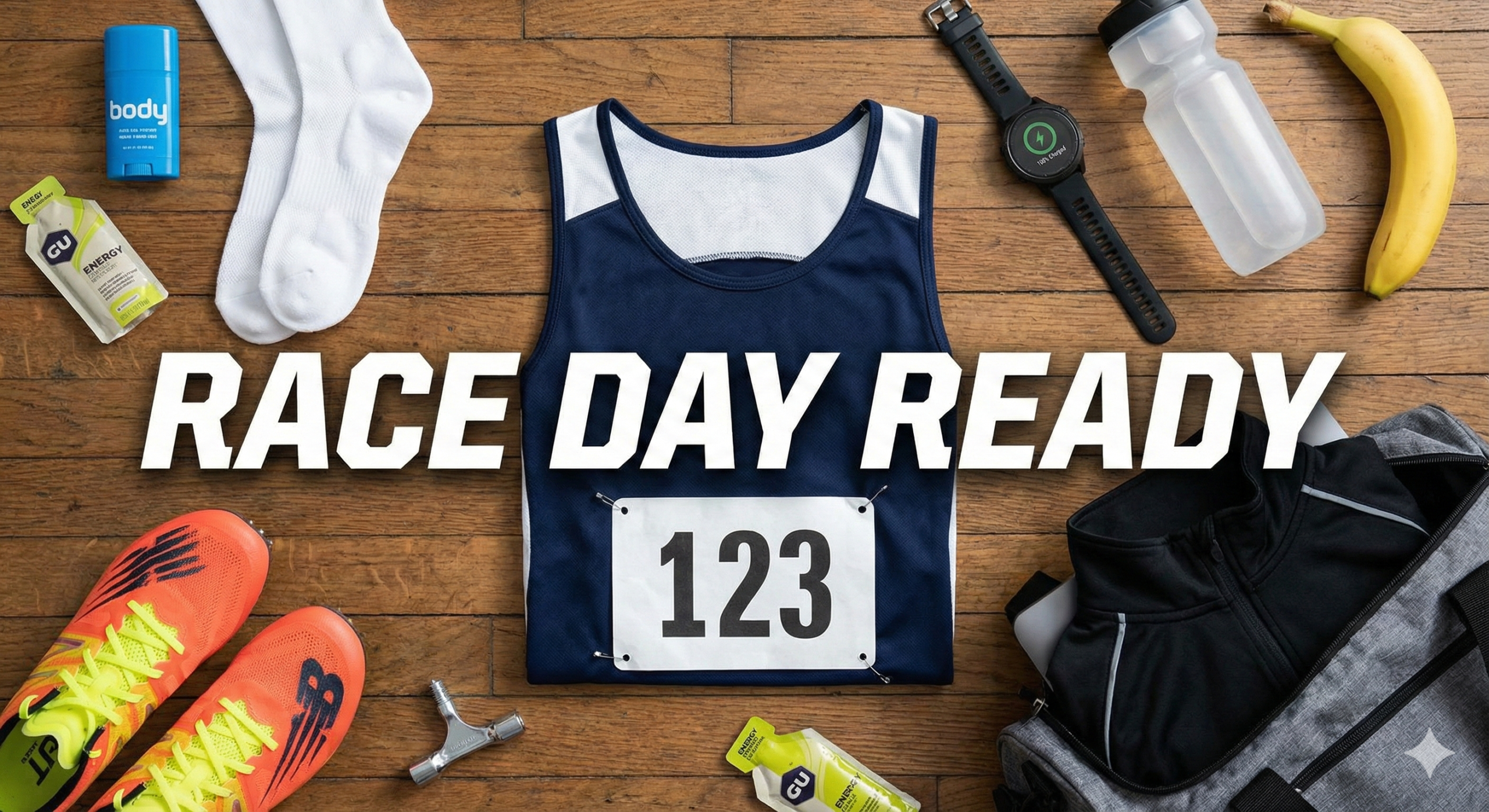
The hard training is done. The miles are in your legs. But the night before a big meet is often a stressful one. Doubts creep in and you start to wonder if you are really prepared. Here’s a easy way to take control of something. Use this race day packing list to help you sleep well knowing that you have everything you need to run your best on race day.
There is nothing worse than arriving at the track or the cross-country course and realizing you forgot your spikes, your bib, or your post-race fuel. The morning of a race should be focused on your mental game, not frantically searching for safety pins.
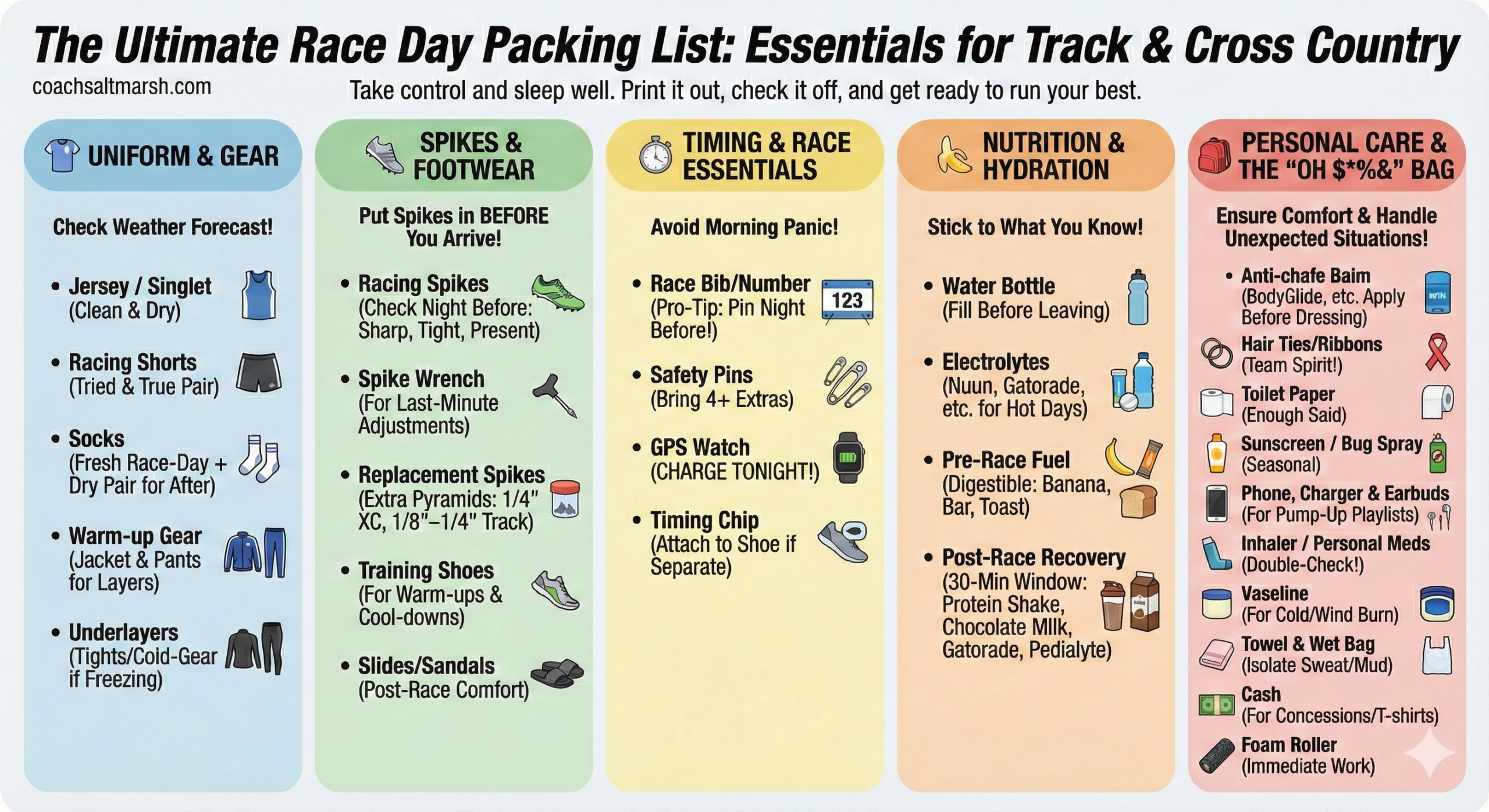
To help you sleep easier and arrive at the starting line confident and prepared, I’ve compiled the ultimate race-day gear checklist. Print it out, check it off, and get ready to run your best.
🎽 Uniform & Gear
Don’t leave your uniform decisions until morning. Check the weather forecast and pack accordingly.
Jersey / Singlet: Make sure it is clean, dry, and ready to go.
Racing Shorts: Race day is not the day to try brand new gear. Pack the pair you know doesn’t chafe or ride up.
Socks: Pack your lucky fresh race-day pair, plus an entirely separate, dry pair to change into immediately after the race.
Warm-up Gear: Layers are key. You need a jacket and pants to stay warm before the gun goes off and to put back on immediately after you cool down.
Underlayers: Check the forecast. If it’s going to be freezing, pack tights or cold-gear underlayers.
👟 Spikes & Footwear
For track and XC runners, footwear is your most critical tool. Treat it with care. And put your spikes in BEFORE you arrive at the race venue.
Racing Spikes: Do a physical check the night before. Ensure all spikes are present, sharp, and tightened securely.
Spike Wrench: Throw it in your bag just in case you need a last-minute adjustment trackside.
Replacement Spikes: Always have backups. Carry extra pyramids (usually 1/4″ for XC or 1/8″–1/4″ for track, depending on the surface rules).
Training Shoes: You won’t want to wear your spikes for warm-ups or cool-downs.
Slides/Sandals: The ultimate post-race comfort for tired feet on the ride home.
⏱️ Timing & Race Essentials
These are the tiny items that often cause the biggest panic if forgotten.
Race Bib/Number:Pro-Tip: If available, pin it onto your jersey the night before. This saves massive amounts of stress in the morning.
Safety Pins: Even if you pinned your bib already, bring 4+ extras. Someone on your team will inevitably need them.
GPS Watch: Put it on the charger TONIGHT. A dead watch is useless.
Timing Chip: If your race uses a separate shoe tag rather than one built into the bib, attach it to your racing shoes now.
🍌 Nutrition & Hydration
Stick to what you know. Race day is not the time to experiment with a new energy gel your teammate’s Dad gave her that morning.
Water Bottle: Fill it up before you leave the house.
Electrolytes: Bring your preferred mix (Nuun, Gatorade, etc.) particularly if it’s a hot day.
Pre-Race Fuel: Pack the easily digestible foods you know work for your stomach (banana, energy bar, plain toast).
Post-Race Recovery: The 30-minute window after finishing is crucial. Pack a protein shake or chocolate milk to kickstart recovery immediately at the finish line. Gatorade or Pedialyte.
🎒 Personal Care & The “Oh $*%&” Bag
These are the items that ensure comfort and can keep unexpected situations from becoming major embarrassments.
Anti-chafe Balm: BodyGlide (or similar) is essential. Apply it before you get dressed.
Hair Ties/Ribbons: Keep your hair out of your eyes and off your neck. Team spirit!
Toilet paper: Enough said.
Sunscreen / Bug Spray: Depending on the season and location.
Phone, Charger & Earbuds: For the bus ride and pump-up playlists.
Inhaler / Personal Meds: Double-check that these are in your bag if you need them.
Vaseline: If it is an exceptionally cold or windy XC race, a thin layer on exposed skin (cheeks, nose, legs) helps prevent windburn.
Towel & Wet Bag: Bring a plastic grocery bag or a dedicated trash bag to isolate sweat-soaked or muddy gear from the rest of your clean bag.
Cash: Just in case you want something from the concession stand or they are selling meet t-shirts.