Three rules that look like paperwork. One of them could save your athlete’s season — or their life.
It was a Tuesday dual meet at Exeter, a few springs back. Not a championship. Not a divisional. A regular-season meet on a cold April afternoon with rusty athletes and hopeful coaches.
One of my girls hit the 300-meter mark of the mile — the section by the javelin — and stopped. She had her hands up by her throat and a panicked look on her face. Her breathing was fast and shallow. She was having a panic attack.
The athletic trainer was there in about eight seconds. She looked at her. She took her by the elbow and walked her onto the infield as she started her assessment. I watched the head official take two steps toward them, clipboard in hand, working out in real time whether this constituted “aid” under the old rules. Would a 30s reset DQ her?
It did. Even though she was physically ready to rejoin the race and finish what she’d started she was disqualified for having had assistance from the trainer.
Starting with the 2026 season, you won’t have to think about it anymore.
The NFHS Track and Field Rules Committee met in Indianapolis last June and approved 11 rule changes for this coming outdoor season, all ratified by the NFHS Board of Directors. Three of them will directly affect how you run your program, manage your meets, and protect your kids. The full official release is on the NFHS website.
I want to give you the practical translation, because the official rulebook language can be a bit vague.
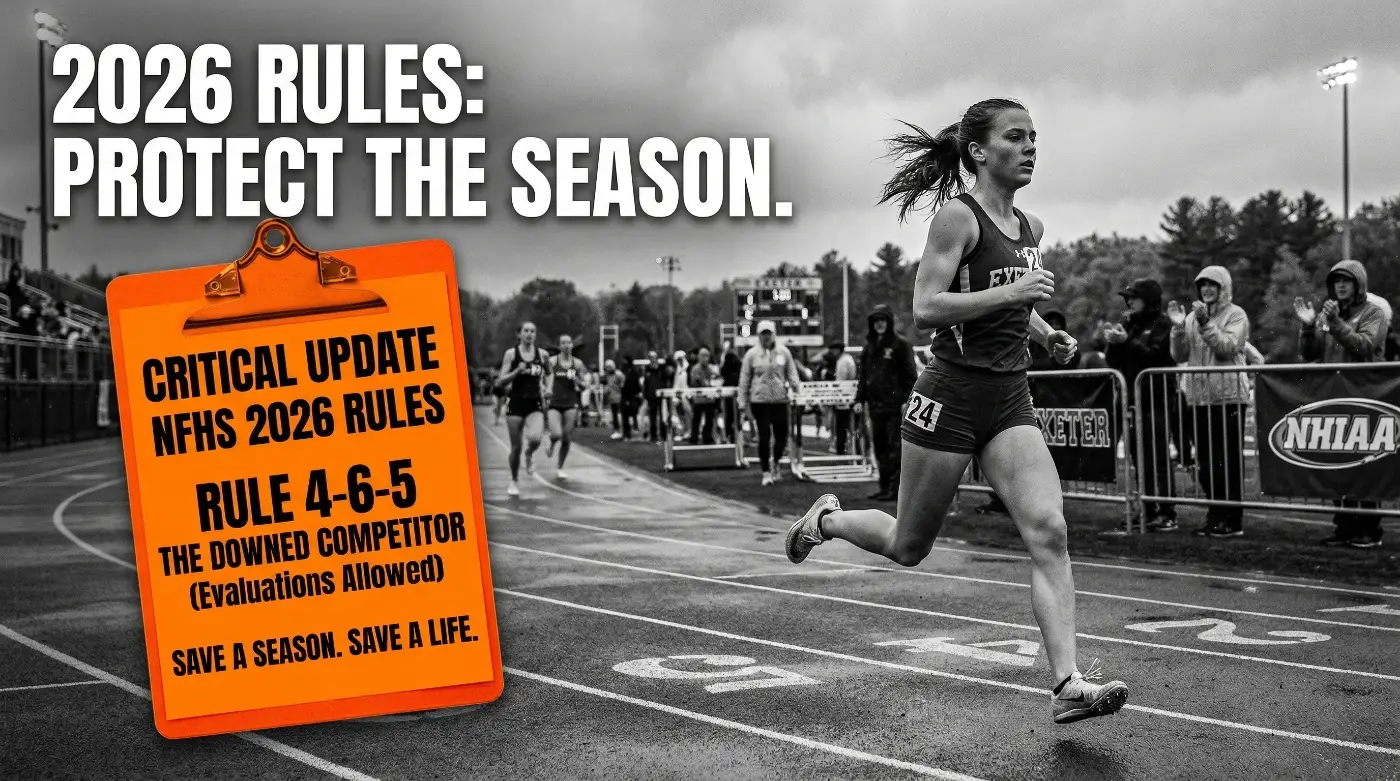
Rule 4-6-5: New Medical Evaluation Policy for Downed Runners
What the rulebook says: A health care professional designated by the games committee may evaluate a downed competitor on the course without resulting in disqualification, provided no assistance is given to the competitor in progressing along the course.
What it means on the ground:
This is the one that matters most. Under the old framework, the moment a coach, trainer, or any non-competing person made contact with an athlete to assess them during an event, the athlete was disqualified.
The practical result? Programs were, in effect, penalized for prioritizing safety. Trainers held back. Officials froze. Nobody wanted to make the call.
The 2026 language separates evaluation from assistance forward. A licensed ATC can now physically assess a fallen runner for a concussion or acute injury without ending their race. If the athlete is cleared, they can legally finish. Their time will reflect every second of that evaluation — the clock does not stop for anyone — but they will record a legal finish and can score for your team.
The gray area you need to know about:
This rule hinges on the phrase “designated by the games committee,” and that’s where New Hampshire’s landscape creates a potential problem. For NHIAA Divisional meets and the Meet of Champions, you’ll have a licensed ATC on site. The rule works exactly as intended.
For a Tuesday dual meet at a Division III school with no ATC? You may not have a “designated health care professional” to invoke this rule. If a coach or parent steps onto the track to check on a collapsed runner, the old-world interpretation likely applies. An ATC, physician, or nurse formally designated in the pre-meet setup is the mechanism that makes this protection available.
My recommendation: before every meet you host this spring, explicitly confirm with your head official who the designated healthcare professional is and get them on the pre-meet paperwork. If you’re traveling to a smaller school, ask the same question before your athletes take the line. The protection only exists if the mechanism is in place.
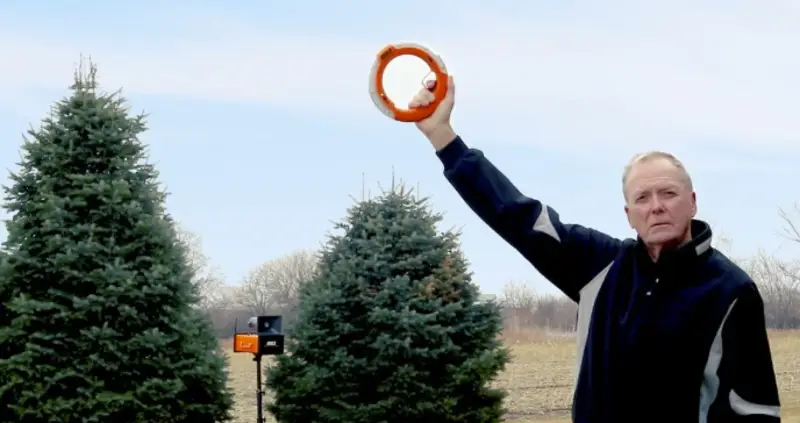
Rule 3-8-6: Electronic Starting Devices and .22 Caliber Blanks
This rule addresses something that has been a budget headache for meet directors for the last several years. The traditional .32 caliber starting blanks have become genuinely difficult to source and super expensive when you find them. Expanding the permissible range of calibers and formally recognizing electronic starting systems, gives track and field programs more options.
The potential weather problem:
Here’s the practical reality for anyone who has run an April meet on the Seacoast: electronic starting systems depend on batteries, cables, and portable speakers. You know what doesn’t care about 40-degree rain and a 20-mph wind off the Atlantic? A mechanical pistol.
What I expect to see is a split approach. Traditional mechanical pistols (possibly dropping to less expensive .22 caliber) will remain the standard for regular-season dual and tri-meets where reliability is everything and the infrastructure isn’t there for electronics. The electronic systems will find their home at FAT-timed invitationals and championship-level competition where the investment in weatherproofing and backup systems is justified.
One genuine technical concern:
Experienced sprint coaches will point out, correctly, that athletes are conditioned to react to the specific acoustic profile of a traditional blank — the sharp crack, the flash, the consistent timing of the sound reaching athletes in outer lanes. Electronic tones carry differently in outdoor stadiums, particularly with wind. For hand-timed meets specifically, the strobe flash used by some electronic systems can be genuinely harder to read in direct sunlight than the traditional smoke-and-flash of a blank.
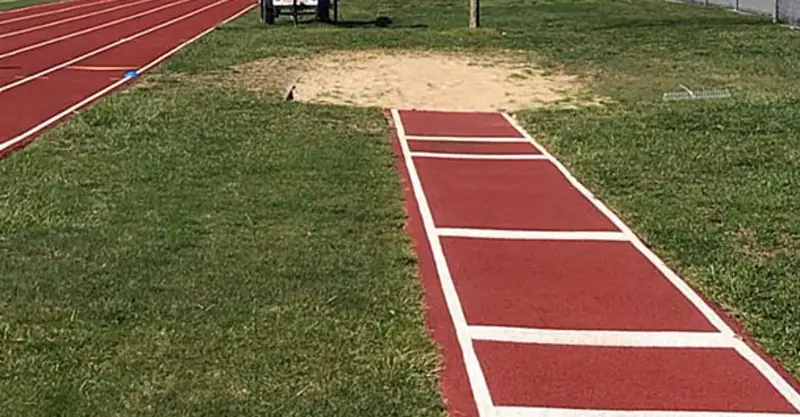
Rule 3-2-3k: Flexible Takeoff Board Placement for Horizontal Jumps
What the rulebook says: Games committees are granted explicit authority to dictate takeoff board placement in horizontal jumps to accommodate different levels of competition, consistent with how opening heights are established in vertical jumps.
What it means on the ground:
If you’ve ever watched a freshman long jumper try to reach the sand from a varsity board — and watched them chip the end of the runway instead — you already understand why this matters. Standard takeoff board distances are designed for athletes who have the approach speed and phase length to cover that ground. Developmental athletes often don’t.
This rule grants games committees the same board-placement authority they already have for opening heights in the high jump and pole vault. It allows the board to come forward for JV and freshman flights without requiring a separate meet or a facility modification.
Where this will and won’t apply:
In New Hampshire, this flexibility will live almost entirely in the regular season. The NHIAA will not be moving takeoff boards at Divisional meets or the Meet of Champions. State-level competition requires standardized conditions to preserve competitive equity and the integrity of state records. That’s how it should be. You don’t want 2 different boards at the Meet of Champions.
The genuine benefit is at the local level. If you’re hosting a tri-meet at your facility, you — as the host coach effectively functioning as the games committee — can now legally establish a closer board for your freshman flight, keep it in the appropriate place for varsity, and document both measurements. The developing athletes get a legal mark.
The traditionalist pushback:
The “participation trophy” argument will come up in coaches’ meetings, and I’ll give it its due: there is a real argument that if an athlete cannot safely project to the standard varsity board, they may not yet be ready for high school competition. Altering the facility to accommodate developmental athletes at the same meet as varsity competitors introduces an inconsistency of conditions that purists find uncomfortable.
My response: We are talking about developing JV and freshman athletes, and preventing a physical safety risk. I’m good with it.
The Bottom Line for TRACK AND FIELD Coaches This Spring
Three rule changes. Each one solves a real problem. None of them is complicated once you understand the mechanism.
For Rule 4-6-5, the downed competitor rule: confirm your designated healthcare professional before every meet you run or attend. The protection exists — but only if you’ve done the paperwork.
For Rule 3-8-6, the starting mechanism changes: Know your facility, know your weather, and keep a backup mechanical pistol in your bag.
For Rule 3-2-3k, the horizontal jump boards: use it for your developmental athletes in the regular season. Document your board placements. Brief your officials before the field events begin. And let the varsity board stay where it belongs for your top jumpers.
Good luck this season!
- NFHS Official 2026 Track and Field Rules Changes Release: nfhs.org
- NFHS Track & Field 2026 Points of Emphasis: nfhs.org/resources