Why Your Athlete Needs a “Super Trainer” to Prevent Shin Splints This Spring
Every March, I have the same conversation with about a dozen different families.
It goes something like this: “Coach, my kid’s shin is killing him. He had a great indoor season and now we’re three weeks into outdoor practice and he can barely finish a workout.”
I already know the answer before I hear the rest. They ran 200m flat ovals all winter in something light and snappy, and now they’re logging five-day weeks on asphalt in the same pair. The shin is telling them the truth — the training load changed, but the footwear didn’t.
This is exactly why the super trainer category exists, and why it matters more for high school legs than almost anyone else.
What Is a “Super Trainer” and Why Should a HS Athlete Care?
A super trainer is essentially a shoe built around one idea: what if we took the performance foam technology from elite racing shoes — the stuff that makes a $250 race-day flat feel illegal on tired legs — and put it into a high-mileage daily trainer?
The result is a shoe with a massive stack of responsive foam (40mm+ in the heel), designed not to make you faster on race day, but to make 50-mile training weeks feel survivable on a 16-year-old’s developing skeleton.
For the high school 1600m/3200m athlete running 30-45 miles a week, this isn’t a luxury — it’s an injury prevention tool. The connective tissue of a 15 or 16-year-old is not the same as a college senior’s. Stress fractures, shin splints, and Achilles flare-ups happen when mileage ramps up faster than tissues can adapt. A great super trainer buys those tissues the recovery time they need between sessions.
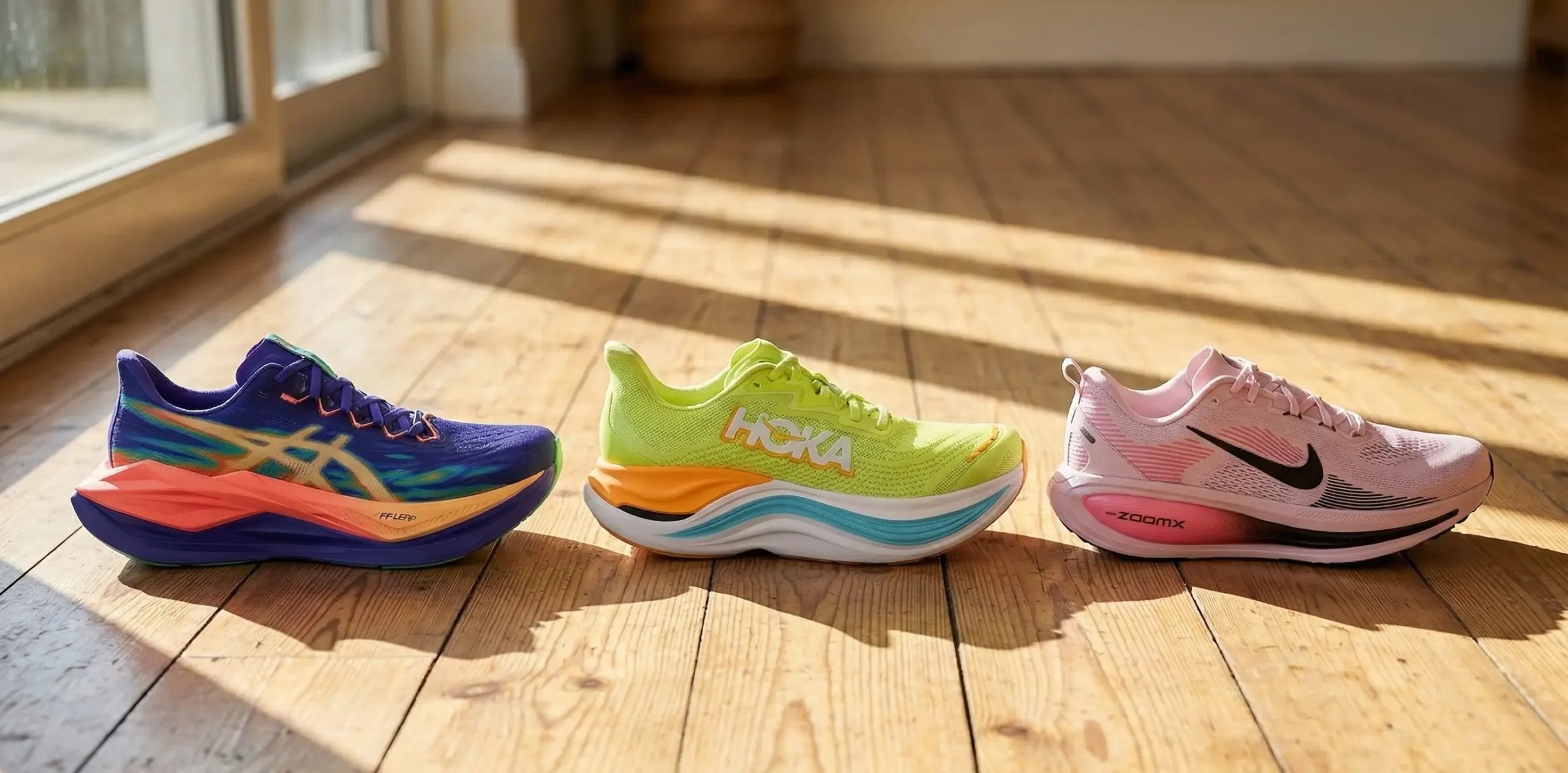
Here are the three shoes I’m recommending for Spring 2026.
Best Super Trainers for High School Runners: Spring 2026 Picks
1. The Workhorse: ASICS Superblast 3
Best for: Long runs, tempo work, “rhythm” intervals
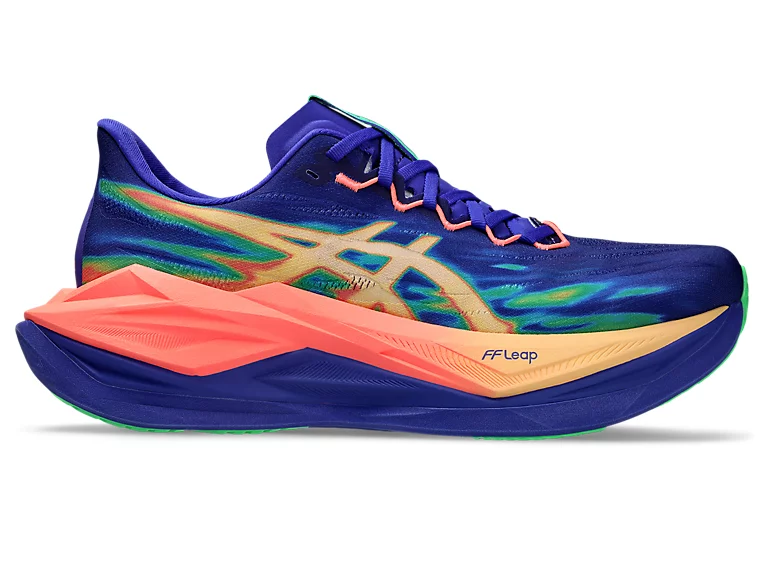
The short version: If an athlete in my program is going to buy one shoe for outdoor season, this is the one.
The Superblast series has been the gold standard of the super trainer category since the original dropped in 2022 and promptly sold out everywhere. The third generation — which just hit shelves as of late February 2026 — is a meaningful step forward, not just a refresh.
The headline change is the foam. ASICS swapped in their newest compound, FF Leap (an A-TPU material previously reserved for their $250+ race-day MetaSpeed series), and the difference is immediately noticeable. The shoe is softer and more energetic from the first stride. Unlike the Superblast 2, which needed 50+ miles to really wake up, the 3 performs right out of the box. ASICS reports a 15% improvement in energy return over the previous model, and that tracks with what reviewers who’ve already put miles on it are saying.
What makes this work for high school athletes specifically:
- 46.5mm heel stack / 38.5mm forefoot — That’s a massive cushion platform that absorbs the repetitive impact of logging serious mileage on hard surfaces.
- 8.4 oz — It’s light enough to use for threshold work and controlled intervals.
- 8mm drop — Reasonable for most foot strike patterns. Not as extreme as the high-drop options that can cause their own problems.
- Wider toe box than the v2 — The Superblast 2 ran narrow. The 3 fixes this, which matters for growing feet.
Coach’s note: Where I see this shoe shine is during longer threshold runs on the road, progression long runs, and aerobic cruise intervals. It has enough pop to feel engaged at a 6:30 pace, but enough cushion to protect the legs on a long, easy 10-miler. That’s a narrow window most shoes can’t hit. The Superblast 3 lives in it.
The one caveat worth mentioning: because the new foam is softer, a handful of early testers noted some lateral instability at very slow paces. If your athlete is a highly overpronating heel-striker, try this one on before committing. For the efficient mid-foot striker who makes up the bulk of serious HS distance runners, it’s outstanding.
Price: $210 on Amazon
2. The Leg Saver: Nike Vomero 18
Best for: Easy/recovery days, day-after-invitational runs, beat-up legs
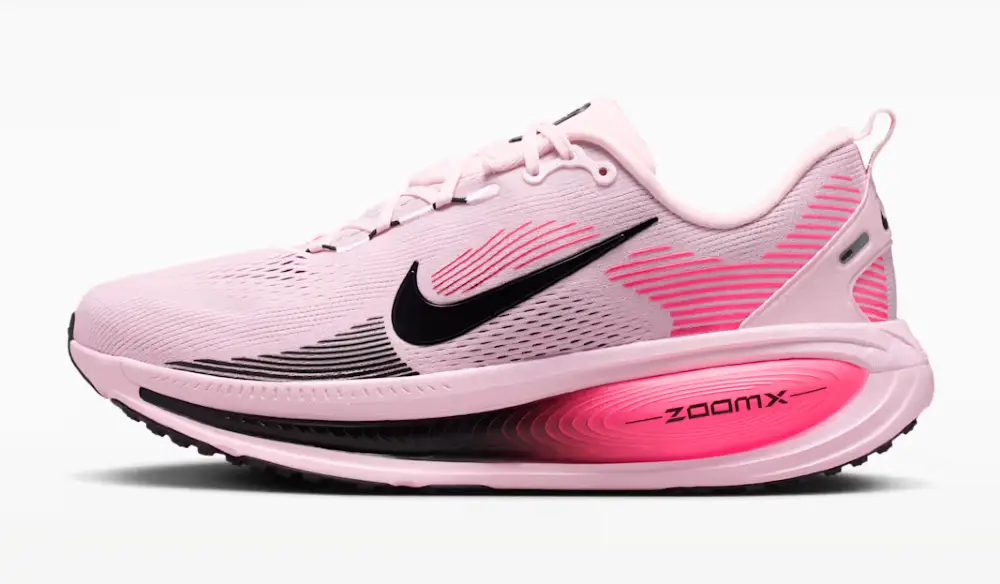
The short version: The shoe your athlete should be wearing Monday morning when they’re still sore from Saturday’s meet.
Nike overhauled the Vomero line in early 2025, and the 18 became a genuine max-cushion recovery tool. They stacked ZoomX foam (their top-tier PEBA-based race foam, the same stuff in the Alphafly) on top of a thick bed of ReactX, giving you a dual-foam midsole that is plush on impact and responsive enough to not feel dead.
What makes this the recovery day choice:
- 46mm heel stack — Among the tallest Nike has ever produced. This is serious shock absorption.
- ZoomX + ReactX — The ZoomX layer provides a gentle energy return; the ReactX base gives it structure. Neither makes you feel like you’re running in sand.
- 10mm drop — Higher drop naturally encourages a more rearward loading pattern, which reduces calf and Achilles demand. On days when those structures are beat up, this is what you want.
- ~10.5 oz — It’s heavier than the Superblast 3. The weight encourages a slower, more deliberate gait. Athletes who run their easy days too fast (which is most of them) will naturally back off the pace in this shoe.
Coach’s note: In 2026, I’m telling every athlete in our program: easy days are easy days. Some reviewers have knocked it for not feeling fast or being exciting. It’s not supposed to be exciting. It’s supposed to save your legs.
One sizing note: a few reviewers have flagged it running slightly snug. If your athlete is in-between sizes, go half-up.
Price: $141 on Amazon
The stack height of modern shoes can limit the Achilles tendon’s range of motion.
This becomes a performance bottleneck (and injury risk) when transitioning to zero-drop spikes. In a perfect world, here is the protocol:
- Super Trainers: Use for recovery days and long easy runs.
- Traditional Trainers: Use for threshold and tempo work.
- Spike Integration: Wear spikes during speedwork 1–2x weekly to adapt before racing.
- Grass Strides: Run strides barefoot on grass 3x weekly to build tendon resilience.
3. The Dirt Road Cruiser: Hoka Skyward X
Best for: High-mileage 3200m specialists, aerobic maintenance runs, athletes with Achilles/calf history
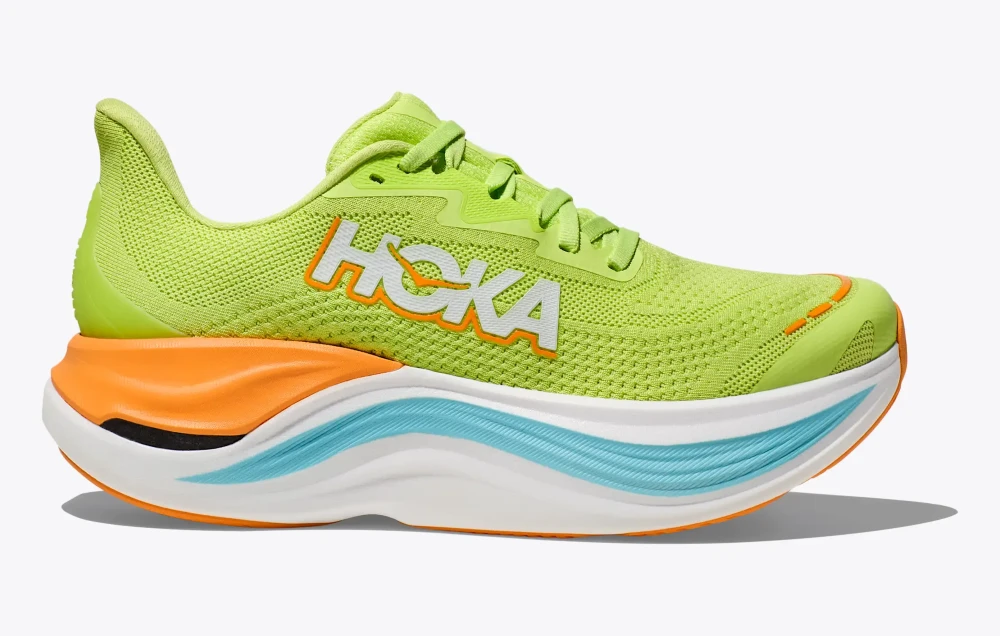
The short version: The most protective shoe on this list, with a unique carbon suspension system that earns its price tag.
The Skyward X is Hoka’s answer to the super trainer category, and they did not go halfway. This shoe has 48mm of heel stack built around a genuinely clever piece of engineering: a convex H-shaped carbon fiber plate sandwiched between a PEBA top layer and a supercritical EVA frame underneath.
That plate isn’t there to make you faster the way a racing flat’s carbon plate works. It functions as a suspension system stabilizing the massive foam stack, maintaining the shoe’s aggressive rocker geometry, and rolling your foot forward through each stride in a way that dramatically reduces load on the Achilles tendon and calf.
For the right athlete, this is remarkable:
- 48mm/43mm stack — On rough asphalt or dirt roads, the Skyward X absorbs shock that would otherwise transfer directly into shin and calf.
- PEBA + supercritical EVA midsole — Better energy return than conventional foam; more durability than a pure-PEBA racing shoe.
- Rocker geometry — The pronounced forward roll reduces peak forces on the Achilles. For athletes with any history of tendon issues, this is significant.
- 11.3 oz — It’s heavy. This is a dedicated easy/aerobic day shoe. Don’t expect to run a workout in it.
Coach’s note: I steer this shoe toward the high-mileage 3200m kids and cross country runners who are already logging 40-50 mile weeks, and especially toward athletes who have a history of Achilles tightness coming off a hard indoor season. If your athlete is sore in that lower leg area in the first three weeks of outdoor practice, the Skyward X on easy days can make a meaningful difference. It’s too much shoe for the track, but on the back roads and rail trails, it’s excellent.
One thing to be aware of: Hoka’s fit tends to run narrow.
| Category |
Coach’s Pick
ASICS
Superblast 3
|
Nike
Vomero 18
|
Hoka
Skyward X
|
|---|---|---|---|
| Best For | Tempo + Long Runs | Recovery + Easy Days | Aerobic Maintenance |
| Midsole Foam | FF Leap + FF Blast+ | ZoomX + ReactX | PEBA + Supercritical EVA |
| Stack HeightHeel / Forefoot | 46.5mm / 38.5mm | 46mm / 36mm | 48mm / 43mm |
| Drop | 8 mm | 10 mm | 5 mm |
| WeightMen’s US 9 | 8.4 oz | ~10.5 oz | 11.3 oz |
| Carbon Plate | — No | — No | ✔ H-Shaped Suspension |
| Price | $210 | $141 | $225 |
| Check Price | View on Amazon ↗ | View on Amazon ↗ | View on Amazon ↗ |
Affiliate disclosure: Some links on this page are Amazon affiliate links. If you purchase through these links, I may earn a small commission at no extra cost to you. I only recommend shoes I would put on the athletes I coach.