
Running in the Heat: Pace Adjustments and Safety Limits
Running in the Heat: How Much to Slow Down, and When to Stop
Why dew point matters more than temperature, exactly how much to adjust pace, and the safety line every coach needs to hold.
It is mid-July. Your team is three weeks into summer base. You have a tempo run on the schedule, it is 88 degrees, the dew point is 74, and one of your freshmen thinks heat is something you get used to.
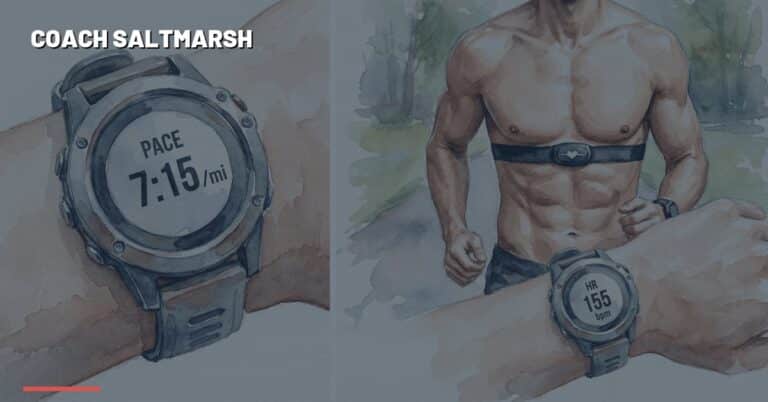
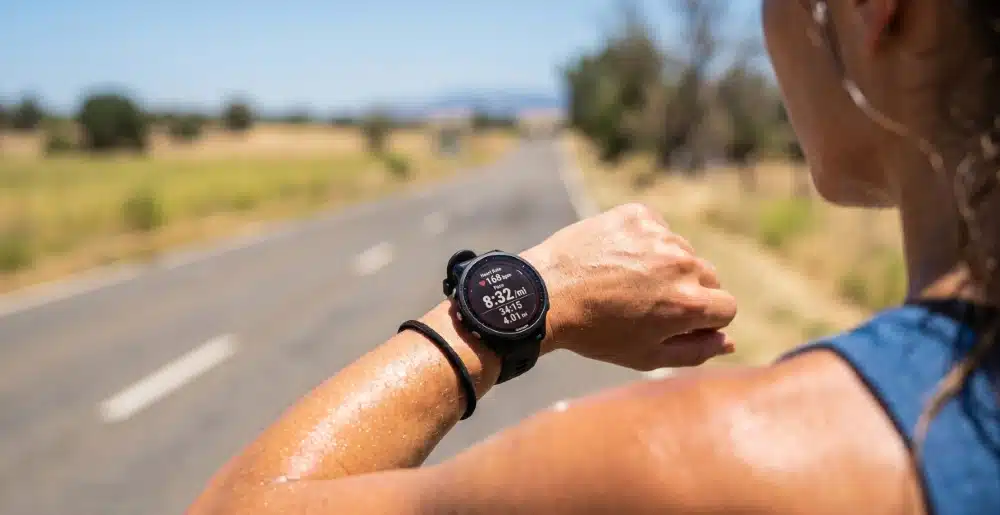
She is going to finish that workout twenty seconds per mile off her October pace, with a heart rate fifteen beats higher than normal, and no idea why. If nobody explains it, she will read the number on her watch as failure.
Heat is not an obstacle to push through. It is a training variable to manage. Coaches who understand the difference get more out of the summer. The ones who don’t spend September wondering why the team looks flat.
This page covers the mechanism, the pace adjustments, the acclimatization window, and the part most articles skip — where the line is, and what to do when a day crosses it.
Why heat slows runners down
A runner at hard effort produces fifteen to twenty times the heat they produce sitting still. All of it has to go somewhere, or core temperature climbs into territory where performance collapses and then where things get dangerous.
Sweat does not cool you. Evaporating sweat cools you. Sweat that drips off the skin does almost nothing.
That single distinction drives everything else on this page.
When the air is dry, sweat evaporates fast, pulls heat off the skin, and the system works. When the air already holds all the moisture it can, evaporation slows or stops. The sweat runs off. The cooling stalls.
The body’s answer is to push more blood to the skin to shed heat by radiation. That blood comes out of the working muscles. Less oxygen reaches the legs, the heart beats faster to supply skin and muscle at once, and the same pace now costs more. Research on exercise in the heat shows heart rate climbing ten to twenty beats per minute in humid conditions compared with dry air at the same intensity.
Radiation has its own ceiling. Once air temperature approaches skin temperature — roughly 90 to 93 degrees — that route shuts down too, and sweat is all that’s left.
So when an athlete’s easy run feels like a tempo, they are right. At the same speed, in bad air, the physiological cost genuinely went up.
Dew point, not humidity
Most runners check relative humidity. It is the wrong number, and understanding why is the most useful thing on this page.
Relative humidity describes how much moisture the air holds compared with how much it could hold at that temperature. Air capacity changes as the day warms, so the percentage swings even when the actual moisture has not moved at all. You can read 80 percent at seven in the morning and 45 percent at noon in the same air mass. That tells you nothing about how the run will feel.
Dew point is the temperature at which air saturates and moisture starts to condense. It measures how much water is in the air, and it does not swing with temperature. A dew point of 70 means the air is loaded, which means sweat cannot evaporate well, which means cooling is compromised.
| Dew point | Conditions |
|---|---|
| Below 55°F | Ideal. Sweat evaporates freely. |
| 55–64°F | Noticeable. Easy runs fine; hard work costs more than the pace suggests. |
| 65–69°F | Severe. Both easy and hard running need real adjustment. |
| 70°F and up | Dangerous. Run by effort. Treat the day with caution. |
A 90-degree day at a 45-degree dew point is easier to run in than a 75-degree day at a 72-degree dew point. Temperature barely matters when the air is dry. High dew point at moderate temperature is where athletes get hurt, because it does not feel as dangerous as it is.
Check the dew point near the time you will actually run. It moves through the day.
How much to slow down
This is the chart the heat pace calculator runs on. Use the chart to understand the logic; use the calculator to get an exact pace for a specific athlete.
| Dew point | Conditions | Pace adjustment |
|---|---|---|
| Under 55°F | Safe | None |
| 55–59°F | Moderate | 1% |
| 60–64°F | High | 3% |
| 65–69°F | Severe | 5% |
| 70–74°F | Dangerous | 8% |
| 75°F and up | Extreme | 12%+ — run by effort or move the session |
The hot-but-dry exception. Dew point is the main driver, but raw heat still counts. Above 85 degrees, apply at least a 3 percent adjustment even when the air feels dry. Radiant heat loads the body regardless of humidity.
Applying it. At a 66-degree dew point — severe, 5 percent — an athlete whose easy pace is 8:00 targets about 8:24 and trusts the effort. At 58 degrees the adjustment is 1 percent, five seconds, barely a change. At 72 degrees it is 8 percent, roughly 38 seconds, which is the difference between an easy run and a grind.
These are starting points. Body size, fitness, sun, wind, and acclimatization all move the real number. A bigger or less-acclimatized runner needs more. The instruction I give my team is the same one that survives every edge case: on a hot day, run the effort, not the pace.
Skip the math
Enter today’s conditions and an athlete’s normal pace, and the calculator returns the adjusted target with the conditions zone flagged. It is the fastest way to hand a runner a number they can trust on a hot morning.
Prefer to listen? I broke down the dew point math and the hydration numbers on the podcast:
Why forcing the pace backfires
This is the part that matters for development, and the reason heat management is not about comfort.
Hold your normal pace in oppressive conditions and you do not just have a hard run. You change what the run is.
An easy aerobic run at its normal pace on a high-dew-point day becomes a threshold effort, because the physiological cost has climbed into a different zone even though the watch reads the same. The athlete banks fatigue meant for a hard day on a day that was supposed to be easy. Recovery suffers. Do it across a summer and they arrive in September flat instead of fit.
The whole point of an easy day is staying aerobic. Chasing a number the weather has made meaningless destroys it.
Running by effort or heart rate in the heat is not soft. It is correct. Hold the Zone 2 heart rate range and an athlete will slow to roughly the pace this chart predicts on their own, and the run does what it was built to do.
Acclimatization: ten to fourteen days
Heat is a trainable stress. Give the body consistent, sensible exposure and it adapts — meaningfully within ten to fourteen days, with most of the change arriving in the first week.
The adaptations are real and measurable:
- Plasma volume expands by roughly 10 to 12 percent in the first several days
- Sweating starts earlier, at a lower core temperature
- Sweat rate rises and the sweat gets more dilute, so less sodium goes with it
- Heart rate drops 8 to 12 beats at the same effort
- Core temperature drops 0.3 to 0.5°C at the same effort
In plain terms: the hot run that wrecked an athlete in early June feels manageable by late June, if they have been running through it.
Three things worth knowing. Days one through four feel worst by design — push through sensibly and it improves fast. The adaptation reverses, fading over two to four weeks once you stop, plasma volume first, so two hot sessions a week preserves it through a cool spell. And acclimatization raises sweat rate, so fluid and electrolyte needs go up, not down.
The protocol
Days 1–7. Cut planned volume and intensity by 20 to 30 percent. This is not optional. Asking athletes to run a full preseason load in July heat before they have adapted is asking for heat illness.
Days 8–10. Return to planned volume at heat-adjusted paces.
Days 11–14. Full load, heat-adjusted paces. Adaptation is largely complete.
The common mistake is treating week one of summer practice as week one of a training cycle. It isn’t. It is an acclimatization phase, and the athletes who blow through it are the ones who hit week four flat. For structuring the base itself, see the summer training plan generator.
Hydration
Dehydration amplifies every mechanism above. A 2 percent loss of body weight costs roughly 3 to 4 percent of aerobic performance. At 3 percent the cardiovascular strain is meaningful. Past 4 percent, heat illness risk climbs sharply.
For a 130-pound runner, 2 percent is about 42 ounces — three water bottles. On a humid July morning at ninety minutes of training, that is not extreme. It is normal, and it is preventable.
Before training. Sixteen to twenty ounces in the two hours beforehand. Urine should be pale yellow at the start of practice. Amber means the athlete arrived already down.
During. Six to eight ounces every fifteen to twenty minutes. Past 45 to 60 minutes, add electrolytes.
Do not let athletes drink on thirst alone. Thirst lags behind actual deficit, especially in teenagers. By the time they are thirsty they are behind.
After. Full replacement takes about 150 percent of what was lost, over two to three hours. Water is enough under ninety minutes. Past that, sodium matters — heavy sweating depletes it, and sodium is what drives both thirst and fluid retention.
On sports drinks: water is fine for most sessions. For hard work over an hour in real heat, a diluted electrolyte drink at 100 to 200 mg sodium per serving beats water for retention. Skip anything above 8 percent carbohydrate; it sits in the stomach.
Weigh athletes before and after one hard summer session. Pounds lost times sixteen is roughly the ounces they need back. Do it once and they stop arguing about water breaks. The rehydration calculator handles the arithmetic.
Modifying the session
| Conditions | Easy | Threshold / tempo | Intervals |
|---|---|---|---|
| Temp <80°F, DP <60°F | Full | Full | Full |
| Temp 80–85°F, DP 60–65°F | Full | +10–15 sec/mile | +3 sec/rep, one rep fewer |
| Temp 85–90°F, DP 65–70°F | +10 sec/mile | +20–25 sec/mile, or heart rate | +5–7 sec/rep, two reps fewer |
| Temp >90°F, DP 70–74°F | +20–30 sec/mile, shorten | Heart rate only, cut volume 20% | Aerobic alternative |
| Any temp, DP >75°F | Aerobic easy only | Convert to aerobic volume | Cancel or pool run |
| Heat index >103°F | Reconsider | Cancel | Cancel |
Threshold work. Cut total volume 15 to 20 percent. Add a recovery interval between sets. Move to shade if you have it — direct sun adds 10 to 15 degrees to the effective load.
Interval work. Extend recovery by 30 to 50 percent. Cut rep count by 20 to 25 percent. A clean six by 400 in heat beats a sloppy ten.
Easy runs. No pace target at all. Heart rate ceiling at 75 percent. Shorten duration before you touch intensity — a 45-minute easy run at 85 degrees and a 72-degree dew point already costs what a much longer October run would.
On mileage
The number on the training log does not capture what heat adds. A 40-mile week in July is not a 40-mile week in October, and treating them as equal is how coaches walk a team into overtraining while the spreadsheet looks fine.
Plan the summer progression with that in mind. The teams that arrive fresh in October are not the ones that posted the biggest August numbers.
Scheduling
6:00–8:00 a.m. Lowest dew point of the day. Best window for quality work. After the sun has been up two hours, surface radiation starts to matter.
6:30–8:30 p.m. Cooler air, but the dew point often has not moved. Better than midday, worse than morning.
11 a.m.–3 p.m. No hard training. Easy running only, with full adjustments.
The safety line
Pace adjustment is the everyday tool. But heat runs on a continuum that ends somewhere serious, and knowing where the line sits is the most important part of a coach’s summer job. Exertional heat illness runs from cramps to heat stroke, and heat stroke escalates fast.
Modify when the dew point reaches 65°F, when it is the first hot stretch of the year and nobody is acclimatized, or when a hard session falls on an oppressive day. Move quality to the coolest hour, cut volume, add rest, or turn it into an easy day.
Cancel or move indoors when the dew point reaches 70°F, especially with direct sun and still air. That combination is the classic high-risk one. Pool running or an early shift protects fitness without the risk.
Heat exhaustion
Heavy sweating, weakness, cold and clammy skin, fast weak pulse, nausea, possible fainting.
Stop the athlete. Move them to shade or air conditioning. Lie them down with legs elevated. Cool with wet cloths and ice at the neck, armpits, and groin. Cool fluids if they are conscious and not nauseous. Stay with them.
Heat stroke — call 911
Core temperature above 103°F, hot skin that may be dry or soaked, rapid strong pulse, confusion, possible unconsciousness.
This is a medical emergency. Call 911. Start cooling immediately with whatever is available — cold water immersion is the most effective method there is. Do not give fluids to anyone confused or unconscious. Do not leave them alone.
What to watch for before it gets there
- An athlete who was sweating heavily and stops
- Confusion, odd behavior, or trouble following simple instructions
- Pale, clammy skin
- Severe headache or dizziness
- Goosebumps or chills in the heat
- Muscle cramps, especially in the legs
Any change in mental status is a red flag for heat stroke. When you are not sure, cut the run short. No July workout is worth it.
Write the policy in May
Put your hot-weather rules in writing before the season starts: the dew point at which you modify, the dew point at which you cancel, mandatory water breaks, and a stated expectation that athletes report feeling off instead of toughing it out.
That last one is culture, and it comes from you. If athletes believe stopping is weakness, they will not stop. Set it before the first practice, not during it.
Print the dew point chart and post it where the team gathers. When athletes understand that running 25 seconds per mile slower in humid air is the correct response and not a failure, they stop fighting the weather and start working with it.
The decision is easy to make calmly in May. It is much harder at four o’clock on a 95-degree afternoon in August with a workout on the board.
NFHS – Heat Acclimatization and Heat Illness Prevention Position StatementFrequently asked questions
How much does heat slow running pace?
Dew point drives it. Below 55°F there is no penalty. It climbs in steps: about 1 percent at 55–59°F, 3 percent at 60–64°F, 5 percent at 65–69°F, 8 percent at 70–74°F, and 12 percent or more above 75°F. For an 8:00 per mile runner, 8 percent is roughly 38 seconds. Air temperature above 85°F adds at least 3 percent even in dry air.
Why does dew point matter more than humidity?
Relative humidity is a percentage that swings with temperature through the day, so it is unreliable. Dew point measures how much moisture is actually in the air and holds steady regardless of temperature, which makes it a far better predictor of whether sweat can evaporate.
What dew point is too hot to run?
Below 55°F is ideal. Above 65°F, adjust pace. Above 70°F, most runners should go by effort rather than pace and treat the day with real caution. A mid-70s dew point with high heat is dangerous for hard outdoor work.
Should athletes slow down or run by heart rate?
Either, and they converge. Hold the normal easy or Zone 2 heart rate and the pace will fall to roughly what the chart predicts on its own. The mistake is forcing the usual pace, which turns an easy run into an unplanned hard one.
How long does it take to adapt to running in heat?
Ten to fourteen days of consistent running in it, with most of the adaptation in the first week. The gains fade over two to four weeks once you stop, so a couple of hot sessions a week maintains them.
Is a 90-degree dry day worse than a 75-degree humid day?
No. A 90°F day at a 45°F dew point is easier to run in than a 75°F day at a 72°F dew point. Dry air lets sweat evaporate, which is what actually cools you. High dew point at moderate temperature is where athletes most often get into trouble, because it does not feel as dangerous as it is.
Tools
- Heat Pace Calculator — adjusted pace for today’s conditions
- Rehydration Calculator — fluid replacement from weight change
- Summer XC Training Plan Generator — build the base around the weather
This guide covers training decisions and is not medical advice. Suspected exertional heat stroke is a medical emergency. Cool aggressively and call 911.