
What Mary Cain’s Story Teaches Us About Coaching Girls: A Guide for High School Cross Country Coaches
I’ve been coaching high school cross country and track for over two decades. Many of them are still running. Some of them aren’t. I’ve come to believe that the difference between those two outcomes has far less to do with talent, mileage, or training principles than most coaches want to admit. It has to do with whether the adults in the room understood what they were actually responsible for.
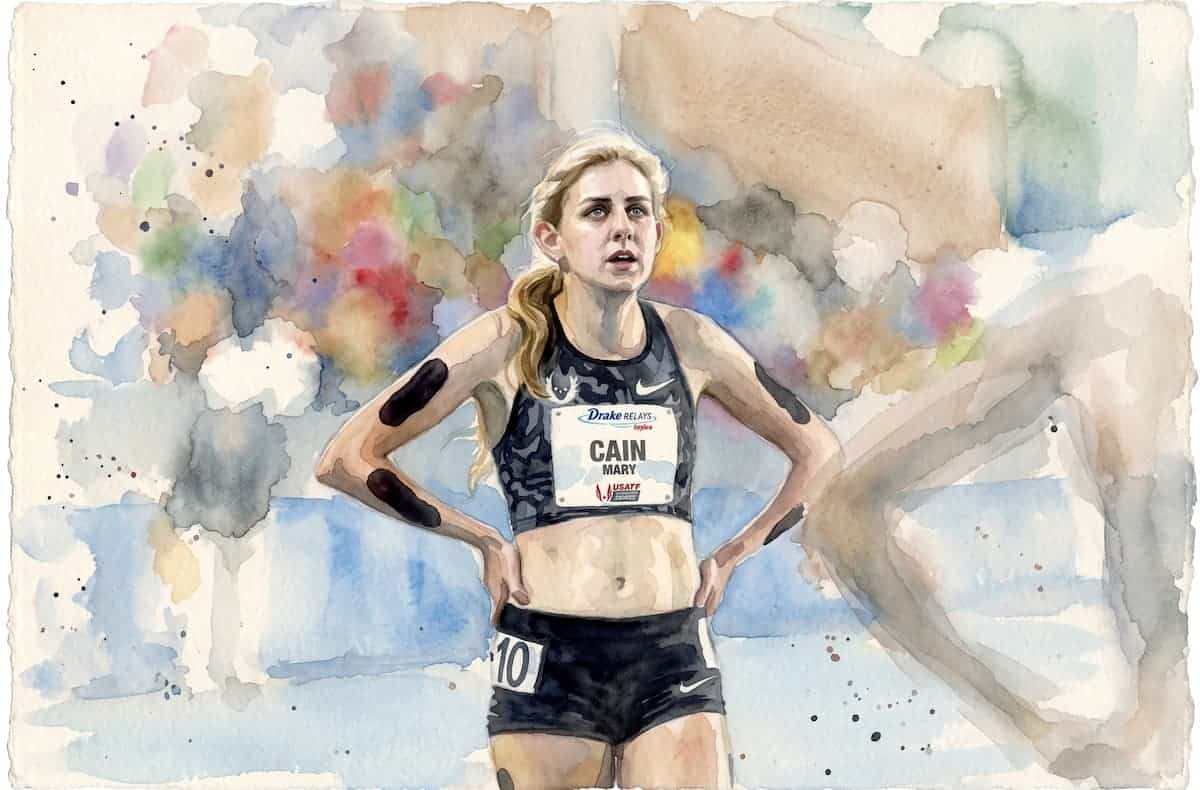
That’s why I want to talk about Mary Cain.
If you coach girls, you need to know her story. Not as gossip, not as a cautionary tale to scare your athletes with, but as the single most instructive case study available to us about how a system designed to develop a young female runner can instead destroy her. Cain told her story first in a 2019 New York Times op-ed video (below), then in interviews, and most fully in her 2026 memoir, This Is Not About Running. Her central argument is one every coach should sit with: this is not a story about one bad man. It’s a story about a system that normalizes the mistreatment of young athletes, and about all the adults who watched it happen and said nothing.
I’m going to walk through what happened, explain the physiology that her coaches either didn’t understand or chose to ignore, and then get practical about what this means for those of us coaching girls’ cross country and track at the high school level. Because the uncomfortable truth is that you don’t need a Nike contract or an elite training group to repeat these mistakes. You can make every single one of them on a Tuesday afternoon on a public high school track.
Who Is Mary Cain?
Mary Cain was, by any measure, the most talented young female distance runner America had produced in a generation. As a high schooler from Bronxville, New York, she broke national records across the middle distances. At 17, she became the youngest American to make a World Championship track team, finishing second at the U.S. Championships in the 1500m and going on to place tenth in the world in Moscow in 2013. She won a gold medal at the 2014 World Junior Championships. She ran 4:04 for 1500m and was among the first women ever to break two minutes for 800m while still in high school.
Then she joined the Nike Oregon Project under coach Alberto Salazar, widely considered the most successful distance coach in the world at the time.
What followed, in Cain’s account, was a years-long campaign of public weight-shaming, isolation from her family, dismissal of her mental health crises, and physical breakdown. She was pressured to drop her weight. She stopped menstruating for three and a half years. She broke multiple bones. She developed disordered eating, began self-harming, and experienced suicidal ideation while her coaches told her she simply wasn’t tough enough. Cain says that Salazar demanded that she lose weight in order to compete at an optimal level and would scold her if she was above the 114 pounds that he outlined for her.
In 2019, the U.S. Anti-Doping Agency banned Salazar for four years for doping violations, and Nike shut down the Oregon Project. Cain came forward shortly after. She sued Nike and Salazar in 2021, reaching a settlement, while Salazar received a lifetime ban from SafeSport for sexual abuse. Today she is a medical student at Stanford, the founder of the nonprofit Atalanta NYC, and an advocate for ending abuse in sport.
The Story Didn’t Start at Nike
Here’s the part of Cain’s story that should keep high school coaches up at night. The abuse didn’t begin in Portland. It began in Bronxville, on a public high school team, years before any professional ever entered the picture.
In her memoir, Cain describes her first coach, she calls him “Mitchell,” as a man who coached by favoritism rather than merit, who punished her for choosing to swim one season instead of running cross country, who left her name off relay rosters as a power move even when she ran the fastest leg, and who stood by silently while her teammates and their parents bullied her relentlessly. She describes being screamed at on the track by a teammate while the coach watched and did nothing. She describes parents stepping onto race courses to berate competitors. She describes a coaching culture where the seventh and final spot on the varsity team was dangled over four girls’ heads with rules that changed weekly, deliberately pitting teammates against one another.
When Cain finally confronted that coach and left for the boys’ team, he told a reporter it was her choice to leave. Reframing a survival decision as a character flaw. Years later, when she left the Oregon Project, the same thing happened. She was painted as uncoachable, entitled, and a poor teammate.
I lead with this because it’s tempting for us to read the Nike chapter and think, that could never happen on my team; I’m not running a multi-billion-dollar program with profits on the line. But the foundational patterns like the favoritism, public humiliation, weaponized roster spots, poor adult role models, the recasting of a victim as the problem, those cost nothing and can creep into any level of athletic program. Those happen at the high school level constantly. The Oregon Project didn’t invent them. It just had more money to amplify them.
The Physiology Every Coach Must Understand: RED-S
If you take one piece of sports science away from this article, make it this one.
For most of Cain’s career, the conceptual framework her coaches operated under was: lighter equals faster, hunger is a sign you’re losing weight, and weight loss is a measure of commitment. That framework is not just cruel. It is physiologically backwards, and it nearly killed her.
The accurate framework is Relative Energy Deficiency in Sport (RED-S), introduced by the International Olympic Committee in 2014. It builds on the older concept of the female athlete triad, first described by the American College of Sports Medicine in the 1990s. The female athlete triad, initially described in 1993 and conceptually defined in 1997 by the American College of Sports Medicine (ACSM), was based on the presence of eating disorders, lack of menstruation (amenorrhea) and poor bone density (osteoporosis). The triad’s three interrelated components are low energy availability, menstrual dysfunction, and low bone mineral density.
RED-S broadened that picture considerably. RED-S refers to a syndrome of impaired physiological functioning caused by relative energy deficiency and includes, but is not limited to, impairments of metabolic rate, menstrual function, bone health, immunity, protein synthesis and cardiovascular health. The core idea is simple and worth stating plainly to every athlete you coach: the energy a body takes in must be sufficient to cover both training and the basic work of being alive.
When energy intake chronically falls short of energy expenditure, what scientists call low energy availability, the body starts shutting down systems it deems non-essential. It literally starts to digest itself in a desperate search for nutrients. Reproduction goes first. Bone maintenance follows.
Here’s the causal chain, because understanding it changes how you coach. When a young female runner is in chronic energy deficit, her body suppresses reproductive hormones, including estrogen. Female athletes with low energy availability leading to amenorrhea have significantly lower bone mineral density Z-scores at the hip, femoral neck, spine, and whole body with an elevated fracture risk. Estrogen is essential to the bone-building process. Lack of periods disrupts the body’s bone-building processes and weakens the skeleton, making bones more likely to break.
Let’s consider Cain’s injury history, which she lists in her memoir: shin stress reaction, calf strains, a shin stress fracture, a femoral neck stress fracture, a sacral stress reaction, a pubic bone stress fracture. She lost her period for three and a half years. This is not bad luck. This is not fragility. This is the textbook clinical presentation of an athlete in prolonged energy deficiency, and it was entirely predictable from the moment her coaches started treating her menstrual loss as either a non-issue or, grotesquely, as evidence that she was finally getting lean enough.
When her coach told her she was “still cycling” and that her weight fluctuations were just bloating, when he suggested diuretics and laxatives and thyroid medication to manage a “weight problem,” every one of those interventions was treating the alarm bell as the fire. The loss of her period was the warning that her body was breaking down. It was waved away and ignored.
There’s one more piece. RED-S doesn’t just damage bones and reproductive function. It activates the body’s stress axis, with downstream effects across metabolic, endocrine, gastrointestinal, and psychological systems. Cain’s own later diagnosis reframed her experience: she came to understand that the brain fog, the inability to control her emotions, the constant exhaustion, and the chronic headaches were in significant part the neurological and psychological consequences of starving a developing body. The emotional breakdowns her coaches mocked were a symptom of the very deficit they were imposing.
For a coach, the takeaway is non-negotiable: weight loss is never a training goal, hunger is never a virtue, and a lost or irregular period in a teenage athlete is a medical red flag that warrants a conversation with a parent and a physician. If you want to go deeper, the OrthoInfo overview of RED-S from the American Academy of Orthopaedic Surgeons is a solid, plain-language starting point.
The Mistake Underneath the Mistake: Training Girls Like Small Men
Why did Cain’s coaches see her natural maturation as a problem to be corrected? Because the entire model they were working from was built for male bodies.
This is the argument the great American distance runner and coach Lauren Fleshman makes in her book Good for a Girl, and it’s essential reading for anyone coaching girls. Fleshman’s point is that our training systems were originally designed by men, for men and boys, and that they fail young women in a specific, predictable way. Too many coaches incorrectly assume that what has worked for male bodies would also benefit female bodies.
The biology matters here. “The male body, between 18 and 22, is getting more juice out of every squeeze when it comes to training. Their hormonal profile is such that their recovery time is quicker,” Fleshman explains. Boys hit puberty and, for distance running, it’s largely an accelerant. More testosterone, more red blood cells, more power, and faster recovery. For girls, puberty brings a natural and healthy increase in body fat, the development of hips and breasts, and a hormonal profile that supports lifelong health but does not, in the short term, make you lighter or faster.
And here is the trap. A talented young girl often peaks early, sometimes winning everything at 13 or 14, before puberty fully arrives. Then her body does exactly what a healthy female body is supposed to do, and her times plateau or regress for a season or two. To a coach working from the male model, this looks like a problem. Often young girls run really well, but then start to slow down as they go through puberty. We start to ask, “What’s wrong with her?” or think that she just needs to train harder and more. Consciously or not, we often identify body composition changes and puberty as the culprit.
You can see the catastrophe building. Naturally, other girls look around and may start to think that puberty is a bad thing, that if they can just keep their body from changing, they’ll continue to run fast. This can lead to overtraining and restrictive eating habits. It doesn’t take a rocket scientist to understand where this leads.
That is the exact lie Mary Cain was sold. And it’s a lie that gets whispered, sometimes unintentionally, on high school teams every single fall. When a coach frets aloud about a returning runner’s “fitness” in a way the girls decode as a comment about her body, when a faster-but-leaner teammate is held up as the model, the seed is planted. You may never say a cruel word. Unfortunately for your young female athletes, the system says it for you.
For coaches who want to understand the female adolescent athlete properly, Fleshman’s Good for a Girl should be on your shelf next to your training texts.
Why Girls Leave and What It Costs
Research from the Women’s Sports Foundation found that by age 14, girls drop out of sports at twice the rate of boys.
According to research by Nike and Dove, 45 percent of teenage girls drop out of sports because of body confidence concerns, twice the rate of boys the same age. 56 percent of the girls who quit say that they were “mocked, criticized, and bullied because of their body size.”
Read that again. More than half of the girls who quit sport were bullied about their bodies. Mary Cain’s story is the elite, extreme, headline-grabbing version of something that is happening quietly and constantly to ordinary high school girls who never make a single record book.
And the experience that determines whether they stay or go is, more than anything, the one we control. As the Women’s Sports Foundation frames it: a positive sport experience can make all the difference in whether a girl stays in the game. Supportive coaches, safe environments, and equal treatment help girls feel valued and motivated to continue participating. But unequal access to facilities, quality coaches, and safe sport experiences can contribute to burnout and dropout.
There’s also a developmental injury angle worth flagging. Adolescent girls face heightened injury risk during the years their bodies are changing fastest. Girls between the ages of 14 and 18 are four to six times more likely than boys to experience an ACL tear, and movement training between the ages of 8 and 12 is critical for developing coordination, body awareness, and proper mechanics. A girl in energy deficit, with compromised bone density, layered on top of that baseline risk, is a runner we are actively endangering.
So when we talk about coaching girls well, we are not talking about being “soft.” We are talking about the difference between a girl who runs for four years and maybe four more in college, and a girl who’s done by sophomore year with a fractured relationship to her own body. The stakes are real.
What Went Wrong: A Coach’s Breakdown
Let me organize Cain’s experience into the specific coaching failures it illustrates, because these are the things we have to be able to recognize in ourselves and in our colleagues.
Weight was treated as a performance lever.
The foundational error. Weight loss as proof of commitment. Hunger was reframed as success. Every downstream disaster flowed from this single inverted belief.
Medical warning signs were managed as inconveniences.
A lost period, recurring stress fractures, chronic fatigue, a sore that wouldn’t heal. Each was explained away. When real doctors gave clear instructions (a boot, crutches, rest), those instructions were overridden by the coach in favor of friendly “team doctors.”
Mental health crises were met with “toughen up.”
When Cain told her coach and the team’s so-called psychologist that she was cutting herself and having suicidal thoughts, the response was that it was late and everyone was tired. Her breakdowns were called childish. Her panic was called a failure of toughness. This is perhaps the most damning failure of all, and it’s the one most directly relevant to high school coaches, because adolescent mental health crises are something you will encounter.
Isolation from family was engineered
Cain describes being made to feel she couldn’t call her parents without “getting in trouble,” being told she was an adult now and should trust her team over her family. In her later reflection, she names this for what it was — grooming.
The group was structured around favoritism and scarcity.
Both with Mitchell and at the Oregon Project, athletes were pitted against one another. Roster spots were weaponized. This destroys team culture and teaches girls that their teammates are their enemies.
Adults watched and did nothing.
This is the thread Cain returns to most insistently. A long line of adults witnessed clear mistreatment and chose to be bystanders. Abuse in sport is sustained not by a single villain but by everyone who decides it isn’t their job to intervene.
Boundaries between coach and Teenage Athlete
A grown man chaperoning a teenage girl’s drug tests, entering her bedroom at night, commenting on her body, having her stay alone in his home. Basic safeguarding should prevent any of this from happening.
What to Do Instead: A Practical Framework for Coaching Girls
Diagnosis without prescription is useless. Here is how I try to run a program in light of everything above. None of this is expensive. Most of it is free.
Make body talk off-limits, and mean it.
No comments about an athlete’s size, ever, even “positive” ones, because the act of commenting tells a 15-year-old that her body is something coaches evaluate. Coach the training and the racing and enforce proper recovery and good nutrition.
Treat fueling as performance, not restriction.
Talk openly and positively about eating enough. Frame food as the fuel that lets you adapt to training and stay healthy. Push back hard, in front of the whole team, on any comments regarding food restriction.
Know the RED-S red flags and act on them.
A missing or irregular period, repeated stress reactions or fractures, frequent illness, persistent fatigue, dramatic body composition change, withdrawal from food around teammates. Any of these is a reason to talk to the athlete and her parents. You are not diagnosing; you are noticing and informing. That is squarely within a coach’s job.
Normalize puberty as part of the path, not an obstacle to it.
Tell your young runners directly that bodies change, that times sometimes plateau through those years, and that the girls who stay healthy and keep training are the ones that will find a stronger version of themselves down the road. Show them that the trajectory of a female distance runner is long. Manage the expectations of the 13-year-old phenom and her parents before the plateau arrives, so it lands as normal rather than as crisis.
Build a culture of competitors who are not enemies.
Cain noticed that her friendliest relationships were often with her rivals from other schools, and that the most toxic dynamics came from within her own team and its parents. Set clear, transparent, consistent standards for varsity selection, and then follow them.
Coach the parents, too.
A meaningful share of the harm in Cain’s high school years came from running-obsessed parents living through their daughters. Set expectations early: how you’ll communicate, what behavior is acceptable at meets, why you won’t be discussing other people’s kids. Make it clear that the sideline is for support, not for berating children.
Take mental health seriously and stay in your lane.
You are not a therapist, and you should not try to be one. But you are a mandatory reporter. If an athlete discloses self-harm or suicidal thoughts, that is never a “we’ll talk tomorrow” moment. Know your school’s protocol, know your counselors, and respond with care and urgency.
Observe SafeSport-style safeguards even if you’re not technically required to.
Two-deep leadership means two adults should be present at all times so that a minor cannot be isolated one-on-one with an unrelated adult. This also protects the coach from false accusations. Avoid being alone with a single athlete in a car, a room, or a message thread. Keep communication transparent and, where possible, copy parents.
Learn what grooming looks like, so you can spot it.
Early warning signs include an adult going beyond their role by offering special treatment, and attempts to find ways to be alone with a child, such as repeatedly offering to drive them home after practice. You don’t have to be an expert. The U.S. Center for SafeSport’s resources for parents and coaches are free, and I’d encourage every coach to take their training.
Refuse to be a bystander.
This is the one that requires courage rather than knowledge. If you see another coach humiliating an athlete, a parent berating a child, or a teammate being bullied, say something!
The Deeper Lesson: It’s the System, Not Just the Villain
The reason I keep coming back to Mary Cain’s story is that it resists the comfortable ending. We want to believe that Alberto Salazar was a uniquely bad actor, that his banning solved the problem, that the rest of us are safe because we’d never do what he did. Cain dismantles that fantasy directly. The structure that allowed the abuse is still standing. The system rewards winning over wellbeing and trains everyone to look away.
For us, at the high school level, that’s both sobering and empowering. Sobering, because it means good intentions aren’t enough. You can harm a kid while believing you’re helping her, just by running the inherited playbook. Empowering, because it means the fix is within reach. We can build programs where bodies aren’t policed, where fueling is celebrated, where puberty is normal, where the team protects its own, where adults intervene, and where a girl who is struggling is met with care instead of contempt.
Mary Cain was the fastest girl in America. The system that was supposed to make her the best in the world nearly ended her life instead. She survived, and she’s spent years telling us exactly where it broke so the rest of us can do better. The least we can do, especially those of us who get the privilege of coaching young athletes, is listen.
primum non nocere… (first, do no harm)
Resources Referenced in This Article
- Mary Cain, This Is Not About Running (memoir, 2026)
- Mary Cain’s original New York Times op-ed video (2019)
- Lauren Fleshman, Good for a Girl: A Woman Running in a Man’s World
- Relative Energy Deficiency in Sport (RED-S) — OrthoInfo, AAOS
- The Female Athlete Triad / RED-S — National Library of Medicine
- Women’s Sports Foundation — Factors Influencing Girls’ Participation in Sports
- U.S. Center for SafeSport
If you or an athlete you coach is struggling: the 988 Suicide and Crisis Lifeline (call or text 988) and the National Alliance for Eating Disorders helpline are available. This article touches on sensitive topics including disordered eating, self-harm, and abuse; if any of it hits close to home, please reach out to a trusted professional.