
Heel Pain in Young Runners: A Coach’s Guide to Sever’s Disease
Heel Pain in Young Runners: A Coach’s Guide to Sever’s Disease
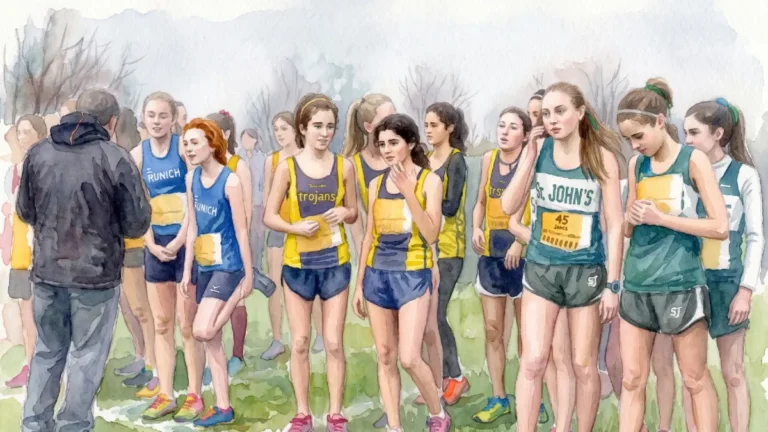
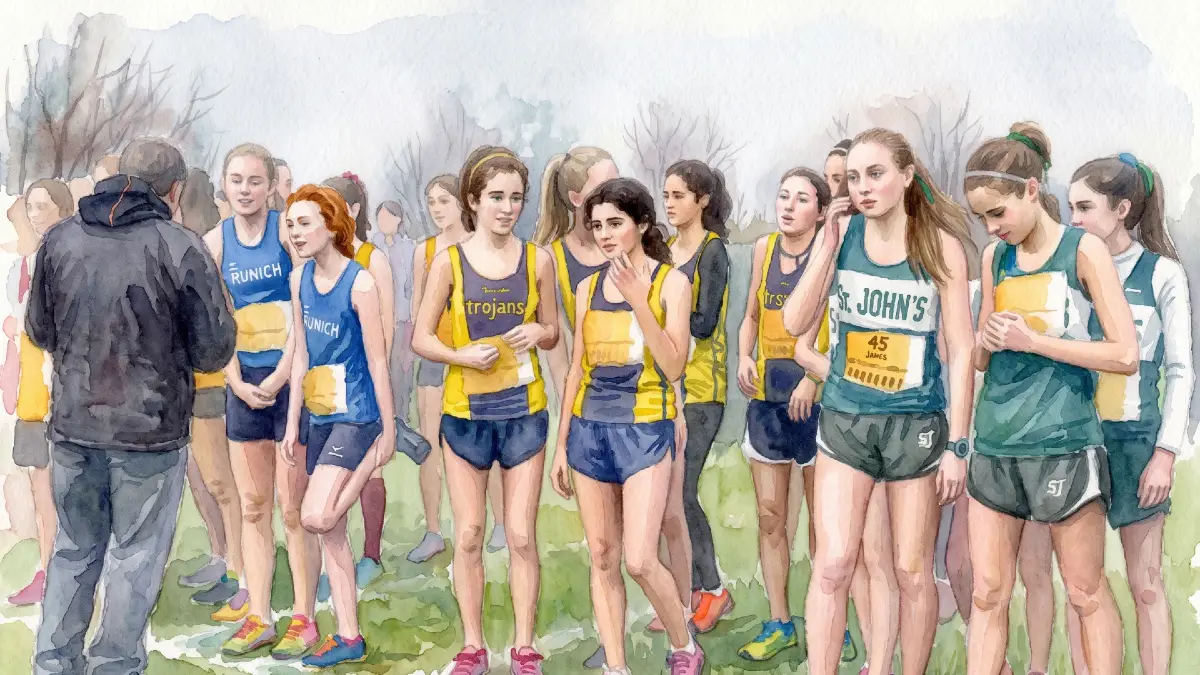
Week three of the season, a twelve-year-old jogs the first lap of the warm-up looking like their shoe is full of gravel. By the second lap they look fine. After practice they are limping again, and they tell you it hurts most in the morning.
That pattern is almost always the same thing, and it has a name most coaches learn the hard way.
Read this first
I am a coach, not a physician. This article explains what heel pain in growing runners usually turns out to be, what the research says about managing it, and how I handle training around it. Coaches do not diagnose. If your athlete has heel pain, they need a qualified clinician to look at it, and this page is not a substitute for that.
What it usually is
Sever’s disease, properly called calcaneal apophysitis. It is the most common cause of heel pain in children and adolescents, with a reported incidence of about 3.7 per 1,000 patients.
The mechanism is simple once you see it. The heel bone in a growing child has a growth plate at the back, and that growth plate is still turning from cartilage into bone. The Achilles tendon attaches right there. Every stride pulls on it.
Then the kid grows. The bone gets longer over a matter of weeks, the calf muscle and Achilles do not lengthen as fast, and the tendon is now under more tension than it was in August. Repeated pulling on a growth plate that is still forming produces irritation and pain.
It is not an injury in the way a sprain is an injury. It is a growing body outrunning its own soft tissue, and the clue is in who gets it: the age ranges reported in the literature are roughly seven to twelve in girls and eight to fifteen in boys, which is exactly the window in which children grow fastest.
The reported risk factors are worth knowing because several of them are things you can influence: rapid growth spurts, tight calves, high body mass index, flat or high-arched feet, a tight Achilles, and unsupportive footwear.
How to recognize it on the field
Four things show up together. Any coach can spot them.
The pain is at the back or underside of the heel, not the arch, not the ankle joint, and not the shin.
It is worst at the start. First steps in the morning, first lap of the warm-up. It often eases once they are moving, which is why athletes hide it. They genuinely feel better twenty minutes in.
It comes back after. Worse in the hour after practice than during it.
Squeezing the heel hurts. Compress the back of the heel bone gently from both sides, the way you would squeeze a rubber ball. If that reproduces their pain, you are almost certainly looking at the growth plate.
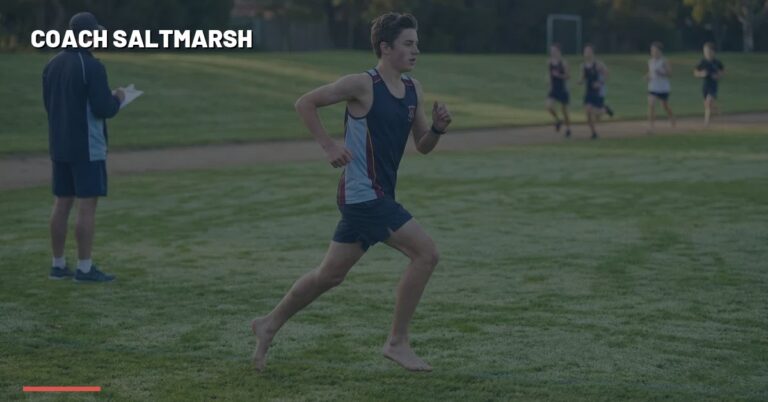
Two other tells. Athletes with this often run up on their toes without realizing, because heel contact is what hurts. And it is frequently bilateral, so a kid complaining about both heels is more likely to have this than a stress injury.
What the research actually says about treating it
Here is where I part company with most of the pages you will find on this, because the honest answer is more uncertain than anyone lets on.
The standard advice is heel lifts, heel cups, orthotics, calf stretching, ice, and rest. Those are the accepted management practices. But a systematic review published in the Journal of Foot and Ankle Research searched nine databases and found only nine usable articles. The authors could not perform a meta-analysis because the data reported were too limited. Their conclusion was that there is limited evidence supporting heel raises and orthoses, and they specifically warned that the studies had methodological problems.
What the available evidence did suggest is that an orthosis with a heel cup and medial arch support gave better short-term pain relief in sport than a plain heel raise or no treatment. A more recent 2025 review across seventeen studies reached a similar place, reporting that custom orthotics outperformed off-the-shelf heel lifts.
So: heel cups and orthotics are reasonable, they are probably better than a flat lift, and the research behind all of it is thinner than the confidence with which it is usually recommended.
Two things are not in doubt.
It is self-limiting. The condition resolves when the growth plate closes, which is usually complete around age fifteen. After that they cannot get it again.
It does not cause lasting damage. That is the sentence to say to a worried parent first, before anything else.
How long it takes, and why nobody can tell you
Published return-to-play figures generally sit between two and eight weeks. Pediatric sources commonly say two weeks to two months with rest.
Then there is the number I find most useful, from a ten-year retrospective study at a German youth soccer academy. Across the cases they identified, mean time to return to play was 60.7 days, with a standard deviation of 64.9 days.
Read that again. The variability is larger than the average. Some athletes were back in a fortnight and some took the better part of a season, and the study found that neither age nor body mass index at diagnosis predicted which. Around fourteen percent of cases recurred, and the recurrent ones took longer.
So when a parent asks how long, the honest answer is that it usually settles in a few weeks to a couple of months, that it can take longer, and that anyone giving them a confident date is guessing.
Managing training around it
The default instruction is total rest. I think that is usually the wrong first move, and the more sport-focused guidance agrees. An NHS patient guide puts it plainly: it is acceptable to exercise with a small amount of discomfort, as long as it does not worsen and settles shortly after stopping.
Complete rest for a month does three things. It detrains the athlete. It weakens the calf, which was part of the problem. And it removes a twelve-year-old from their team for a condition that will not damage them, at exactly the age where that is most likely to end their running.
What I actually do, once a clinician has looked at it and cleared modified activity:
The modified week
- Cut volume by roughly a third, not to zero. A twenty-five minute run becomes seventeen. The dose comes down, the athlete stays at practice.
- Remove hills, jumping, and hard surfaces. Grass and soft trail only. Hill sprints and bounding come out entirely until they are pain free.
- Keep the calf work in. This feels backwards and it is the most important line here. Straight-knee and bent-knee calf raises, done pain free, load the tissue that could not keep up with the bone. Do not drop them because the heel hurts.
- Add heel cushioning. A heel cup in both shoes, not just the sore side. Check the shoes while you are at it, because a growing foot in last spring’s sneakers is a common contributor.
- Ice after, not before. Ten to fifteen minutes after practice, with a towel between ice and skin.
- Give them a job. Timing, splits, cheering. An athlete who is training less should still be at practice, because the social reason is why they came out in the first place.
Getting back to full training
The test I use comes from that same NHS guidance and it is the cleanest one I have found: they should be able to hop, skip, and jump quietly, without pain, before returning to full load.
Quietly is the operative word. A kid who lands hard is guarding, and guarding means they are not ready.
From there, add one thing at a time. Volume first, back toward normal across two weeks. Then hills. Then any jumping or bounding. If a session leaves them worse the next morning, you added too much, and you go back a step rather than pushing through.
Three mistakes I see coaches make
Telling them to run through it. The pain eases once they warm up, which makes this tempting and makes the athlete complicit. All you are doing is guaranteeing a longer, more stubborn version of the same problem.
Shutting them down completely for a month. Over-correcting in the other direction. They detrain, the calf gets weaker, and they lose their team for a condition that is not going to hurt them long term.
Treating it as a foot problem. The heel is where it hurts. The calf and the training load are usually where the answer is.
When to stop and get it looked at
Coaches do not diagnose, and some heel and lower-leg pain is not this. Send them to a physician, promptly, if any of the following are true.
- Pain that wakes them at night, or that is present at rest.
- Visible swelling, redness, warmth, or any fever.
- Pain from a specific injury or moment, rather than one that came on gradually.
- Pinpoint tenderness on the shin bone rather than the heel, especially if hopping on that leg hurts. That is a different category and can be bone stress, which is never run through at any age.
- One heel only, not improving over two to three weeks.
- A limp that persists off the field.
The rule I coach by: heel pain gets managed, bone pain gets a doctor and a stop.
Preventing the next one
You cannot prevent a growth spurt. You can make the tissue around it more ready, and you can stop stacking load on top of it.
Load the calves twice a week, all season, for everybody. Straight-knee and bent-knee calf raises are in the durability circuit of every program I run, and they are there specifically because growing runners get heel pain. This is the cheapest insurance available.
Do not increase volume during a visible growth spurt. When a kid suddenly gets clumsy and trips over things, hold their mileage where it is. That clumsiness is coordination lagging behind limb length, and it is your signal that the bone is moving faster than everything attached to it.
Check shoe fit every six weeks. Feet grow two sizes in this window. A kid in shoes that fit in September may not be in shoes that fit in October.
Keep the volume appropriate to training age. Most middle school heel pain arrives in weeks three to five, after a summer of nothing followed by a sudden five days a week. The fix is a gradual ramp, which is covered in how many miles should a 12-year-old run.
Vary the surface. Grass and soft trail wherever you can. Repetitive impact on pavement is a reported risk factor, and it is the easiest one to change.
What to tell the parent
Say these four things, in this order, and you will save yourself a long email.
- It is the most common cause of heel pain in growing kids, and it is not dangerous.
- It will resolve as the growth plate closes, usually by about fifteen, and it will not cause lasting damage.
- It needs to be looked at by a clinician, because a coach cannot rule out the things it is not.
- In the meantime we are reducing load rather than stopping, unless the doctor says otherwise, and here is exactly what that looks like this week.
That last point matters more than it looks. A parent who hears “we cut Tuesday’s run by a third, took out hills, added a heel cup, and kept the calf work” is hearing a plan. A parent who hears “rest it” is hearing that nobody is in charge.
Where the calf work lives
The durability circuit that carries straight-knee and bent-knee calf raises, single-leg balance, and trunk work runs twice a week in the 12-Week Middle School XC Plan, alongside 36 print-and-post schedule pages and a manual of twelve games. Growing runners get heel pain, so the plan is built to load the tissue before it complains.
The full reasoning behind the season is free in the guide to coaching middle school cross country.
See what’s inside — $49.99Frequently asked questions
What is Sever’s disease?
Sever’s disease, or calcaneal apophysitis, is irritation of the growth plate at the back of the heel bone in a growing child. The Achilles tendon pulls on a growth plate that is still forming, usually during a period of rapid growth. It is the most common cause of heel pain in children and adolescents.
Can my child keep running with Sever’s disease?
Often yes, at reduced load, once a clinician has assessed them. NHS patient guidance says exercising with a small amount of discomfort is acceptable as long as it does not worsen and settles shortly after stopping. Complete rest is not always necessary and carries its own costs. Get it looked at, then modify rather than stop.
How long does Sever’s disease last?
Published return-to-play figures generally range from two to eight weeks, and paediatric sources often say two weeks to two months. Real-world variability is much wider. One ten-year study of youth soccer players found a mean return to play of about sixty days with a standard deviation of sixty-five days, meaning some athletes recovered in a fortnight and others took months.
Does Sever’s disease cause permanent damage?
No. It is self-limiting and resolves once the heel growth plate closes, usually around age fifteen, after which a child cannot get it again. It does not cause lasting problems.
Do heel cups and orthotics actually work?
The evidence is weaker than the confidence with which they are recommended. A systematic review concluded there is limited evidence supporting heel raises and orthoses, while noting that orthoses with a heel cup and arch support outperformed plain heel raises for short-term pain relief in sport. They are reasonable to try. They are not proven.
How do I tell Sever’s disease from a stress fracture?
You do not, and neither do I. That is a clinician’s job. As a rough guide, this typically involves the back of the heel, often both feet, eases with warm-up, and hurts when you squeeze the heel from both sides. Pinpoint tenderness on the shin bone that sharpens during running is a different problem entirely and needs a physician promptly.
Should my child wear a heel lift in both shoes?
Ask the clinician who assessed them, but the usual approach is both shoes. Raising one heel and not the other changes leg length and can create a new problem somewhere else.
Keep reading
- How to coach middle school cross country — the full guide, including the other injuries that show up in growing runners and how the season is built to avoid them.
- How many miles should a 12-year-old run? — what the AAP, NATA, and RRCA publish about youth training volume, and what the research shows about running and injury in young athletes.
Sources
- Achar S, Yamanaka J. Sever Disease (Calcaneal Apophysitis). StatPearls, 2024.
- James AM, Williams CM, Haines TP. Effectiveness of interventions in reducing pain and maintaining physical activity in children and adolescents with calcaneal apophysitis (Sever’s disease): a systematic review. Journal of Foot and Ankle Research. 2013;6:16.
- Nweke TC. Conservative Management of Sever’s Disease (Calcaneal Apophysitis): A Comprehensive Review of Treatment Efficacy. Cureus. 2025.
- Incidence of calcaneal apophysitis and return-to-play in adolescent athletes of a German youth soccer academy: a retrospective study of 10 years.
- NELFT NHS Foundation Trust, understanding Sever’s disease.
- Nemours KidsHealth, Sever’s disease.
- Cleveland Clinic, Sever’s disease (calcaneal apophysitis).
This article is general education written by a coach, not medical advice, and it is not a substitute for assessment by a qualified clinician. If your athlete has heel pain, have it examined. If they have pain at rest, at night, with swelling or fever, or pinpoint pain on the shin bone, see a physician promptly.