
The Car Ride Home: What to Say After a Cross Country Race
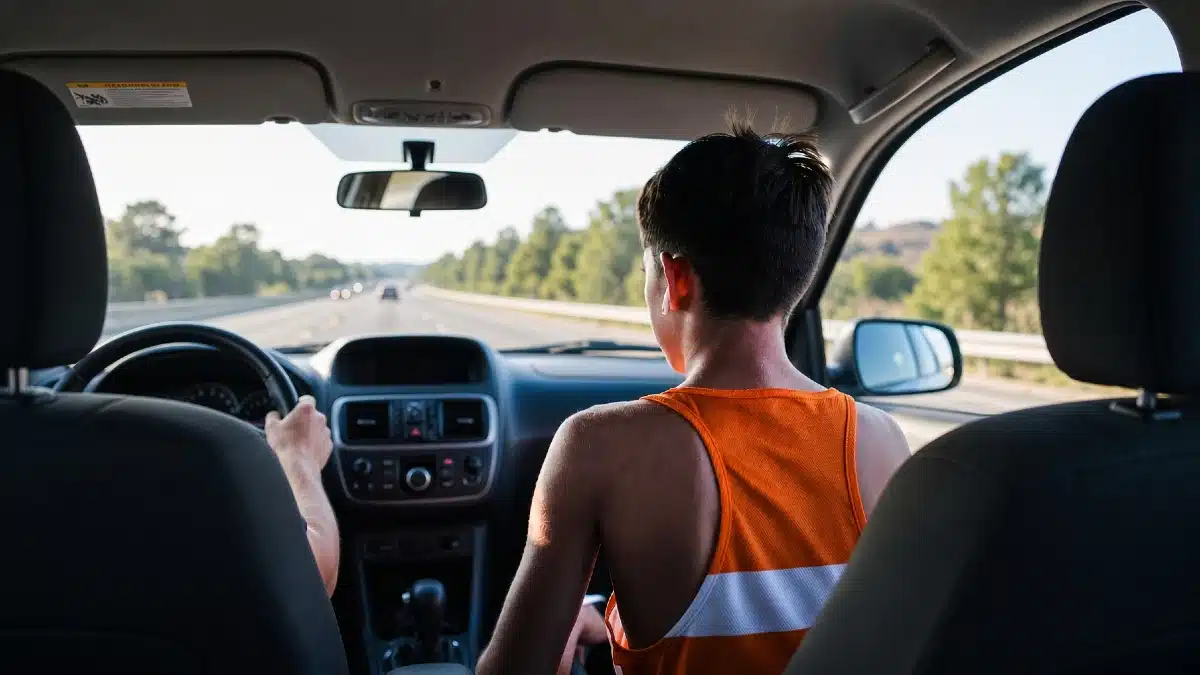
Katherine Tamminen was working as a sport psychology consultant at a hockey academy when she got into a conversation with a group of young athletes about happiness and stress. One of them said the most stressful part of sport was the car ride home.
Not the game. The drive after it.
That sentence shaped the rest of her research career. Tamminen went on to found the Sport and Performance Psychology Lab at the University of Toronto and became one of the leading researchers on stress and coping in young athletes. She died this past February. She was 43.
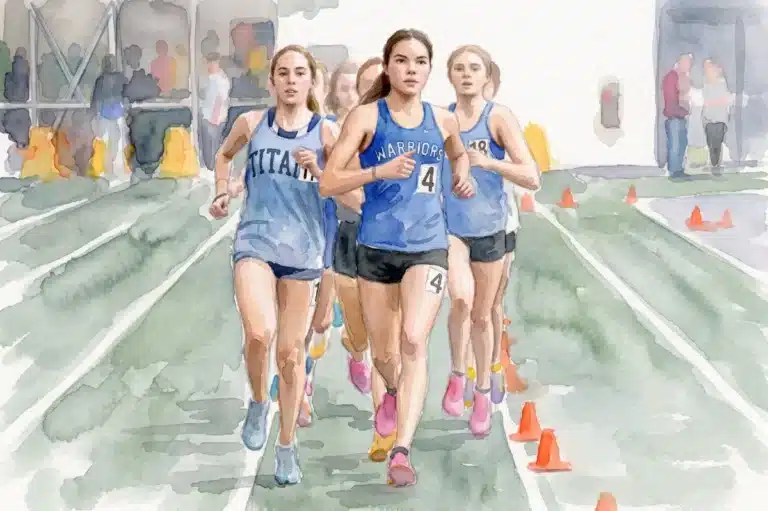
Every Saturday in the fall I watch the scene her research is about. A kid crosses the line, gets through the chute, cools down with the team, and then walks across the field toward a parent and a car. What happens in the next twenty minutes matters more than most parents realize.
This post is about those twenty minutes. It is for parents, because you are the one driving. It is also for coaches, because we have our own version of that drive, and most of us handle it the same way parents do.
The short version
Your runner already knows the time. Feed them, say one thing that has nothing to do with the clock, and let the silence belong to them. Ask open questions only when they open the door, then let them finish the sentence. Save the hard conversation for a time they choose. Coaches, the walk from the chute to the team tent is your car ride. Same rules.
What the car ride research found
Tamminen published the first car ride study in 2017. Her team interviewed 27 athletes between 11 and 16 years old, plus their parents, about the drive home after games and practices. The kids played hockey, baseball, figure skating and other sports.
Three findings matter for any parent with a runner.
There is no single right ride. Some athletes looked forward to the drive. They wanted to unpack the day with someone who had been there. Others described enduring it.
The car is a pod of privacy. That was Tamminen’s phrase. You sit side by side, not face to face, and nobody has to make eye contact. She called the setup non-confrontational, and it can open up conversations a kid would never have in the parking lot. The same privacy cuts the other way. Without a sibling, a spouse or a teammate in the back seat as a buffer, things could get more heated.
Kids fight for the steering wheel. Headphones go in. Eyes go to the window. Some athletes admitted they pretended to fall asleep to avoid talking about the game. Tamminen read that as athletes trying to take control of where the conversation went. Parents often read it as attitude.
Five years later her lab went further. They mounted cameras on the windshields of 28 families and recorded 98 real car rides to and from practices and games. Thirty hours of footage. Every comment, every question, every eye roll, coded. The video study was published in 2022, and the numbers are worth sitting with.
59%
of all car time was silence
13%
of car time was spent talking about sport
83%
of parent questions were closed, answerable in a word or two
18 of 851
parent questions were open and asked the kid to reflect
55%
of the time, parents kept talking or cut in right after giving praise
0
times an athlete expressed confidence in their own ability
Read that list twice.
The ride is mostly quiet. Fine. Sport takes up a small slice of it. Also fine. The problem is inside the slice.
Parents asked hundreds of questions, and almost all of them could be answered with a word. In cross country those questions sound like “Was that a PR?” and “Did you go out too fast?” Out of 851 questions, 18 were the kind that invite a kid to think out loud.
Then the finding that stopped me. When parents praised their kid, more than half the time they kept talking or jumped in before the kid could respond. After praise, parents talked over the kid’s response about twice as often as they did after criticism. We say the good thing and then we bury it.
And the kids? They answered every question their parents asked, unless the parent cut them off first. They will talk. We do not always let them.
The last number is the one I keep coming back to. The athletes criticized their own performances about as often as their parents did. They praised themselves less. And in thirty hours of video, not one of them said anything that expressed confidence in their own ability to succeed. Not once.
One caution from the researchers themselves. These were families who agreed to be filmed, and people on camera tend to be on their best behavior. The worst rides in your town probably did not make it into this study.
Why the cross country ride is its own animal
The athletes in these studies played hockey, soccer, baseball, figure skating and the like. Cross country runners were not the focus. Our sport loads that same drive with a few extras.
The clock already spoke
In a soccer game a parent can argue about the referee. In a 5K the result is a number, and your runner heard it at the chute. They do not need a recap of the fade after the first mile. They were there for the fade.
The number lies
Cross country courses are not tracks. Two 5K courses here in New Hampshire can sit forty to ninety seconds apart for the same runner in the same three-week stretch. Hills, footing, mud, turns, and how wide the first two hundred meters are all change the watch without changing the effort.
Even the same course is not always the same course. Derryfield Park in Manchester changed its route in 2023, and every race there since has run slightly longer and slower. A parent comparing a 2022 Derryfield time to a 2024 Derryfield time is comparing two different races with the same name. If you are new to the sport, this guide to how long a cross country race really is will save you a lot of confusing conversations.
The body is empty before the mind is
Your runner just raced as hard as a teenager can race for three miles. The adrenaline that got them to the line is still up, and then it drops. Legs are heavy. Patience is thin. What looks like attitude in the passenger seat is often a body that has nothing left. That is not the moment for a performance review.
They are already their own harshest judge
Distance runners hold high standards, and many of them tie a bad day to the question of whether they belong. The video study backs this up. The kids were as hard on themselves as their parents were, and they never once voiced confidence in themselves.
Your runner is already holding a trial in their head. Your post-race analysis does not add evidence. It adds a second prosecutor. You are not supposed to be the prosecutor. You are supposed to be the character witness.
The real job is carrying their confidence for them
Here is what I think this research is telling us, and it is bigger than the car.
Teenagers do not say confident things about themselves out loud. Not in a car, not after a race, and certainly not on camera. So somebody else has to say it. And then that person has to stop talking long enough for it to land.
A positive headspace is not built by pep talks. It is built by hearing, over and over, from the people whose opinion matters most, that who you are is not your time. Kids who believe that race braver. They take the risk in the second mile because a bad result will not cost them anything at home. If you want to go deeper on the inside of a runner’s head, read my pieces on breaking self-limiting beliefs and the Chimp Paradox for runners. The second one explains why nobody, parent or athlete, makes good decisions with adrenaline running the show.
That job belongs to parents and coaches both. Here is how to do it.
The car ride playbook for parents
1. Make the deal on a Tuesday
Tamminen’s most practical finding was that some parents said simply talking about the car ride helped. Not the race. The ride. Her research found real value in letting kids help write the “rules of the road” ahead of time. One athlete asked her parent to start with something positive instead of always leading with the negative. That is a reasonable request from a teenager, and you will only hear it if you ask.
Ask on a weeknight. Not in the parking lot.
What it sounds like
“After a race, do you want to talk on the way home, or would you rather have music and a snack and talk later?”
“After a bad one, is there anything you don’t want me to say?”
“If you want my take, you ask. Otherwise I’ll keep it to myself until you’re ready.”
2. Food before questions
Hand them something to eat before you hand them a question. A sandwich, a banana, a chocolate milk, whatever they like. Hungry, depleted teenagers are not good conversationalists, and neither are hungry adults. Put it in the bag the night before. My race day packing list has a spot for it.
3. Say one clean thing. Then stop.
“I love watching you run.”
That line traces back to Bruce Brown and Rob Miller of Proactive Coaching, who spent years asking college athletes what their parents said that made them feel good after games. Their version was “I love to watch you play.” It works because it is not a verdict. Not on the time, not on the place, not on the last hill. It tells your kid that your approval was settled before the gun went off.
The video study says the hard part is what comes next. Say it, and then stop talking. If the next sound you hear is the seat reclining, that is an answer.
4. Let the silence belong to them
Remember that 59 percent. A quiet car is normal. Headphones and a stare out the window are information, not a problem to solve.
Tamminen drew a line between good silence and bad silence, and it is worth learning to tell them apart. One silent ride after a rough race is recovery. Weeks of a kid who does not want to be in the car with you is something else, and it deserves a real conversation at home, not on the highway. If you are worried it is more than a bad stretch, my piece on mental health in high school runners is a good place to start.
5. Leave the splits to the coach
Why they lost contact with the pack. Why the last 800 was slow. What their arms were doing on the hill. All of that is coaching, and it lands worse from the driver’s seat than from the person who wrote the workout. Parents in Tamminen’s study often saw criticism as useful for their kid’s development. Some athletes agreed. Others described the ride as something to endure.
Same goes for places, rankings and comparisons to teammates. If your runner wants the data, they will bring it up.
6. Ask open questions, then wait
When your runner does open the door, swap the closed questions for open ones. The researchers saw closed questions everywhere and open, reflective ones almost nowhere. Here is what the switch sounds like in cross country.
| Instead of this | Try this |
|---|---|
| “Was that a PR?” | “What part of that race are you proud of?” |
| “Did you go out too fast?” | “What did the first mile feel like?” |
| “Why did you get passed at the end?” | “What was going on in your head on that last hill?” |
| “Did you have fun?” | “What was the best part of today?” |
| “Are you happy with that?” | “What was the toughest part of that course?” |
Then wait. The researchers did not count a pause as silence until it passed three seconds. Use the same rule. Count to three in your head before you say anything else. Most of the time your kid will fill the space. If they don’t, that is an answer too.
7. Let them schedule the hard talk
If your runner is angry or close to tears, the car is the wrong room. Ask when they want to talk. Tamminen suggested exactly this: find out what they want to talk about, and when. Maybe after dinner. Maybe before bed. Giving them control of the clock takes most of the heat out of the conversation.
Hard conversations still matter. Tamminen was clear on that. If something unfair happened at the meet, it should not sit and fester. The goal is not a car with no hard conversations in it. The goal is a kid who never dreads getting into the car.
8. Check your own adrenaline
You were jacked up too. You probably ran from the mile mark to the two-mile mark to the finish. You watched your kid get passed in the last 400. Parents in the research said it helped to let their own emotions cool before they spoke, and Tamminen’s advice applied to both people in the front seat: give your child time to think, and give yourself time to think.
“What happened in the second mile?” can be curiosity. Said in a tight voice, right after a disappointing finish, it is an accusation. Your kid will hear the tone before they hear the words.
The car ride card · screenshot this
- Food first.
- One line: “I love watching you run.”
- Then quiet. Their silence, their call.
- No splits. No places. No comparisons.
- If they talk, ask open questions and let them finish.
- The hard talk happens later, on their schedule.
Coaches, the walk to the tent is your car ride
Everything above applies to us. We just have a different vehicle.
Our version of the car ride is the walk from the finish chute to the team tent, and the debrief that happens there. The kid is just as depleted. The adrenaline is just as high. And plenty of us do what the parents in that video study did. We talk more than the athlete. We ask closed questions. We hand out a compliment and then pile three corrections on top of it before the kid can say thank you.
| The principle | In the car | At the tent |
|---|---|---|
| Wait out the adrenaline | Food and quiet first | Cool-down first. Save the detailed debrief for Monday practice. |
| Set the rules early | Make the deal on a Tuesday | In preseason, ask each athlete how they want feedback after a bad race. Write it down. |
| Ask before you tell | “What was the toughest part?” | “What did you learn about yourself in the second mile?” |
| Let them finish | Count to three | Athlete talks first in every one-on-one. Do not fill the silence for them. |
| Carry their confidence | “I love watching you run.” | Name one thing they did today that you want to see again. Then stop. |
| Put the clock in context | Leave the splits alone | Splits come on Monday, with the course, the weather and the field next to them. |
The same rules apply to the hardest conversation we have all season, telling a runner they missed the varsity seven. Give them a number, give them a date, and give them one thing to work on. I lay that out in full in how to pick your varsity seven.
Coach your parents, too
Most parents have never been told any of this. They are not trying to make the ride worse. They are trying to help, with the only tools they have, in a car, twenty minutes after watching their kid suffer.
So tell them. Our preseason parent meeting has a slide called The Car Ride Home. Put the same message in an email the week of your first meet, and again before the championship meet, when the stakes and the emotions are highest. My preseason parent meeting guide, weekly parent email template and parent communication guide will help you build it in.
For coaches
The Pre-Season Parent Meeting Kit
The slide deck, the email templates, the family handout, and a word-for-word script for the hard questions. The Car Ride Home slide is already in it. Editable and ready to present.
See what’s inside · $34Instant download · 30-day guarantee
When your runner wants the notes
Some kids want the feedback. A few will ask before you reach the highway what you saw out there. The research does not say to refuse them.
It says to find out ahead of time what this particular kid wants. And it says to remember that wanting feedback on a Tuesday is not the same thing as wanting it ten minutes after the finish. When they do ask, honor the request that athlete made in Tamminen’s study. Start with something that went right. Then give them one thing, not five. Then ask what they think.
Back to the hockey academy
One young athlete told Katherine Tamminen that the hardest part of sport was the drive home. She spent years figuring out why, and what parents could do about it.
The answer turned out to be smaller than most of us expect. Feed them. Say the one thing. Stop talking. Let them steer.
You already did the part that mattered most. You got them there. You stood in the cold at the two-mile mark. You are driving them home. On most Saturdays, that is the whole job.
Ten years from now your runner will not remember today’s time. They will remember what the car felt like.
Common questions about the car ride home
What should I say to my child after a bad cross country race?
Keep it to one line that has nothing to do with the result, such as “I love watching you run,” and then let them lead. Your runner already knows the time and the place. If they want to talk, ask open questions and let them finish. If they don’t, give them quiet and food and save the conversation for a time they choose.
Should I talk about the race on the drive home?
Only if your runner brings it up. Research on real car rides found that sport took up only about 13 percent of the drive, and most of the time was silence. That is normal. The best approach is to agree ahead of time, on a weeknight, how your runner wants post-race conversations to go.
Why is my runner so quiet after races?
A hard 5K leaves a teenager physically and emotionally drained. Headphones, staring out the window and reclining the seat are common ways young athletes control the conversation and recover. One quiet ride is normal. A runner who avoids talking to you for weeks is a different situation that deserves a real conversation at home.
What if my runner wants feedback?
Give it, but follow their lead. Start with something that went well, offer one point instead of a list, and ask what they think before you add more. Leave technical and tactical feedback, like pacing and race strategy, to the coach.
What should coaches say to athletes right after a race?
Less than you think. Let the athlete cool down first, ask an open question, let them talk before you do, and name one thing they did well. Save splits and tactical analysis for the next practice, when the adrenaline is gone and you can put the time in context of the course, the weather and the field.
Sources
- Tamminen, K. A., Poucher, Z. A., and Povilaitis, V. (2017). The car ride home: An interpretive examination of parent-athlete sport conversations. Sport, Exercise, and Performance Psychology, 6(4), 325-339.
- Tamminen, K. A., Bissett, J. E., Azimi, S., and Kim, J. (2022). Parent and child car-ride interactions before and after sport competitions and practices: Video analysis of verbal and non-verbal communication. Psychology of Sport and Exercise, 58, 102095.
- University of Toronto News (2017). After the game: How parents can improve the car ride home with young athletes.
- University of Toronto Faculty of Kinesiology and Physical Education (2026). In memoriam: Professor Katherine Tamminen.