
How Two Lactate Values Became the Most Important Measurements in Distance Running
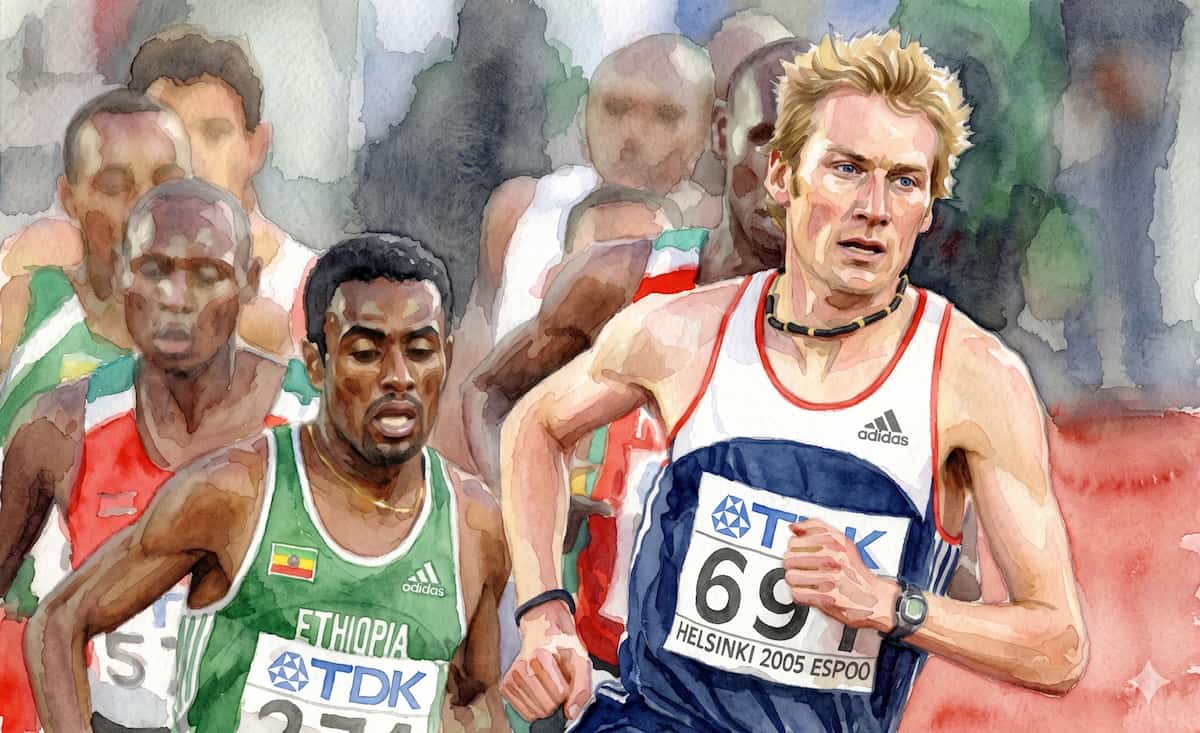
Sometime in the late 1990s, a Norwegian distance runner named Marius Bakken got obsessive about a number.
Bakken was a serious athlete. He would go on to run 13:06 in the 5,000 meters, a Norwegian record that stood for over twenty years. But in the late 1990s he was also something rarer: a runner who had become a trained physician, and who had started asking physiological questions about his own training that coaches at the time could not answer.
The question, simply: what is actually happening in my blood when I run at different paces, and how does knowing that change what I should do tomorrow?
He began drawing his own blood, a fingertip capillary sample, during training runs and feeding it into a portable lactate analyzer. He did this more than 5,500 times over the years that followed. What he found, catalogued session by session over more than a decade, became the foundation of what is now called the Norwegian Double-Threshold method, the training system that produced Jakob Ingebrigtsen’s Olympic gold medals, multiple world records, and arguably the most complete middle-distance running program in the modern era. He just released a bestseller called The Norwegian Method Applied.
The numbers Bakken was hunting are called LT1 and LT2. Lactate Threshold 1 and Lactate Threshold 2. Two physiological inflection points that tell you more about how to train a distance runner than almost any other measurement available to a coach.
Rad on to find out what they are, why they matter, and how to build an entire training year around them.
Understanding Lactate Thresholds: What are LT1 and LT2?
The blood knows. Here is the basic physiology.
Your muscles produce lactate continuously. Even at rest. Lactate is not a waste product, it is an energy shuttle, produced when glucose is broken down under high-demand conditions and then transported to other tissues for further fuel. The old story that lactate causes the burning sensation in your legs and forces you to stop is wrong. The burning comes from acidosis, hydrogen ion accumulation, which happens as lactate levels rise. However, one does not cause the other.
What matters for distance runners is not lactate itself but the balance between how fast your muscles produce it and how fast your body can clear it. At rest, that balance is easy. You’re doing it right now as you read these words. Production is low, clearance is fast, blood lactate sits around 1.0 mmol/L. As you run faster, production increases. At some point, production begins to win as it accumulates faster than it can be shuttled away.
The first time clearance starts to fall behind is LT1. This typically happens around 2.0 mmol/L. Below this point, you are in full aerobic balance. Above it, you are in metabolic territory where lactate is elevated but still stable. It is rising, but slowly enough that the body manages it. This is the zone of extended aerobic effort. It is where long-run pace, marathon pace, and easy tempo runs live. You can still talk, but not in full sentences.
The second time clearance loses control is LT2. This happens around 4.0 mmol/L, a standard proposed by German researcher Kindermann in the late 1970s and formalized by the Cologne Sports Medicine Group (Hollmann, Mader, Heck) as part of the foundational methodology for systematic lactate testing in endurance sports. Above LT2, blood lactate begins accumulating faster than it can be cleared. The clock is running. You can maintain the effort for minutes, not hours. LT2 is the outer edge of sustainable hard running. The metaphorical piano is about to drop on your back.
These two numbers, approximately 2 and 4 mmol/L, are the physiological borders of the most important training territory in your athletes’ fitness development.
The Three-Zone Model: Why the “Middle Zone” Can Ruin Your Training
The LT1/LT2 framework divides exercise intensity into three zones:
- Zone 1: Below LT1. Easy. Conversational. Fat-burning. The base.
- Zone 2: LT1 to LT2. Moderate. Elevated lactate but stable. The engine is running.
- Zone 3: Above LT2. Hard. Lactate accumulating. The zone of intervals and racing.
Most recreational runners and many coached athletes spend the majority of their quality training in Zone 2. This feels productive. Zone 2 is uncomfortable, but it hurts in a satisfying way. It seems like it should be doing something. Heart rate is elevated, breathing is labored. Surely this is working.
The research says: less than you think.
Dr. Stephen Seiler, the Norwegian-American exercise physiologist who has spent decades studying how elite endurance athletes actually train, found that world-class distance runners spend approximately 80% of their volume below LT1 (Zone 1) and concentrate most of their quality work in Zone 3, above LT2. The middle zone is used sparingly.
A 2013 study by Stöggl and Sperlich took recreational runners and compared a polarized program (mostly Zone 1, some Zone 3) against a moderate-intensity program (mostly Zone 2). The polarized group showed significantly greater improvements in 10K performance.
The explanation is physiological. Zone 2 is expensive. It costs carbohydrate, impairs full recovery, and generates systemic fatigue without delivering the specific mitochondrial and capillary adaptations of Zone 1 volume or the threshold-ceiling adaptations of Zone 3 precision work. You spend recovery currency you need for real quality sessions, without getting the full return on investment that either extreme delivers.
Coaches sometimes call this the “trap of mediocrity.” Whatever you call it, it is the place where well-intentioned athletes spend too much of their time running neither slow enough to build the base nor hard enough to push the ceiling. The way out is not to run harder. The way out is to know exactly where your thresholds sit and stay on the right side of them.
Marius Bakken’s Breakthrough: The Origin of Double Thresholds
This is where Marius Bakken’s obsession becomes a coaching lesson.
The insight Bakken developed through years of lactate testing was not just about where the thresholds were. It was about what happens when you train just below the thresholds rather than through them.
The standard threshold workout in American running is a tempo run: 20–30 minutes at a comfortably hard pace, pushing through the discomfort, finishing tired. This approximates LT2. It is effective. But it has a recovery cost that limits how often you can do it.
Bakken’s discovery: if you train at a controlled 2.0–3.0 mmol/L, deliberately below LT2, in the upper portion of Zone 1 / lower Zone 2, you can do it twice in a single day, and you can do it multiple times per week, because you are never accumulating the systemic fatigue that a full LT2 session creates. The total threshold volume per week becomes substantially higher than a single-session model allows.
This is the Norwegian Double-Threshold method: two threshold sessions per day, two or more days per week, both kept precisely in the sub-threshold zone through lactate monitoring. Not maximal. Not exhausting. Just relentlessly, precisely targeted.
Jakob Ingebrigtsen’s father and original coach, Gjert, who built his system in direct consultation with Bakken (Bakken has published email and text exchanges proving this knowledge transfer, Gert has claimed it was all his idea) used this method to develop all three Ingebrigtsen brothers. The weekly structure during the October–May base phase: 110–120 miles per week, six quality sessions, with three or four of those being lactate-controlled threshold sessions. One day of hill work. Long easy runs filling the remaining days. No racing. Just building.
The result was an athlete who could win an Olympic 1500m at 20, then win Olympic 5000m gold at 23, then continue setting world records at 24 and 25. Not despite the conservative training structure, because of it.
A 2023 peer-reviewed systematic review published in PMC analyzed the Norwegian double-threshold model against conventional training approaches and concluded that lactate-guided threshold interval training within a high-volume, low-intensity framework represents a physiologically coherent and empirically supported model for elite distance performance development.
The VDOT Bridge: Estimating Thresholds Without Blood Tests
Most coaches do not have portable lactate analyzers. Most athletes will not draw their own blood between morning and afternoon sessions the way Marius Bakken did.
Here is the bridge: Jack Daniels’ VDOT system gives you a practical approximation of LT1 and LT2 thresholds derived from recent race performance.
VDOT is Daniels’ term for effective aerobic fitness. It’s a number that reflects both your VO2max ceiling and your running economy, derived from what you’ve actually run in a race recently. His five training zones (E/M/T/I/R) map onto the LT1/LT2 framework this way:
- E pace (Easy) Below LT1. True aerobic base work.
- M pace (Marathon) Mid-Zone 2. Extended aerobic work with stable lactate.
- T pace (Threshold/Tempo) LT2. Daniels called it “comfortably hard,” approximately 10K-to-half-marathon effort. This is the LT2 zone.
- I pace (Interval) Above LT2, targeting vVO2max. Lactate is accumulating; effort is race-hard.
- R pace (Repetition) Well above LT2, neuromuscular speed work.
Daniels recommends ~80% of total weekly volume at E pace, directly paralleling Seiler’s observation of elite athlete distributions. The precision of T pace work in Daniels’ system is the closest most coaches will get to the Norwegian lactate-testing approach without actual testing.
The limitation: VDOT assigns threshold pace from race performance, not direct physiological measurement. Two athletes with identical VDOTs can have meaningfully different LT1/LT2 profiles. This is why I built a calculator that combines VDOT methodology with vVO2max to give you the most precise threshold estimates available without a lab visit.
Use the Lactate Threshold Calculator here. Enter a recent race performance and get your LT1 easy running pace range, your LT2 threshold pace, and your vVO2max interval pace. These are the three intensity anchors you need for everything that follows.
vVO2max: The Third Physiological Marker
There is a third physiological marker that completes the picture: vVO2max, the velocity (pace) at which VO2max is reached.
Above LT2, you are accumulating lactate and running on borrowed time. But there is still a meaningful intensity gradient in this zone. At vVO2max specifically, your aerobic system is running at full capacity. You are consuming oxygen at your maximum rate. Below vVO2max (but above LT2), you are working hard but not quite maximizing aerobic demand. At vVO2max, you are at the ceiling.
Research confirms that vVO2max is a highly effective training prescription anchor for interval sessions. The classic protocol: 5 × 3 minutes at vVO2max pace, 3-minute active recovery. Adaptations include increased VO2max, improved running economy, and upward pressure on LT2 itself.
Where vVO2max fits in the macrocycle: late. Not in the base phase, not in early build. vVO2max work is the sharpening tool, it goes in during the pre-competition phase when the aerobic base is fully developed and the threshold ceiling has been raised. Putting vVO2max intervals into a training block before LT1 volume is well established is one of the most common structural errors in American distance running programs. High school coaches are getting smarter, but they are notorious for prescribing 400m reps at goal race pace way too early and often. Puking should never be the goal.
Structuring Your Training Year: The LT1/LT2 Macrocycle
Everything above points toward a specific way of organizing a training year. Here is the framework, phase by phase.
Phase 1: General Preparation, 12–16 Weeks
The base phase. LT1 volume is the priority. Think big aerobic infrastructure: mitochondria, capillaries, fat oxidation efficiency, connective tissue resilience.
Zone distribution: 85–90% below LT1 / 10–15% LT1-to-LT2
Key workouts: Long runs at full conversation pace. Easy doubles. Weekly cruise interval session (4–6 × 1 mile at LT2 pace) to maintain threshold awareness without overdoing it. Strides 2–3× per week to maintain neuromuscular speed.
Norwegian application: If you want to introduce double-threshold work, begin here, conservatively. One double-threshold day per week, keeping both sessions at 2.0–2.5 mmol/L (easy conversational to moderate effort, not a full tempo). Think: AM easy tempo segments / PM cruise intervals at the same controlled pace. Total threshold volume per week is the goal, not session intensity.
The science behind this phase is aerobic base construction: mitochondrial biogenesis, capillary density, cardiac output development. The 2022 systematic review in the International Journal of Sports Physiology and Performance documented that elite distance runners consistently show a pyramidal training distribution during the preparatory phase, with the majority of volume below LT1.
Phase 2: Specific Preparation, 8–12 Weeks
The build phase. LT2 development becomes the priority. You are raising the threshold ceiling. Making it so that your athlete can hold a faster pace before lactate starts accumulating unsustainably.
Zone distribution: 75–80% below LT1 / 15–20% at LT2 / 3–5% above LT2.
Key workouts: Two threshold sessions per week, both at genuine LT2 pace. One long tempo (25–40 minutes). One set of cruise intervals or a double-threshold day (Norwegian style). Mileage is at or near its peak. One VO2max-adjacent session per week, short (brief repetitions at I-pace rather than full vVO2max intervals).
Warning: This is the phase where coaches most often make intensity errors. When volume is also high, pushing threshold work above LT2 consistently leaves athletes carrying fatigue rather than building fitness. If your athletes are always tired on easy days, their threshold work is too hard.
Phase 3: Pre-Competition Sharpening, 4–6 Weeks
Volume begins declining. Quality becomes more race-specific. vVO2max work enters.
Zone distribution: 70–75% below LT1 / 10% at LT2 / 15–20% above LT2.
Key workouts: One maintenance threshold session per week (shorter, maybe 15–20 minutes at LT2, to maintain the ceiling without extending fatigue). One vVO2max interval session per week (5 × 1000m or 4 × 1200m). Race simulations. Time trials.
Athletes built well in Phases 1 and 2 will start to feel fast in Phase 3. This is the “snap” that coaches talk about. The feeling that comes from reducing volume while the aerobic and threshold adaptations continue expressing themselves. Ingebrigtsen’s system deliberately produces this: the base season is long and conservative specifically so that the competitive season arrives with full physiological reserves.
Phase 4: Competition
Racing is the hard training. Volume is lowest of the year. Maintain what was built. Manage recovery.
Zone distribution: 70% below LT1 / 10% LT2 (one short session) / 20% above LT2 (racing and race-specific preparation).
The competitive season error: Adding more volume or more intensity when race results are disappointing. The answer to a bad race mid-season is almost never more training. It is recovery, race analysis, and patience with the system.
Practical Workouts for LT1, LT2, and vVO2max
Building LT1 (below LT1):
- Long run: 60–110 min at full conversational pace. Can you speak in sentences? If not, you’re above LT1.
- Easy double: AM 30 min / PM 20 min, both below LT1.
- Strides: 8 × 20 seconds acceleration to fast but smooth, 40-second walk, after any easy run. Neuromuscular speed without lactate load.
Developing LT2:
- Classic tempo: 20–35 minutes at LT2 pace. No music. No distractions. Learn what that pace feels like in your body.
- Cruise intervals: 4–6 × 1 mile at LT2 pace, 60 seconds rest. The rest allows lactate to briefly clear, so you can accumulate more total threshold mileage per session.
- Norwegian double: AM 4 × 2000m at 2.5 mmol/L / PM 5 × 1600m at 2.5 mmol/L. Total threshold volume ~18K in one day. Conservative per-session intensity is the whole point.
- Progressive tempo: Begin at LT1 pace, finish at LT2 pace over 30–40 minutes. Teaches the body to manage rising lactate at the end of efforts, a valuable race-preparation skill.
vVO2max and above:
- 5 × 1000m (3 min recovery) the classic vVO2max session
- 4 × 1200m (3–4 min recovery) slightly extended version, good for 5K prep
- 600m repeats at Daniels’ R-pace with full recovery. Neuromuscular speed, not vVO2max; belongs in sharpening phase
What Bakken’s Blood Tests Taught
Marius Bakken is now retired from competition. He maintains a website and coaching practice dedicated to spreading the double-threshold model. He has trained runners from multiple countries using the same framework he built by drawing his own blood on the trails of Norway.
What he found, tested, and refined over decades of data, the Cologne Sports Medicine Group established in the lab in the 1970s, Jack Daniels translated into practical pace prescriptions, and Stephen Seiler confirmed through population-level studies of elite athlete training distributions: the two most important physiological events in a distance runner’s effort are LT1 and LT2, and training organized around them, respecting Zone 1, targeting Zone 3 precisely, and avoiding the moderate zone’s seductive mediocrity, produces results that unstructured “work hard” training cannot.
Bakken’s system became Gjert Ingebrigtsen’s system. Gjert’s system became Jakob’s system. Jakob is 25 years old and still setting world records.
The science has never been more accessible. The question is whether you will apply the precision or keep training in the middle.
Find your threshold paces: Lactate Threshold Calculator
Suggested Internal Links
- Jakob Ingebrigtsen: Inside the Norwegian Double-Threshold System The athlete who proved Bakken’s framework at the Olympic level
- Grant Fisher and Lactate-Precise Coaching American distance running’s most rigorous threshold practitioner
- Lactate Threshold Calculator Your LT2 and vVO2max training paces from a recent race performance
Suggested External Links
- Marius Bakken: The Norwegian Model The primary source document from the method’s creator
- Running Writings: LT1, LT2 and heart rate zone science The best practical breakdown of how LT1/LT2 map to training zones
- Stöggl & Sperlich (2013): Does Polarized Training Improve Performance in Recreational Runners? The controlled study showing polarized distribution beats moderate-intensity training
- INSCYD: Why LT1 Matters A detailed technical breakdown of the first threshold
- PMC: Lactate-Guided Threshold Training — the Norwegian Method Reviewed Peer-reviewed analysis of the double-threshold model
- Marathon Handbook: Double Threshold Training Accessible introduction for athletes new to the Norwegian system