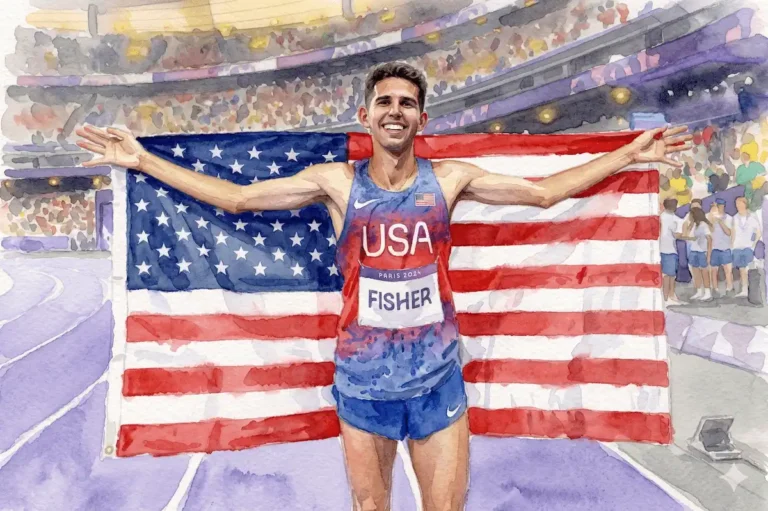

Katelyn Tuohy: A Lesson in Long-Term Athlete Development

Where Katelyn Tuohy is now
- January 2025: 4:25.54 for the mile at the Dr. Sander Invitational, still her best at the distance.
- June 2025: won the 5,000m at the Portland Track Festival.
- December 2025: 16th at the USA Cross Country Championships, short of the U.S. team for the World Cross Country Championships in Tallahassee.
- February 21, 2026: won the mile at the ASICS Last Chance Invitational in Winston-Salem, N.C., in 4:32.39, a meet record.
Katelyn Tuohy ran 13:21 at Van Cortlandt Park as a high school sophomore. That course is 2.5 miles long. She ran it faster than athletes ten years older than her, in one of the most competitive high school cross country environments in the country.
Her coach at the time was Brian Diglio, also her AP U.S. History teacher at North Rockland High School in New York. He saw the 13:21 and his first coaching thought was not about how to get it lower. It was about how to make sure she was still running in four years.
“My role so far has been to try to put the brakes on, so she doesn’t do too much.”
That one sentence is the entire lesson.
Tuohy went on to win Nike Cross Nationals three consecutive times. The only athlete in history, male or female, to do it. She then went to NC State under Laurie Henes and won four individual NCAA titles and helped the Wolfpack win three consecutive team cross country championships, the first program to do so since Stanford in 2005–07. She turned professional with Adidas in December 2023 and continues to train under Henes.
Two coaches. One athlete. The same foundational instinct: protect first, develop second.
Prefer to listen? I walked through the Tuohy training data on the podcast:
Why A High School Coach Should Care
Tuohy’s development arc is one of the most complete case studies in athlete management in distance running history. She went from breaking middle school records as a seventh-grader through a three-time national championship high school career through four individual NCAA titles to a professional contract, all without catastrophic injury or burnout.
This is rare. The history of elite high school distance runners is littered with careers that burned bright and ended early. Athletes who were national champions at 16 and injured or burned out at 19. The list is long and well-documented.
Tuohy is in her mid-twenties and still racing. Her mile record stands at 4:25.54 as a professional. She continues with the same coach who guided her through college.
The question is not what made her fast. Many athletes are fast at 16. The question is what made the whole arc possible. The answer is a sequence of coaches who understood their primary obligation was not to extract every performance today, but to build the system that would allow her to perform at the highest level for the longest possible time.
The High School Foundation: Brian Diglio And The Art Of Restraint
Brian Diglio was Tuohy’s AP U.S. History teacher before he was her coach. He noticed her at age ten, running with her parents in a local event. He began working with her before the records existed.
By seventh grade, she was breaking records set by Mary Cain, the most publicized female distance prodigy in American history. The pressure to maximize that talent was immediate and intense. Diglio’s response was consistent: hold back.
When Tuohy returned from a knee injury, Diglio addressed the concern in a way most coaches would not: “Really, it was for her mental state more than anything else. For an athlete, any time out of your routine throws you off. It was an important race for her mentally.”
This is a sophisticated coaching insight. The physical recovery was handled. The psychological disruption of routine was the variable Diglio addressed by returning her to competition. He was managing the whole athlete, not just the physical system.
Her high school results on training that Diglio consistently characterized as less than she wanted to do:
- Nike Cross Nationals champion: 2017, 2018, 2019 (first three-time champion in event history)
- Van Cortlandt Park course record: 13:21 (2.5 miles)
- U.S. national high school 5000m record: 15:37.12
- High school outdoor mile record: 4:33.87
- High school indoor 3000m record: 9:01.81
- Five Gatorade Player of the Year awards
- Academic GPA: 4.59
The instinct to do more was always present. The coach’s job was to redirect it.
NC State And Laurie Henes: Building On The Foundation
Freshman Year: Patience Before Progress
Tuohy arrived at NC State in 2020 with a knee injury. Henes’s response was to start her below full volume and deliberately not rush her return. For an athlete accustomed to dominating every competition she entered, a freshman fall spent managing load and building toward health was a genuine test.
The patience at the collegiate level was not incidental. It directly echoed what Diglio had done in high school: preserve the athlete, don’t exploit the talent for short-term results. The injury wasn’t a setback to be minimized. It was an opportunity to build the relationship before prescribing training.
The turning point in Tuohy’s freshman year came in a one-on-one meeting with Henes between semesters. Tuohy has described the conversation clearly: “She emphasized taking control of what you can take control of… I can’t just focus on running. I have to take control of my sleep.” That conversation reframed the athlete’s role from passive talent to active participant in her own development. It also signaled what kind of coaching relationship this would be, one that addressed the whole athlete, not just the workout log.
Her NCAA debut came in February 2021. What followed over the next three years was one of the most decorated collegiate distance running careers in history.
Individual NCAA titles:
- 2022 outdoor 5000m
- 2022 cross country 6K
- 2023 indoor mile: 4:24.26 (collegiate record)
- 2023 indoor 5000m: 15:03.12 (collegiate record, later broken)
- 2023 indoor 3000m: 8:35.20 (collegiate record)
Team accomplishments under Henes:
- Three consecutive NCAA team cross country championships: 2021, 2022, 2023
- First program to complete a three-peat since Stanford’s 2005–07 run
The Henes Coaching System
Team Integration As The Primary Training Structure
The most structurally distinctive element of how Henes coaches elite athletes is her refusal to separate them from the team training environment. Approximately 90 percent of Tuohy’s training at NC State was conducted with other program members. Individual work was reserved for specific competitive preparation. Henes’s reasoning: “We’ve been fortunate to have groups that she can do most of her training with. There’s very little separation.”
The logic is both practical and philosophical. Practically, people want to train with other people. The social energy of a group workout produces a quality of effort that solo training cannot replicate. An athlete running intervals with nine teammates who are working hard will find a level of effort she does not find alone.
Philosophically, separating elite athletes from their teams sends a signal that can be isolating and, eventually, destabilizing. Henes keeps her best athletes embedded in the team culture precisely because the culture is part of what makes them better.
This extended to how she managed competitive dynamics within practice. When a teammate was falling off pace during a hard workout, the NC State model was not to drop them and let the pack move on. “If someone is falling off pace, instead of dropping them we try to get them back to the pack.” That is a specific, deliberate choice about what practice is for. Competitive instincts are channeled into collective improvement, not individual survival-of-the-fittest. The result is a harder practice environment and a more cohesive team.
The implication for high school coaching is direct. The instinct to give your best athlete a separate, more advanced training program is often wrong. The group raises every individual. Keep your best athletes in the group as long as possible.
Summer Periodization: Structure That Prevents Burnout
Henes’s approach to the summer transition phase, detailed by Tuohy in a 2022 Atlanta Track Club interview, deserves particular attention from high school coaches who manage the post-season recovery period.
The first month after track season concludes is effort-based only: fartleks, hill strides, no prescribed times. The explicit goal is to build rhythm and base while allowing the athlete to decompress from the emotional and physical depletion of championship season. Paces don’t matter.
The second phase gradually increases mileage into cross country pre-season.
This is not complicated. But it requires a coach who trusts the process enough to remove the stopwatch for an entire month following the most intense competition of the year. The athletes who come back broken in October are often the ones whose summers looked like training camps rather than recoveries.
What Elite Fitness Actually Looks Like: The April 2022 Workout
In April 2022, FloTrack’s Workout Wednesday series documented an NC State practice that gives concrete shape to how Henes developed Tuohy’s finishing speed across the outdoor season.
The session:
- 5 × 800m
- Immediately followed by a 2 × 400/200/200 ladder set
What made it notable was the closing speed on the final 200. Early in that outdoor season, Tuohy’s closing 200 off the 800 set was running in the 35–36 second range. By late spring, she was closing in 31–32 seconds.
That four-second improvement over a single outdoor season, on top of already elite aerobic fitness, represents a specific, trackable development goal that Henes built into the training structure. It also illustrates something important about how Henes uses the group environment: a workout like that does not happen in isolation. The 800 effort, the ladder set, the closing 200, all of that happens because the competitive environment of team practice forces it.
For high school coaches: if you want your athletes to develop a finishing kick, prescribe it. Track it across a season. Give it a specific workout context where it can actually be trained, not just hoped for.
Flexibility Over Perfection
The 2023 NCAA Championship was won by an NC State team dealing with injury and illness going into the meet. Not a manageable situation. A genuinely difficult one.
Henes’s preparation for and response to that situation: “Things don’t have to be perfect. If you put together a good enough day with everyone just giving everything they’ve got, sometimes that works out.”
This sounds like low expectations. It is the opposite. It is the product of a training philosophy that explicitly prepares athletes to perform on imperfect days. Most programs train athletes to peak when everything is ideal: health is good, weather is good, course is familiar, taper was right. A program that only knows how to perform under ideal conditions is fragile. The Henes model builds athletes who can compete when conditions are bad.
From a practical standpoint, this means occasionally training tired. It means occasionally racing when you are not fully sharp. It means building the experience of competing imperfectly so that when the championship arrives and nothing is ideal, the athlete has a reference point.
Long-Term Relationship As A Training Variable
The most unusual thing about the Henes-Tuohy relationship is that it continues after college. Tuohy turned professional in December 2023 and signed with Adidas. She stayed in Raleigh. She continues to train under Henes.
Most professional distance runners join established professional training groups with dedicated pro coaches, altitude training access, and full-time support staff. Tuohy made a different choice. The relationship she built with Henes over four years was worth more to her development than the resources available elsewhere.
For high school coaches, this points to something fundamental: the trust built over years of careful coaching produces an athlete who is not looking for a better situation. She found it. The investment in long-term relationship is itself a performance variable.
The Philosophy Behind The System
Two coaches across three different programs made the same foundational choice: restraint first, development second.
Diglio held back a seventh-grader who was already breaking national records. Henes integrated a three-time national champion into team training rather than building her a custom elite program, managed her freshman year below full volume after an injury, reset her relationship to running every summer by removing prescribed paces, and built a team culture where collective improvement was the goal of practice. Both coaches resisted the obvious, tempting move, which was to maximize the already elite athlete.
The lesson from the full arc of Tuohy’s career is that the coach’s most important decision is often what not to do. The athlete who arrives with elite talent needs a coach who can resist the pressure to spend that talent immediately.
Henes’s flexibility principle extends beyond training into the coaching relationship itself. “Things don’t have to be perfect” is also a statement about expectations. The coaches who create the most durable athletes are not the ones with the most perfect programs. They are the ones who can adapt, who can respond to what is actually happening rather than what the plan says should be happening, and who maintain the trust relationship that allows honest communication when something is wrong.
What Most Coaches Get Wrong
The failure mode for talented young female distance runners is almost always the same: too much, too soon. The athlete is exceptional at fourteen and the program responds by giving her exceptional training. She handles it for a year. Maybe two. Then she breaks.
The break is not dramatic. It is a stress fracture, or a long stretch of mediocre races, or a gradual loss of enthusiasm that looks like burnout because it is burnout. The coach who built the training that produced the break calls it an unfortunate injury. It is not. It is the predictable outcome of training a developing body beyond its capacity to absorb stress.
Diglio saw the trap with Tuohy. He had a seventh-grader breaking national records and he chose not to train her like an elite athlete. He trained her like a seventh-grader with exceptional talent, which is what she was. He planned for four years later, not for the meet on Saturday.
The same trap shows up in college coaching. A high school three-time national champion arrives in August. The instinct is to build a separate, harder, more elite training program to match her talent. Henes did the opposite: she put Tuohy in team training, started her below full volume after a freshman injury, and kept 90 percent of the work in the group environment for four years.
The athletes who develop most durably are the ones whose coaches resisted the temptation to accelerate development in year one.
How To Apply This To Your Program
1. Write down your primary obligation to your most talented freshman.
It is not to win the conference title this year. It is to make sure she is healthy, developing, and still passionate about running at the end of her senior year. Every training decision you make for her in freshman year should be evaluated against that obligation.
2. Keep your best athletes in the team training environment as long as possible.
The group is the training stimulus. Before you write a separate program for your best runner, ask whether the group can serve her development if you manage the workouts well. In most cases, the answer is yes. Keep her with the team, push the team, and everyone benefits.
3. Build a team practice culture that lifts, not sorts.
Henes’s “get them back to the pack” approach is a specific, coachable practice decision. When your best athletes help a struggling teammate stay in a workout instead of running away from her, everyone gets harder. Design workouts where that is possible and expected.
4. Use the post-season transition deliberately.
After your championship meet, take the stopwatch away for four to six weeks. Fartleks. Strides. Hills. Effort-based running with no prescribed times. Your athletes need to recover from the emotional and physical depletion of the championship season before they can absorb the next training block.
5. Train a finishing kick explicitly.
Identify it. Prescribe workouts for it. Track it across the season. Tuohy’s closing 200 didn’t happen by accident. It happened because Henes built a session structure where it could be trained, measured, and improved. If your athletes’ finishing speed matters in championship races, treat it like a trainable quality, not a fixed trait.
6. Include imperfect training days in your plan.
Once or twice per month, prescribe a workout for the day after the athlete is tired from the previous session. Not every workout needs to be executed from optimal freshness. An athlete who has run intervals when tired has a different competitive reference point than an athlete who only runs intervals when fully recovered. Championship races are often not run from optimal freshness.
7. Extend the planning horizon.
Make a four-year training document for every athlete who shows genuine potential. Even a rough one. Put freshman year in the first column: what does this athlete need to develop? Junior year: what should she be capable of? Senior year: what do you need her to have built across the previous three years to peak here? Work backward. The decisions you make today look different when you can see where they need to lead.
8. Address the mental disruption of injury and setback explicitly.
When an athlete is hurt or ill, Diglio’s instinct was right: the psychological disruption is as significant as the physical one. When you return an athlete from injury, the conversation about what the experience meant to her is as important as the conversation about training load. Athletes who have processed setbacks return more resilient. Athletes who have not processed them return fragile.
What Tuohy’s career means for your program
The Bottom Line
Katelyn Tuohy is one of the most complete distance running development stories in the history of the sport. Two coaches, one athlete, a career arc that runs from seventh-grade national records through professional Adidas sponsorship with the same coach she had in college.
The system was not complicated. It was restrained, team-integrated, flexible, and built on trust earned over years rather than results earned over months. It included a freshman year that started below full volume. A summer periodization model that removed prescribed paces entirely for the first month after track season. A practice culture where the fastest athlete helped the one who was falling off, rather than leaving her behind. A documented finishing kick improvement of four seconds over a single outdoor season. And a coaching relationship that was worth more to the athlete than a professional training group.