Distance Training for High School Runners
As a USATF Level 2 Endurance Coach, I’ve seen firsthand how a structured, science-based approach can transform an athlete’s career. High school distance training is a unique puzzle that balances rapid physical development with the demands of cross country and track seasons. My philosophy centers on building a robust aerobic engine while bulletproofing the body against the common pitfalls of overtraining.
In the world of high school athletics, there is a lot of noise. This hub is designed to cut through the jargon and provide athletes, parents, and coaches with actionable, expert-backed advice. From 5K race strategy and periodized training plans to nutrition and recovery, everything here is designed to help you run faster and stay healthy.
The goal isn’t just to win the next race—it’s to foster a lifelong love for the sport and to see just how far your hard work can take you. Let’s get to work.
Explore by Season & Role
The complete framework for building a championship XC season — from summer base mileage in June to race tactics in November.
Cross Country Training HubSpeed development, lactate tolerance, and race-specific training for the most physiologically demanding events on the track.
Middle Distance Training HubProgram management, parent communication, practice structure, and the cultural frameworks that build winning programs year after year.
Coaching High School Distance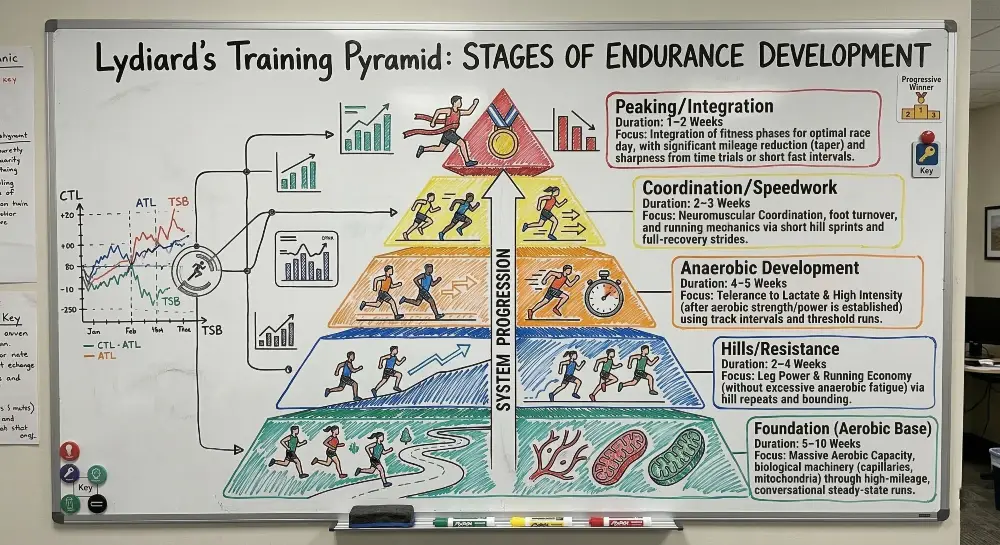
Understanding Distance Running Training Philosophy
To maximize your potential, your training must address three core areas:
1. The Aerobic Foundation (Base Building)
Distance running is, at its heart, an aerobic endeavor. Over 90% of the energy used in a 5K comes from aerobic metabolism. We build this through consistent weekly mileage and the “long run.” These efforts increase mitochondrial density and capillary beds in your muscles, allowing you to transport and utilize oxygen more efficiently.
2. Threshold and Economy
Speed is about moving fast efficiently. By incorporating Lactate Threshold workouts we teach your body to delay the onset of fatigue. Pairing this with “strides” improves your running economy, ensuring you don’t waste precious energy with inefficient form.
3. Strength and Durability
A fast engine is useless if the chassis breaks down. For high schoolers, injury prevention is paramount. A dedicated routine of dynamic mobility, core stability, and posterior chain strength training (glutes, hamstrings, and lower back) provides the “armor” necessary to handle the repetitive stress of high-mileage weeks and the high-intensity racing.
Distance Training Methodology






Distance Training Components




Sample Distance Training Week
- Monday Easy run + 5x 100m strides
- Tuesday Threshold Workout (e.g. 4x1000m@T)
- Wednesday Recovery run
- Thursday Fartlek run
- Friday Easy run + 5x 100m strides
- Saturday Long Run – Progression
- Sunday Rest
Recommended Reading on Distance Training



Go Deeper
Everything on High School Distance Running Training
Training Philosophy
Periodization & Planning
Zones & Physiology
Methods & Volume
What is the ideal weekly mileage for a high school distance runner?
There is no “magic number,” as mileage should always be individualized based on a runner’s experience, age, and injury history. Generally, a developmental freshman might thrive on 15–25 miles per week, while a seasoned senior chasing a state title might safely build to 40–60 miles. My philosophy centers on “progressive overload” which means gradually increasing volume by no more than 10% weekly.
How can I improve my 5K time during the Cross Country season?
The secret to a faster 5K isn’t just running more, it’s about improving your lactate threshold. Incorporating weekly tempo runs (comfortably hard efforts at about 25–30 seconds slower than 5K race pace) teaches your body to clear lactate more efficiently. Pair this with “strides” or short hill repeats to maintain speed and turnover, and you’ll see those mid-season plateaus start to break.
How many days a week should high school runners do speed work?
In the endurance world, we live by the 80/20 rule: 80% of your running should be at an easy, aerobic pace, and about 20% should be high-intensity. For most high school programs, this translates to two “quality” sessions per week. Races are considered one of the two quality sessions. Recovery is where the physiological adaptation actually happens. Most coaches and athletes don’t focus on recovery enough and that leads to overtraining syndrome.
What is the best way to prevent common running injuries like shin splints?
Most high school injuries stem from the “Too Problem”: too much, too fast, too soon. To stay healthy, focus on dynamic mobility before every run, core strength after runs, and strength training twice a week. Find high quality shoes that fit and are designed specifically for your intent: racing, high mileage, recovery. Many runners own multiple pairs for different types of training and racing.
How important is strength training for distance athletes?
Strength training protects a distance runner. Developing a strong posterior chain (hamstrings, glutes, and lower back) improves running economy. This means you use less energy to maintain a specific pace. You don’t need a gym membership. Simple bodyweight exercises like lunges, planks, and single-leg squats can make the difference between fading in the final 800 meters and having the power to kick for the finish line.