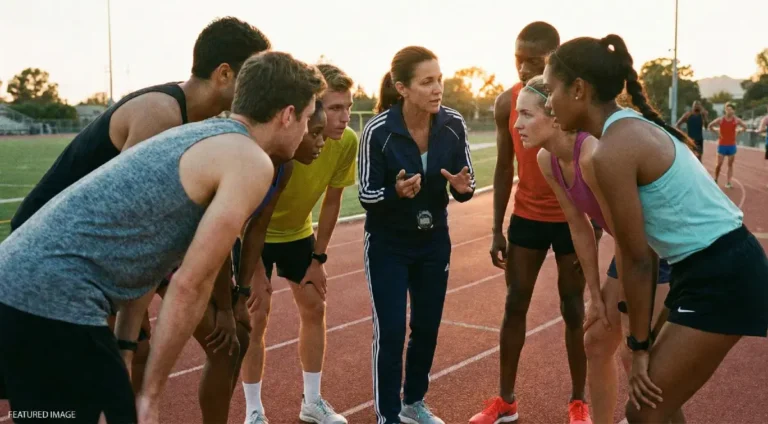

12 Middle School Cross Country Workouts Disguised as Games
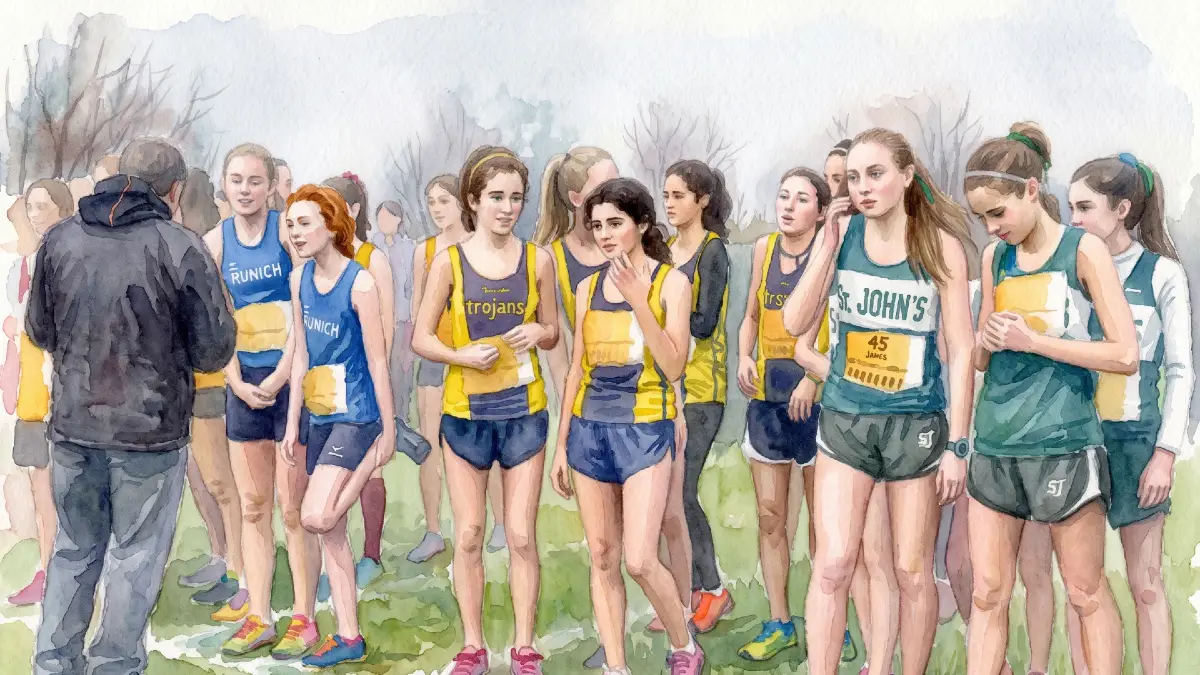
12 Middle School Cross Country Workouts Disguised as Games
Search for middle school cross country practice ideas and you will find candy runs, card runs, and ultimate frisbee. Fun, all of it. But none of those lists tell you how much work the kids actually did, which means none of them are workouts.
That is the gap this article fills. Every game below carries a real training dose. You will know what it trains, how to set it up, exactly how much to give, and the specific way it falls apart, because I have watched all twelve fall apart.
If you want the reasoning behind the doses, start with the full guide on how to coach middle school cross country. This article is the practical half.
If you want these games already placed into a season, the free 12-week middle school training plan schedules nine of them across twelve weeks, with the dose for each one and the easy days in between already written.
Why games, and not just workouts
Two reasons, and neither of them is that kids need entertaining.
The first is that a workout you hand to eleven-year-olds becomes a race. Every time. You write four reps at controlled effort, and by rep two they are competing with each other, the session lands two gears higher than you planned, and you have run a time trial on a Wednesday in September.
A game solves that because the goal moves. When winning means landing inside a pacing window, or staying uncaught on a handicap, or correctly running the card you drew, running as hard as possible stops being the winning move.
The second reason is retention, and it is written into the guidance from the sport’s own governing bodies. USATF Foundation youth material and the Road Runners Club of America both say the same two things about this age group: make running fun, and never use running as punishment. That is not a nicety. The American Academy of Pediatrics found in a 2024 clinical report that injury and burnout are among the leading reasons young athletes leave sport. Fun is a retention tool, and retention is the only middle school metric that still matters in four years.
The rule that turns a game into a workout
Set the dose before the athletes see the game.
That is the whole thing. Decide the session is four one-minute efforts at controlled hard. Then pick the wrapper. Never the other way around, because a game left to generate its own dose will always generate too much.
Every game below is built so that some physical object holds the dose for you. An index card. A deck you stacked last night. A stopwatch with a hard cap. The object does the discipline so you do not have to, and that matters more than it sounds, because the moment a group looks strong you will want to add one more rep. The card is what stops you.
Four laws of a good running game
- The dose is yours. The game is theirs. Decide the amount first, then choose the wrapper.
- Handicap everything. Any game the fastest athlete wins by default teaches the eighth-slowest athlete to quit trying.
- End it early. Stop while they still want another round. This is the hardest law to follow and the one that decides whether they come out next year.
- Rotate the winners. Across a season, use enough different games that a lot of different kids win something. Score control, honesty, and improvement, not just speed.
Five games at easy and steady pace
Ninety percent of middle school running should be conversational. These five make that bearable.
1. The Quiet Mile
The talk test, made enforceable. The cheapest useful game there is.
What it trains
Easy pace discipline. Nothing else, which is exactly the point.
You need
A whistle.
How to run it
- Before you leave, tell them one whistle means everybody talks.
- Run in pods at conversation pace. Pair each athlete with someone beside them.
- Every four to six minutes, blow one whistle blast at random.
- Every athlete says a complete sentence out loud to their partner. A subject and a verb. “Yeah” is not a sentence and neither is “good.”
- Walk the loop and listen. Anyone gasping is over-geared. Point at them without speaking. They slow down.
- A pod that passes every check earns a team point. A failed check costs nothing.
The dose
Whatever easy run was already on the schedule. This game adds zero, which is why you can run it any day of the season.
How it goes wrong: they invent one-word answers and call them sentences. Replace the open prompt with a specific one. “Name three things in your backpack.” And let shy kids answer their partner, never you.
2. Caterpillar
A single-file line that eats itself from the back. Surging practice hidden inside an easy run.
What it trains
Easy running with short controlled surges. Also group cohesion, which matters more than coaches admit.
You need
Open ground with room to pass.
How to run it
- Form single-file lines of six to ten. Never longer than ten, because a long line makes a long surge.
- The line runs at conversation pace, set by the front runner. Say out loud that the front runner’s job is to run slow enough that the back runner can talk.
- On your call, the runner at the back accelerates up the outside to the front.
- They settle in and lead. The new back runner goes immediately. Continuous.
- Call the surges yourself for two sessions. After that the line self-times.
- Finish with two or three minutes of normal easy running so the session does not end on a surge.
The dose
Fifteen to twenty-five minutes of line running, with a surge every thirty-five to forty-five seconds. In a ten-person line that gives each athlete two to four surges of about eight seconds each.
How it goes wrong: the front runner races. The line strings out, the back runner can never reach the front, and an easy day turns into a tempo. Demote the front runner to pacesetter and score “the line stayed together” instead. If it happens twice, put your slowest athlete at the front permanently.
3. Scavenger Trail
The long run disguised as a treasure hunt. The only game built for the Monday slot.
What it trains
Aerobic base. It is a long run wearing a costume.
You need
Eight to twelve numbered index cards with a code word on each, one answer sheet per pod, and a trail loop.
How to run it
- Hide the cards along the trail before practice. Never off the trail. Say that twice, because they will look.
- Space them so that collecting all of them puts your slowest pod at the target duration, not your fastest.
- Send pods out with one answer sheet. They write the code word from each card, in order.
- A pod returns as a complete group or it does not score, no matter how many cards it found.
- Time-box the return. Everyone comes back at the same clock minute whether or not they have them all.
The dose
Thirty-five to sixty minutes depending on experience, and never more than the athlete’s long run cap.
How it goes wrong: they sprint between cards and turn a long run into intervals. Score completeness and cohesion rather than speed, and tell them out loud that the cards are not going anywhere.
4. Map Quest
A season-long team odometer. Trains nothing physically and is one of the most valuable things on this list.
What it trains
Belonging. It makes minutes feel like progress and it gives your slowest athlete equal standing.
You need
A wall map, a pin, and one athlete who owns the tally.
How to run it
- In week one, pick a destination and pin it. A state meet course, a college campus, a town up the coast. Let the team vote.
- Convert team minutes to miles at one flat rate for everybody. Every athlete’s minute is worth the same mile regardless of pace. That is the entire mechanism.
- Give the tally to an athlete, not a coach. They update it every Friday and announce the number.
- When the team arrives, celebrate and pick a new destination the same day.
The dose
None, and that is the danger. Cap every athlete’s contribution at their assigned weekly minutes.
How it goes wrong: a motivated seventh grader starts running secret miles at home to move the pin. This is the one game on the list that can hurt somebody. Say in week one that extra runs do not count, and mean it when it gets tested in week nine.
5. Beat the Coach
A handicapped chase where you are the target. The outcome is entirely under your control, which is what makes it useful.
What it trains
Steady to controlled hard effort, and race practice without a race.
You need
A measured loop, a stopwatch, recent race data, and a coach willing to run.
How to run it
- Announce the distance and your own target time publicly, before assigning any head starts. Saying the number out loud is what makes it real.
- Assign head starts from each athlete’s most recent race, set so the field converges on you rather than on each other.
- Send them in reverse order of ability. You start last.
- Run your announced time. Do not chase individuals and do not visibly sandbag.
- Anyone who crosses before you scores. Cool down as a group immediately and let them tell you about it.
The dose
One to two miles at steady effort, depending on experience.
How it goes wrong: the head starts are wrong and your slowest athlete finishes alone with the team watching. Compute from real race results, not feel. Aim to be caught by sixty to seventy percent of the squad. Not everyone, or beating you means nothing. Not twenty percent, or the back half stops trying at halfway.
Five games at controlled hard effort
These are the threshold-family sessions, and they are the only structured intensity a middle schooler needs. One per week, maximum. On a race week, the race is that effort and none of these run at full dose.
Every one of them should end with athletes who can answer a question in three or four words. If they finish with hands on knees, the dose was wrong, and that is on you.
6. Traffic Light
You call colors, they shout the gear back and run it. The backbone session and the easiest to control.
What it trains
Threshold work, plus the vocabulary of effort. Kids who learn to name a gear can find it again in a race.
You need
A loop where everyone passes you, and an index card.
How to run it
- Write the sequence of calls on a card before practice. Do not improvise. Improvised calls add volume every single time.
- Stand where the whole loop is visible and every athlete passes you at least once a minute.
- Call GREEN, YELLOW, or RED. Green is conversation pace, yellow is comfortably fast, red is controlled hard. They shout the gear back as they pass.
- Green recovery between reds is at least as long as the red piece. For first-year runners, make it double.
- Mark each red off the card physically as you call it.
- Always finish on green. Never end a session on a red.
- Ask a question ten seconds after each red ends. Three-word answer means the right effort.
The dose
Four red pieces. One minute each for a first-year runner, up to three minutes each for an experienced eighth grader.
How it goes wrong: you get excited and add a red because the group looks strong. Or a cluster of eighth graders turns every red into a race against each other. The ten-second question fixes the second problem in one session. Only the card fixes the first.
7. Stacked Deck Fartlek
They draw a card each lap and run what it says. The draw is random. The deck is not, because you built it.
What it trains
Fartlek across all three efforts, with a dose that cannot inflate.
You need
A deck of playing cards per pod, a loop of 400 to 800 metres, and ten minutes the night before.
How to run it
- Build the deck in advance. Pull exactly as many face cards as you want hard efforts, then fill the rest with red and black number cards. Nothing else goes in.
- Space the face cards through the stack by hand rather than shuffling, so nobody draws three in a row. Yes, that means it is not truly random. No athlete has ever noticed.
- Seal each deck in a labelled envelope. Build them all on a Sunday and they last the season.
- Athletes draw one card at the end of each lap. A pod leader holds the deck and deals.
- Red number card means easy for the next lap. Black means steady. Face card means a hard effort of a set length, then easy for the rest of that lap.
- Deck size equals the number of laps that pod will run. When the deck is empty, the session is over. Never reshuffle.
The dose
Four to five face cards, each worth sixty seconds to two and a half minutes of hard effort depending on experience.
How it goes wrong: you forget to build the decks and improvise with a full fifty-two card deck. Twelve face cards appear, and a first-year runner does twelve hard efforts instead of four. Build them in advance or run Traffic Light instead.
8. Progression Pursuit
Two laps. The second must be faster, but only slightly. Too slow loses. Too fast also loses.
What it trains
Pacing control, which is the single most transferable race skill at this age.
You need
A measured loop, a stopwatch, and someone reading splits aloud.
How to run it
- Explain the window first. Lap two must be faster than lap one by between one and fifteen seconds. Outside that window in either direction does not score.
- Run lap one at controlled hard. Read every split aloud and have each athlete repeat their own number back to you.
- Full recovery. Three to five minutes walking or easy jogging. Do not shorten this to save time.
- Run lap two. Read the splits aloud again.
- Announce who landed inside the window. Do not announce who was fastest.
- Stop at two reps. There is no third.
The dose
Two efforts of 800 to 1200 metres.
How it goes wrong: they sandbag lap one so lap two is easy. Require lap one to land within twenty seconds of their recent race pace, and score lap-one honesty as its own point. Once they work out that sandbagging is detectable, it stops.
9. Predator and Prey
A staggered chase where everyone runs the same duration and only the geography differs.
What it trains
Continuous threshold work. This is the best game in existence for a squad with a four-minute-per-mile spread.
You need
A loop, a stopwatch, a whistle, and honest handicap estimates.
How to run it
- Rank the group by recent race pace. Slowest starts first.
- Set stagger gaps so that, if everyone runs to form, the field converges near the end of the prescribed time rather than in the first two minutes.
- Send them at their assigned intervals. Everybody runs the same duration, because the dose is time. That is what makes it fair across a wide range.
- Prey score for finishing uncaught. Predators score for each catch.
- Blow the whistle at the time cap. Everyone stops together, caught or not, mid-chase or not.
- Walk a lap as a group before anyone discusses who caught whom.
The dose
Six to twelve minutes of continuous controlled hard effort.
How it goes wrong: staggers are too generous and nobody is caught, or too tight and your slowest athlete is passed in the first minute with eight minutes left. Recompute weekly from real data. When in doubt, err toward nobody catching anybody, because being caught early is far more demoralising and much harder to recover from.
10. Pyramid Pop
A fartlek with a shape they can recite. Teaches that a hard effort is repeatable.
What it trains
Threshold work, plus the lesson of the middle mile: the same effort gets harder and you hold it anyway.
You need
A stopwatch. Any route.
How to run it
- Announce the pyramid before you leave and have them recite it back. They should be able to say it without you.
- Recovery equals the piece just run. A three-minute piece earns three minutes easy.
- They call the gear out loud as each piece begins. Naming the effort is how they learn to find it again.
- Tell them in advance that the pieces on the way down will feel harder than the identical ones on the way up. That is the lesson, and it lands better predicted.
- Run the first minute alongside them and set the pace yourself.
- Finish with at least three minutes easy before returning to the field.
The dose
A 1-2-1 pyramid for a first-year runner, up to 1-2-3-3-2-1 for an experienced eighth grader. Four to twelve minutes of hard effort total.
How it goes wrong: the first piece is run at race effort and the pyramid collapses by the middle. This is close to universal on the first attempt. Run the first minute with them, at the right pace, for the first three sessions.
Two games for speed and play
11. Coin Flip Hills
Flip a coin at the bottom. Heads you sprint, tails you walk. Randomness makes an unglamorous session feel like a game.
What it trains
Power and mechanics. Short hill sprints are a neuromuscular session, not a conditioning one, and that distinction is the whole game.
You need
A short steep hill offering eight to twelve seconds of climb, a coin, and a clipboard.
How to run it
- Athletes queue at the bottom. Flip the coin for each one as they reach the front.
- Heads is a sprint. Tails is a walk to the top and a free pass.
- Everybody walks down every time regardless of the flip. The walk is the recovery and it is not optional.
- Count only the heads. Track it on a clipboard, or give each athlete a wristband and have them count out loud.
- When an athlete hits their number they are finished, whatever the coin says. They jog easy on the flat until the group is done.
The dose
Four to six sprints of eight to ten seconds, with a full walk down between every one.
How it goes wrong: they jog down to get more reps, which turns a power session into an anaerobic one. That is exactly the thing you were avoiding. Enforce the walk, and walk down with them if you have to.
12. Sharks and Minnows
Tag on a cone grid. Acceleration, deceleration, and change of direction disguised as the best fifteen minutes of the week.
What it trains
General athleticism, which is the thing middle school distance programs skip and then wonder about four years later.
You need
Cones marking a grid roughly thirty metres by twenty, on grass.
How to run it
- Two or three sharks start in the middle. Everyone else lines up on one end.
- On “go,” minnows run for the far side. Anyone tagged becomes a shark and stays.
- Continue until two or three minnows remain. Those are the sharks next round.
- Play three or four rounds, then stop while they are still asking for another.
- Give the athletes tagged out first the shark role next round, so nobody spends the block on the sideline.
The dose
Ten to fifteen minutes. Maximum.
How it goes wrong: the grid is too big and it becomes a shuttle run, or it runs to twenty-five minutes and the last kids standing have accidentally completed a hard anaerobic session on a day that was not supposed to have one. Keep crossings to five or six seconds and keep the clock honest.
Which game, which day
| Day | Game | What it delivers |
|---|---|---|
| Monday | Scavenger Trail | The long run |
| Tuesday | The Quiet Mile or Caterpillar | Easy day, pace discipline |
| Wednesday | Traffic Light, Stacked Deck, Pyramid Pop, or Predator and Prey | The week’s one hard effort |
| Thursday | Coin Flip Hills | Power and mechanics |
| Friday | Sharks and Minnows | Play block, short and light |
| Any week | Map Quest | Runs alongside everything, all season |
| Mid-season | Beat the Coach | Morale, once handicaps are accurate |
| Pre-championship | Progression Pursuit | Pacing control before it counts |
One hard effort per week is the ceiling. On a meet week, the race is that effort, and Wednesday’s game comes down to something from the first group.
That is one week. For twelve of them in order, with the meets, the down weeks, and which game lands in which week already decided, the free 12-week schedule is published in full.
The same twelve games, one page each
The free 12-week schedule puts nine of these games into a real season: which one runs in which week, at what dose, with the easy days and down weeks around them. One athlete level, every day, published in full.
The Middle School XC Coach’s Kit adds the rest: all twelve games at one page each with the exact dose for three athlete levels, the lines to say at the start line, the combined-squad variant for programs running grades 5 through 12 on one field, and 36 print-and-post schedule pages. Built to hand athletes off to the 22-Week Season Blueprint already speaking the same language.
Get the free 12-week schedule See the full kit — $49.99Frequently asked questions
What are good middle school cross country workouts?
The best middle school workouts deliver a controlled dose inside a format the athletes cannot turn into a race. Traffic Light, Stacked Deck Fartlek, and Predator and Prey all do that. One hard session a week is the ceiling at this age, and on a meet week the race counts as that session.
How do you make cross country practice fun without wasting the session?
Decide the training dose first, then choose a game that delivers exactly that amount. Use something physical to hold the dose, like a written call card or a pre-built deck, so the session cannot inflate when the group looks strong. Fun and effective are not a tradeoff if the dose is fixed before the game starts.
Should middle schoolers do interval workouts?
Not the long, hard, short-rest kind. Threshold-family work in short pieces is appropriate, and short hill sprints with full recovery are excellent. Racing supplies all the high-intensity work a middle schooler needs, and the RRCA specifically advises limiting systematic training before puberty.
How long should a middle school cross country practice be?
Sixty to ninety minutes, and if you only have sixty, cut the running rather than the movement warm-up. A twenty-minute easy run with a full dynamic warm-up beats a forty-minute run with five minutes of jogging, every time at this age.
How do I run these games with a wide range of abilities?
Handicap them. Predator and Prey staggers the start so everyone runs the same duration. Beat the Coach gives each athlete a head start from their own race data. Progression Pursuit scores control rather than speed, so your slowest athlete can outscore your fastest. Games where the fastest kid wins by default are the ones to avoid.
Sources
- Brenner JS, Watson A, AAP Council on Sports Medicine and Fitness. Overuse Injuries, Overtraining, and Burnout in Young Athletes. Pediatrics. 2024;153(2):e2023065129.
- USATF Foundation youth coaching guidance, drawn from Greene L, Pate R, Training for Young Distance Runners.
- RRCA FUNdamentals of Youth Running.
This article is general education, not medical advice. Clear any existing injury with a qualified professional.