
Cross Country Coach Gear That Lasts All Season (2026)

The short version
Split your list in two. The school buys course equipment, timing, and team supplies through a purchase order. You buy the things that keep you warm, dry, and organized for four months. Spend real money on boots, a rain shell, and a handheld stopwatch with lap memory. Everything else can wait until year two.
Disclosure: Some links below are affiliate links. If you buy through one, I earn a small commission at no extra cost to you. I only list gear I have used or replaced on my own course. Nobody pays for placement here.
I have coached cross country for 25 years on the New Hampshire seacoast. In that time I have ruined too many pairs of sneakers to count, lost a clipboard and a binder in a nor’easter, and stood at a mile mark in November wearing a cotton hoodie shivering because I didn’t plan ahead. The gear list below is what goes in my backpack to every meet.
Most gear articles are written by people who have never held a stopwatch in the rain. This one is a list of what breaks, what lasts, and what you can skip entirely.
First: figure out whose money you are spending
New coaches get this backward. They buy cones with their own credit card and then discover the athletic department had a budget line for cones the whole time.
Team equipment is a school expense or a boosters expense. Course flags, marking paint, cones, coolers, team tents, first aid supplies, and timing equipment go on a purchase order. Your athletic director expects that request. If your program has no budget, your booster club almost certainly does, and a written list with prices gets funded far more often than a verbal ask in the hallway.
Personal gear is yours. Boots, rain shell, gloves, sunglasses, watch, headlamp. You will use them for a decade. Buy the very good version once. It’s worth it. And, you’ll use it during indoor and outdoor track season, and for years after you retire.
Here is the split:
| School buys | You buy |
|---|---|
| Directional flags and stakes | Waterproof boots |
| Marking paint | Hooded rain shell |
| Measuring wheel | Handheld stopwatch |
| Cones and barricade tape | Storage clipboard |
| Team tent, coolers, jugs | Wool socks and layers |
| First aid kit and AED access | Headlamp |
| Timing system, bibs, pins | Sunglasses and a real hat |
| Two-way radios for marshals | Thermos |
The practice bag
This bag lives in your car from August to November. It does not get unpacked.
A handheld stopwatch, not your phone
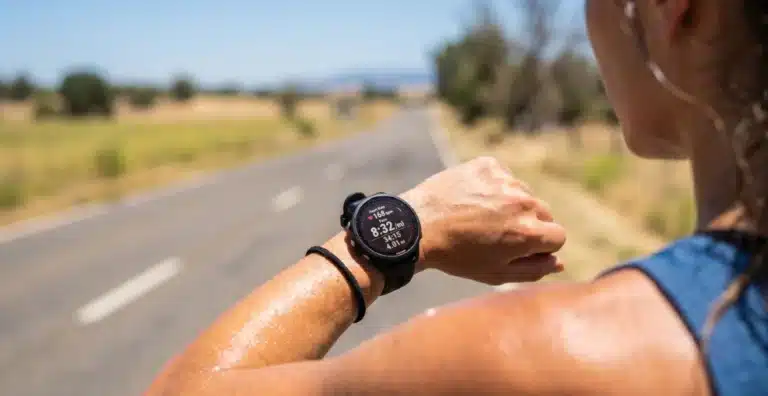
Your phone dies in the cold, locks when your hands are wet, and cannot take twenty splits without you looking down. A dedicated watch with lap memory takes splits from an entire varsity pack in one hand while you keep your eyes on the runners.
Look for a watch that stores at least 30 laps and recalls them after you stop. The Ultrak 495 is the most common on high school infields for a reason. Buy two. One will get stepped on or borrowed permanently.
If you run mile repeats or a workout with tight pace targets, pair the watch with the free split calculators on the site so you are not doing arithmetic at the 800 mark.
A storage clipboard
The flat kind blows away and gets soaked. A clipboard with a box under the lid holds your roster, your workout card, pens, tape, and a tick key. An aluminum storage clipboard costs about twenty dollars and lasts forever.
A pealess whistle
Cork whistles freeze and jam. A Fox 40 pealess whistle works wet, cold, and clogged with mud. Put it on a lanyard, not in a pocket.
Waterproof paper
Regular paper turns to pulp in an October drizzle. Rite in the Rain notebooks take pencil and pen through a downpour. I write every workout and every split in one and keep the season’s notebook on a shelf. Eight years of those notebooks is the most useful coaching resource I own.
The small stuff that solves problems
- Athletic tape and a blister kit. Somebody’s heel will open up on a hill repeat day with new shoes.
- Instant cold packs. Two, minimum.
- Zip ties and duct tape. They fix bibs, tents, spikes, and shoelaces.
- Sunscreen and tick spray. Permethrin on your shoes and pant cuffs, not your skin. If you coach in the Northeast, ticks are a bigger risk to your athletes than the sun.
- Spare shoelaces. You will hand them out three times a season.
The truck box
Everything that is too big for the bag but too important to leave in a closet.
- A five gallon water jug and paper cups. Athletes forget bottles. Every day.
- A dozen 12 inch cones. Enough to lay out a tempo loop or a chute for time trials.
- A cheap measuring wheel. Mark a 400 on the grass, check a mile split point, verify a workout loop. Under fifty dollars and used more than you expect. This one is worth asking the school to buy, but a basic measuring wheel is a fine personal purchase if your AD says no.
- A folding stool. You are on your feet for three hours at a meet. Sit down between races, you’re allowed to relax a little.
- A power bank. Meet results, video, and the weather radar all run off your phone.
- A headlamp. Practice ends in the dark after the clocks change. A headlamp with a red mode lets you read a watch without ruining your night vision or blinding a kid.
One thing I would not skip. Reflective vests for the team once daylight saving ends. If your program runs roads in November, this is not optional equipment. It is the single cheapest safety purchase you will make all season.
What you wear
Coaching cross country is standing still outdoors for two hours in weather that runs from 88 degrees in August to 28 degrees at the state meet. Runners stay warm by running. You do not.
Boots
The single best purchase I ever made. Course walks, marking days, rainy meets, and mud in the finish chute. A pull-on rubber boot with a neoprene lining handles all of it and comes off in five seconds when you get back in the car.
Muck Boot Chore Mid or Bogs Classic Mid. Expect to pay well over a hundred dollars and expect them to last six or seven seasons. The twenty dollar rubber boot cracks at the flex point by Halloween and your feet get soaked.
Rain shell
Get one with a real hood and pit zips. Water resistant is not waterproof. A shell that beads for twenty minutes and then soaks through is worse than no shell.
Look for a taped-seam hardshell in a basic three-layer jacket. Buy it a size up so a fleece fits underneath in November.
Socks
Merino wool, not cotton. Cotton holds water against your foot and you will be miserable for the rest of the meet. Darn Tough is made in Vermont and carries a lifetime warranty, which matters when you are wearing them a hundred days a year. Three pairs is enough.
Hands and head
Thin liner gloves, not ski mittens. You need to work a stopwatch, hold a pen, and pin a bib. Buy a cheap pair and buy four of them, because you will leave one pair on the bus. Add a knit beanie and a wide brim rain hat. A ball cap does nothing for the back of your neck in a sideways rain. Let’s face it, you don’t need to look cool anymore. Be practical.
Sunglasses
Polarized, and inexpensive on purpose. You will sit on them, lose them at an invitational. Goodr and similar run about twenty five dollars and do not slide off when you sweat.
Meet day extras
The practice bag comes to every meet. These four items get added on race day.
- A printed roster with entry confirmations. Paper. Cellular coverage is usually poor in the woods.
- Safety pins. Two hundred of them. You will be the coach who has extras, and every other coach will remember it.
- A thermos. Meets start early and go long.
- Two-way radios if you have assistants spread across the course. Consumer radios beat cell service at most cross country course locations.
I keep a separate written sequence for meet day so nothing gets left in the equipment room at 5:30 in the morning. That whole list lives here: the cross country meet checklist for coaches.
Hosting a meet: the course kit
If your program hosts, you need a marking kit. This is entirely a school expense and should be a recurring line item, because paint and wire flags are consumables.
- Directional flags in red, yellow, and blue. Red is a left turn, yellow is a right turn, blue is straight ahead. NFHS rules call for them mounted six feet or more off the ground so a pack can see them. Everything Track and Field and Morley Athletic both stock sets.
- Wire marking flags. The little pin flags. Plan on a hundred for a 5K loop.
- Inverted athletic marking paint and a wand applicator. Your knees will thank you for the wand.
- Barricade tape or snow fence for the chute and any sharp turn.
- A measuring wheel that reads in feet and meters.
- Loppers and a rake. Courses grow back every summer.
Quantities, sequence, and the mistakes that send a varsity pack down the wrong trail are all in the companion piece: how to mark a cross country course.
What I stopped buying
Twenty five years of purchases includes some bad ones.
- Printed pace charts. Laminated cards curl and go out of date. Use a calculator and write the four numbers you actually need on your clipboard.
- The expensive megaphone. A hundred dollar bullhorn does nothing a raised voice and a whistle cannot do at a high school practice. Buy the cheap one, or skip it.
- Team sunglasses, team water bottles, team anything with a logo. Athletes lose them in week two. Put that money into reflective vests.
- A GPS watch as a coaching tool. Useful for your own running. Not useful for timing a workout, because you cannot take splits for nine athletes on your wrist.
- Cheap boots. I bought three pairs of twenty dollar boots before I bought one good pair. That math is not complicated.
Build it over three seasons
Nobody buys this list at once. Here is the order that makes sense on a first-year salary.
Year one, about $250
Boots, rain shell, stopwatch, storage clipboard, whistle, wool socks, liner gloves. That is the kit that gets you through a season without being cold, wet, or disorganized.
Year two, about $150
Headlamp, thermos, folding stool, power bank, waterproof notebook, sunglasses, second stopwatch.
Year three
Insulated bibs or fleece-lined pants for the November meets, radios if you have assistants, and a second rain layer so you always have a dry one.
The meet that taught me all of this
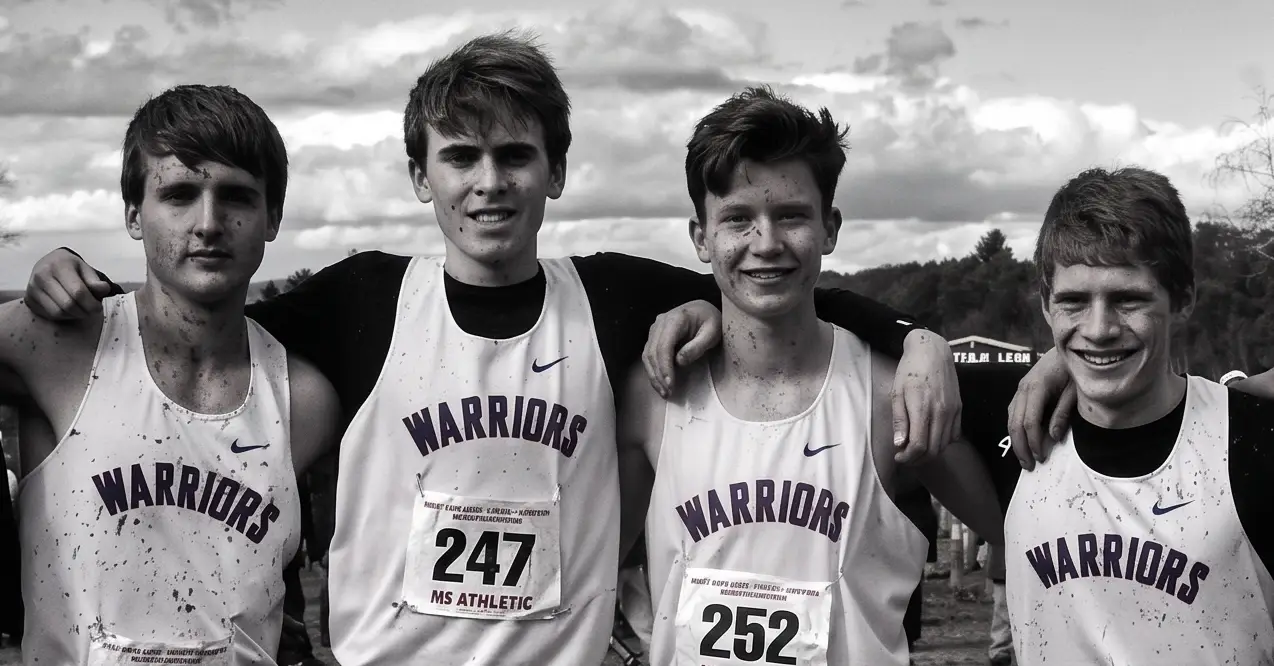
At the New England Championships one year it was in the twenties and snowing sideways. Our box assignment put the team in six inches of cold, half-frozen mud.
I have never gone to a meet without proper boots since. But the bigger lesson was not about my feet. It was about theirs. Towels. A full change of dry clothes. More layers than any runner believes they could possibly wear.
The pictures are unforgettable and the kids still tell the story. They also did not have to be that cold, and that was on me.
Everything else a first-year coach needs
Gear is the easy part. The Coach OS Bundle is the rest of the job in one system: a 22-week periodized plan written at three athlete levels, a fueling guide, and a complete parent meeting kit with slides, email templates, and a code of conduct. One purchase covers your whole staff.
See the Coach OS BundleQuestions coaches ask
What stopwatch do cross country coaches use?
A handheld watch with lap memory that stores at least 30 splits and recalls them after you stop timing. The Ultrak 495 is my recommendation. A phone or a GPS watch cannot take splits for a full pack.
Can my school pay for coaching gear?
For team equipment, usually yes. Course flags, paint, cones, coolers, first aid supplies, and timing equipment are normal athletic department expenses. Bring your athletic director a written list with prices and a total. Personal clothing and footwear are almost never covered.
What boots should I wear to coach cross country?
A mid-height pull-on rubber boot with a neoprene lining. Muck and Bogs both make the style. They handle wet grass, mud, and course walks, and they come off quickly. Expect to spend over a hundred dollars and expect six or more seasons out of them.
Do I need a measuring wheel?
If you host meets, yes, and the school should buy it. If you only run practices, it is still one of the most useful fifty dollar purchases available, because it lets you verify workout loops and mark split points on grass.
How much should a first-year coach expect to spend?
About $250 on personal gear if you buy the durable version of the seven items that matter. Everything else can be added in later seasons or requested through the school.