
Caffeine and Distance Running: The Complete Guide to Performance and Safety
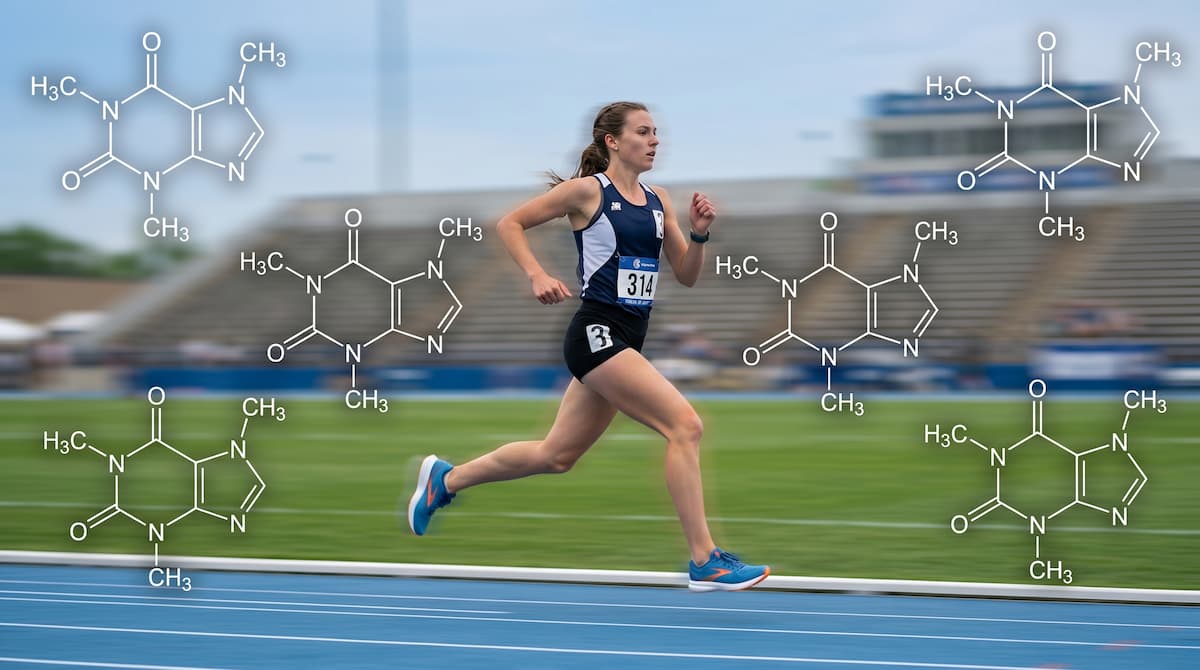
It was the third week of October, and one of my athletes showed up to our State Meet warm-up looking like he’d already run a race. His eyes were buzzing. His warm-up was ragged and too fast. About ten minutes before the gun, he found me and said, “Coach, I don’t feel right.”
The culprit was a pre-workout energy drink. The kind that gets pushed on social media by guys with eight percent body fat who have never coached a nervous 17-year-old trying to peak at the end of a cross country season. He’d taken it on an empty stomach, forty minutes before a 5K he’d been pointing at for twelve weeks.
He ran terribly. His anxiety got in the way of his racing instincts. It wasn’t the caffeine that hurt him. It was the wrong product, the wrong dose, the wrong timing, and zero preparation.
That experience is part of why I’m writing this. Because caffeine, used properly, is one of the best-researched and most effective legal ergogenic aids in endurance sport. And caffeine, used improperly especially by teenagers, can undo months of careful training in about forty minutes.
Here’s what the science says, what I’ve learned over two decades of coaching, and how you can think about this intelligently.
What Is Caffeine, and Why Do Coaches Care About It?
Caffeine is a naturally occurring stimulant found in coffee, tea, cocoa, and a long list of products engineered specifically for athletic performance. It was actually on the World Anti-Doping Agency’s banned substances list, at excessive doses, until 2004, when WADA removed the outright prohibition and moved caffeine to its monitoring program instead.
That’s worth sitting with for a moment: a substance that was once classified alongside performance-enhancing drugs now sits legally in your morning cup of coffee. The research justifying its ergogenic (performance-enhancing) effects has been piling up for decades. The International Society of Sports Nutrition (ISSN) position stand is unambiguous: aerobic endurance is the form of exercise with the most consistent moderate-to-large benefits from caffeine use.
For a distance running coach, that’s a sentence worth reading twice. It’s also something that deserves a deep dive to better understand the pros and cons of using caffeine and the effect it has on distance runners in high school.
The Physiology: What Caffeine Actually Does to a Running Body
Understanding why caffeine works makes you a smarter user of it. Here’s the condensed version.
The Adenosine Blockade
During a race, a workout, or any sustained effort, your body produces adenosine as a byproduct of energy metabolism. Adenosine is your brain’s way of saying slow down, rest, you’ve done enough. It binds to receptors in the central nervous system and does three things that matter enormously for performance:
- It promotes fatigue and drowsiness
- It increases your perception of effort (makes the same pace feel harder)
- It inhibits the release of dopamine, reducing your drive, alertness, and motivation
Caffeine competes with adenosine for those same receptor binding sites. It doesn’t eliminate fatigue, it masks the signal. Your physiological fatigue is real, but your brain’s perception of it is blunted. You can sustain a harder effort because the “quit” signal arrives later, quieter, or not at all. Think of the advantage this provides during lap three of the 1600m race.
As researchers at ScienceDirect summarize, caffeine’s antagonism of adenosine also prevents the dopamine suppression that normally hammers mental alertness and motivation during competition. When caffeine keeps adenosine at bay, dopamine stays elevated, and with it, your arousal, focus, and willingness to push. When coaches say “don’t fall asleep” during the middle of the race, this is exactly what we’re talking about.
The Dopamine and Noradrenaline Effect
The adenosine blockade triggers a cascade. With adenosine out of the picture, caffeine effectively amplifies the release of excitatory neurotransmitters, particularly dopamine (positivity) and noradrenaline (focused energy) throughout the brain. This is where the mood lift, the focus, the feeling of I’ve got this comes from. It’s not imaginary. It’s chemistry.
For a distance runner sitting in a championship 1600m heat, trying to stay relaxed and race their race, that neurochemical environment matters.
The Rate of Perceived Exertion Effect
This one is arguably the most practically significant for runners. Multiple studies show that caffeine consistently lowers RPE, the athlete’s Rate of Perceived Exertion. A study of 3K runners found that 3 mg/kg of caffeine ingested one hour before a 3K race improved attention by 15.6% and reaction time by 5.9%, alongside a meaningful improvement in finish time. But perhaps more relevant for coaching: the athletes felt better while running faster.
In a sport where the difference between a PR and a blown race often comes down to what happens mentally at the 2-mile mark, that’s significant.
The Muscle Mechanism
There’s also a direct muscular component. Caffeine appears to enhance calcium ion (Ca²⁺) mobilization in muscle cells, the mechanism that drives muscle contraction. More available calcium means more forceful contractions at the same neural drive. It’s a small effect relative to the CNS benefits, but it’s real, and it’s documented in the ISSN’s position stand.
What the Research Actually Shows for Runners
Here’s where I want to be precise, because the popular narrative about caffeine sometimes overpromises.
A comprehensive systematic review and meta-analysis published in Nutrients looked at 21 randomized controlled trials involving caffeine and running. The findings:
- Caffeine significantly improved time to exhaustion in running tests
- Caffeine produced a statistically significant but modest improvement in time trials
- Benefits held for both trained and recreational runners in time-to-exhaustion trials
- The evidence for time trial improvements in trained runners was less consistent
The advantage comes down to about 7 seconds in a 16-minute 5K. In a 4:30 mile, it’s about 2 seconds. But at the high school state meet, where places and qualifying spots come down to hundredths, those margins matter.
The ISSN position stand is broader and more optimistic: endurance performance improvements of 2–7% are reported in laboratory settings when caffeine is consumed at 3–6 mg/kg body mass.
Dr. Louise Burke, a Professorial Fellow at Australian Catholic University, 30-year veteran of the Australian Institute of Sport, and arguably the world’s leading authority on caffeine and endurance sport, puts it plainly: caffeine typically produces a 1–3% improvement, “which may be just a few seconds during shorter races, but can amount to two to five minutes over a three-hour marathon.”
For cross country and track, we’re talking about the shorter end of that range. A few seconds. That’s something. But, you have to be in striking distance already, it’s not magical.
The Protocols: Dosing and Timing
How Much?
The research has converged on a clear sweet spot: 3–6 mg of caffeine per kilogram of body weight.
For context:
| Body Weight | Low End (3 mg/kg) | High End (6 mg/kg) |
|---|---|---|
| 110 lbs (50 kg) | 150 mg | 300 mg |
| 130 lbs (59 kg) | 177 mg | 354 mg |
| 150 lbs (68 kg) | 200 mg | 408 mg |
| 170 lbs (77 kg) | 231 mg | 462 mg |
A standard 8 oz cup of brewed coffee contains roughly 95–120 mg of caffeine. A typical caffeine pill (like the 200 mg of NoDoz) is a precise, well-controlled dose. An energy gel with caffeine usually runs 25–100 mg per serving, check the label.
The ISSN is clear that going above 9 mg/kg produces no additional benefit and substantially increases the risk of side effects. More is not better. For most runners, landing in the 3 mg/kg range is the smarter starting point. It will provide meaningful effect, lower side-effect profile.
When to Take It?
The standard protocol: 45–60 minutes before race start.
Caffeine peaks in your bloodstream roughly 30 to 60 minutes after ingestion. The goal is to have peak plasma levels coinciding with the most demanding portion of your race. For most high school distances, that means you’re taking it at or just before the start of your warm-up.
Does Cutting Caffeine Before a Race Help?
This is one of the most common questions I get. The logic seems sound, if you take a break from caffeine, your adenosine receptors will be more sensitive when you reinstate it on race day.
The research, however, is more complicated. A 2011 study found that athletes who consumed caffeine on race day saw approximately 3% performance improvement regardless of whether they had abstained in the days prior. The caffeine worked either way.
That said, a review of 21 studies found that abstaining from caffeine for at least 7 days before an event optimized its effect.
My practical take: don’t make this complicated. If you’re a daily coffee drinker heading into your state championship, you don’t need to suffer through a caffeine-withdrawal headache for a week. But if you can modestly reduce your intake in the 5–7 days leading up to a major competition and do it without the misery of withdrawal, it’s probably worth doing.
Forms of Caffeine: What to Actually Use
Not all caffeine is created equal. Delivery method matters both for timing and for stomach tolerance.
☕ Coffee
The most accessible and most studied form of caffeine. The challenge is variability. An 8 oz cup of drip coffee can contain anywhere from 80–200 mg of caffeine depending on roast, grind, and brew method. Cold brew is typically more concentrated. Espresso sounds strong but is actually lower volume and often similar or lower in total caffeine than drip coffee.
Pros: Widely available, affordable, familiar.
Cons: Hard to dose precisely, can irritate the stomach before a race, milk or cream slow absorption.
Best for: Daily coffee drinkers who want to maintain their routine on race day.
💊 Caffeine Pills/Anhydrous Caffeine
Pharmaceutical-grade caffeine in precise, standardized doses. The ISSN notes that caffeine in anhydrous (pill) form may actually produce a greater ergogenic effect than coffee at equivalent doses. Products like Vivarin (200 mg), NoDoz (200 mg), and ProLab Caffeine (200 mg) are inexpensive, shelf-stable, and precisely dosed.
Pros: Precise dosing, no GI issues from liquid volume, fast absorption, no flavor.
Cons: Unfamiliar, easy to accidentally take too much.
Best for: Athletes who want precision and have already practiced their protocol in training.
🍬 Caffeinated Chewing Gum
Products like Caffeine Gum by GU (40 mg/piece) and Run Gum (50 mg/piece) offer a unique advantage: buccal absorption (through the tissues of the mouth) is faster than GI absorption. Peak plasma levels can be reached in as little as 15 minutes compared to 45–60 minutes for swallowed caffeine.
Pros: Fastest absorption, portable, easy to use pre-race or mid-race, can dose incrementally.
Cons: Less studied than pills, lower caffeine per unit so may require multiple pieces, some find gum chewing awkward before competition.
Best for: Athletes who need a caffeine hit closer to race start
🧴 Energy Gels with Caffeine
Products like GU Energy Gel Jet Blackberry (40 mg), Maurten Gel 100 CAF (100 mg), Gu Roctane with Caffeine (35 mg), and Clif Shot Bloks with Caffeine (50 mg per 3 blocks) combine caffeine with carbohydrate. A combination that research shows can enhance both performance and post-exercise glycogen resynthesis.
Pros: Combines caffeine with carbohydrate fuel, designed for mid-run use, easy to carry.
Cons: Higher cost, not really needed for sub-30-minute events, GI sensitivity varies.
Best for: Distances over 5K
⚡ Energy Drinks and Pre-Workout Supplements
Here’s where I need to stop and be direct with you: I’m not recommending pre-workout supplements or mainstream energy drinks for high school distance runners. Products like C4, Ghost Pre-Workout, Bang Energy, and similar are either dosed too high, contain undisclosed ingredient stacks, or both. Many contain 200–300 mg of caffeine plus additional stimulants and compounds whose interactions in developing bodies are poorly understood.
The story I opened with? That was a pre-workout supplement. It worked exactly as poorly as you’d expect.
If you want the energy drink route, products like PRIME Energy (200 mg) or Celsius (200 mg) are at least standardized and caffeine-labeled, but they still put a 110-lb sophomore within range of the adult threshold for caffeine without any performance guidance.
Event-Specific Scenarios: How I’d Think About Caffeine for Each Race
800 Meters
The 800 sits at the uncomfortable intersection of aerobic and anaerobic. It’s 1:45–2:15 for most high school boys, just long enough for aerobic mechanisms to contribute significantly, just short enough that the physiological effects of caffeine are harder to isolate.
A 2024 study published in Medicine & Science in Sports & Exercise found that caffeine did improve simulated 800m run performance in college middle-distance runners. The mechanism appeared to reduce RPE and improved willingness to tolerate discomfort, rather than a direct aerobic boost.
Protocol: 3 mg/kg, 45–60 minutes before race start. Pill or caffeinated gum. No coffee (potential GI issues). This one is case-by-case. Some 800m runners run so much on adrenaline that adding caffeine creates anxiety, not performance.
1600 Meters / Mile
The mile is the sweet spot for caffeine in track. Long enough that the adenosine-blocking effect has time to express itself, intense enough that the RPE reduction gives you a genuine competitive edge at the final 200 when the lactic acid is everywhere and your brain is begging you to slow down.
Protocol: 3 mg/kg, 45–60 minutes before race. Pills or caffeinated gum. Test this in a workout first, not in competition. Ideally, run a time trial on your standard caffeine dose before the first meet you plan to use it in.
3200 Meters / 2-Mile
This is the event where caffeine earns its reputation. Eight laps requires the mental tenacity to stay in the race during laps 4–6 when the pace is honest and you’re in oxygen debt. The adenosine-blocking, dopamine-sustaining effects of caffeine are at their most powerful here.
Protocol: 3 mg/kg, 60 minutes before race. Pills preferred for precision.
5K Cross Country
The complexity with cross country is that the warm-up protocol is compressed. The field is often big. And the emotional volatility of varsity cross country means you’re already running on adrenaline.
My approach for XC is to treat caffeine more conservatively than for track. The aerobic demands are similar to the 3200m, but the terrain variability and race-to-race unpredictability mean you want consistency in your preparation.
Protocol: 2–3 mg/kg, 50–60 minutes before the gun. Consider caffeinated gum as the delivery vehicle. It’s easy to spit out and absorbs faster if your timing is off.
The Individual Variation Problem: Why It Works for Some and Not Others
Here’s the part of the caffeine conversation that most sports nutrition content glosses over: not everyone responds the same way.
The science on this is fascinating. Two genes appear to explain a significant portion of the inter-individual variation in caffeine response:
CYP1A2 — This gene encodes the liver enzyme responsible for metabolizing caffeine. The AA genotype produces “fast metabolizers” who clear caffeine quickly. C-allele carriers are “slow metabolizers” who may stay caffeinated longer but also experience side effects more intensely. Research published in PMC confirms that these genetic variations “may explain a large portion of the inter-individual variance reported by studies following caffeine ingestion.”
ADORA2A — This gene encodes the adenosine A2A receptor. Certain variants are associated with heightened caffeine-induced anxiety, which explains why some athletes become anxious and underperform after a standard dose that works perfectly for teammates.
What this means practically:
- Some athletes will run a PR on 200 mg of caffeine before a mile
- Other athletes will run slower because they’re tense, anxious, and over-aroused
- A small subset may experience no measurable benefit at all
There’s currently no easy consumer genetic test that reliably tells you which category you’re in. The only reliable protocol is empirical testing in training. Run the same workout twice. Once caffeinated, once without. Track both performance and perceived exertion. Do it more than once. Look for a pattern.
This is exactly the kind of individualization that separates a smart training approach from following generic advice off the internet.
Caffeine and Teenagers: The Conversation Every Coach Needs to Have
I’ve been building toward this section because it’s the most important one in this article, and I’m going to give it the space it deserves.
Almost everything written above applies to adult or near-adult athletes (18+) with developed physiology. When it comes to high school athletes, and particularly your 14, 15, and 16-year-olds, the risk-benefit calculation looks very different.
The Developing Brain and CNS
Research published in PMC demonstrated that caffeine consumption during adolescence produces anxiety that persists into adulthood even after the caffeine is removed. The adolescent brain is in active development and caffeine’s interference with adenosine signaling during this period may have lasting neurological effects.
The adolescent CNS is also more sensitive to stimulants. A survey of high school athletes found that caffeine in adolescents is associated with increased anxiety and irritability, decreased response time, and decreased attention. The exact opposite of what you want in competition. Their developing brains are especially sensitive to caffeine.
Sleep is Still The Most Underrated Performance Variable
Teenagers need 8–10 hours of sleep per night. This isn’t a suggestion. It’s a proven physiological requirement rooted in the developmental demands of adolescence.
Research on caffeine and adolescent sleep found that regular caffeine consumption leads to later bedtimes, shorter total sleep time, and reduced slow-wave sleep activity. This is the deep sleep phase most associated with physical recovery and adaptation. If your athlete is sleeping less because of habitual caffeine use, they are recovering less from training.
A runner who is chronically under-recovered because of disrupted sleep architecture will not benefit from caffeine on race day in any meaningful way. The debt is too large.
Pre-Competition Anxiety Amplification
Teenage athletes already show up to big competitions with elevated stress hormones. Adding caffeine, which raises adrenaline and cortisol, to an already over-activated nervous system is a formula for anxiety, not performance. The pediatric medicine literature is explicit: caffeine can “exacerbate feelings of anxiety, nervousness, and restlessness” and in susceptible individuals can “even trigger panic attacks.”
I’ve seen this. You’ve probably seen this. It doesn’t look like a slight increase in jitteriness. It looks like a state qualifier with a 10,000 foot stare, who can’t find their race legs, runs 45 seconds off their PR, and doesn’t know why.
Energy Drinks: The Specific Danger
Over 69% of young athletes in one study consumed energy drinks, with 17% drinking them every day or multiple times per week. The side effects reported by these young athletes: insomnia, anxiety, tachycardia, nervousness, and irritability. One in four reported fast heartbeats. One in four reported difficulty sleeping.
The energy drink industry markets aggressively to teenage athletes across social media and gaming platforms. The products are designed to look like performance tools. They are not designed with adolescent physiology in mind.
My advice: No energy drinks or pre-workout supplements for any athlete on my roster under 18.
The Bottom Line on Teens: What’s Appropriate
If you’re coaching high school distance runners, here’s my framework:
- Under 16: No caffeine supplementation strategy, full stop. Get sleep, eat real food, train smart.
- 16–17: Limit discussion to naturally caffeinated beverages (coffee or tea) at low doses if the athlete and family are already drinking it habitually as part of their daily routine. No pills, no pre-workouts, no energy drinks.
- 18+: Test in training first. Start at the low end of the dose range. Be conservative.
For athletes who ask me about caffeine, I direct them to this conversation first: How’s your sleep? How’s your nutrition? Training consistency? In my experience, most high school runners who want to experiment with caffeine are looking for a shortcut around one of those three fundamentals. The shortcut doesn’t exist.
Practical Coaching Protocol: The Smart Approach
If you’re a college, post-collegiate, or adult masters runner who wants to use caffeine intelligently, here’s how I’d structure it:
1. Establish your baseline. Run a time trial or hard workout with zero caffeine to get a clean data point.
2. Test your dose in training. Three weeks before your first target race, do the same workout caffeinated. Start at 3 mg/kg. Use either a 200 mg pill or, if you need more precision, buy pure anhydrous caffeine powder and weigh it precisely (use a milligram scale).
3. Time it right. Take your dose 45–60 minutes before the gun. Set an alarm.
4. Note the response. Did your RPE feel lower? Did you finish strong or early? Any GI distress, anxiety, or heart rate anomalies? Track this for 3–4 sessions before committing to a race-day protocol.
5. Manage the week before. Modest reduction in daily caffeine intake (not cold turkey) in the 5–7 days before your goal race.
6. Stick to what you practiced. Race day is not the day to try a new product or a new dose. You only race the protocol you’ve trained.
What I Tell My Athletes
Here’s the version I give in the team room:
“Caffeine is real. The research is real. But it’s not a substitute for sleep, nutrition, or smart training. If you’re sleeping eight hours, eating enough, and running the workouts, caffeine might give you a 1–3% edge on race day. If you’re sleeping six hours because you were up until midnight earlier this week, caffeine can’t fix that.”
Caffeine is an amplifier of good habits, not a corrective measure for bad ones.
For adult runners, it’s a tool worth having in the kit. For teenage athletes, the risk-benefit math doesn’t add up until they’re old enough for their brains and bodies to handle it.
Additional Resources
- ISSN Position Stand: Caffeine and Exercise Performance — the most comprehensive peer-reviewed summary available
- Wu Tsai Human Performance Alliance: Optimal Timing of Caffeine — Dr. Louise Burke’s practical framework
- Systematic Review: Caffeine and Endurance Running — meta-analysis on time trials and time-to-exhaustion
- Runners Connect: Should You Reduce Caffeine Before Your Race? — practical breakdown of the washout question
- Strength Running: Running on Coffee — excellent practical overview with Louise Burke interview material
- Predictors of Caffeine Use in High School Athletes (PMC) — the adolescent-specific research